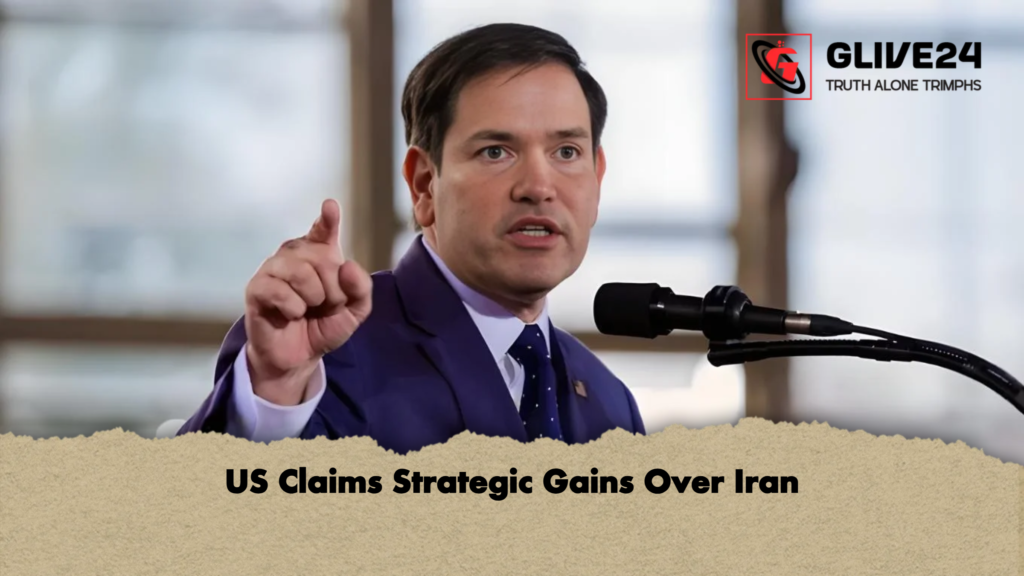
United States Secretary of State Marco Rubio has asserted that Washington has inflicted substantial damage on Iran’s naval forces and defence-industrial infrastructure, suggesting that the cumulative effects of sustained military pressure could become fully evident within weeks.
In an interview broadcast on ABC News on Monday (31 March), Rubio said the United States was approaching “the final stage” of its strategic objectives. He claimed that Iran is likely to emerge in the near term in a significantly weakened military and strategic position, particularly in relation to its missile programme and maritime capabilities.
According to Rubio, a considerable portion of Iran’s missile systems, naval infrastructure, and defence manufacturing capacity has already been degraded. He argued that the overarching objective of these actions is to prevent Tehran from rebuilding or expanding its ability to produce missiles and drones in the future. He further characterised the current moment as one of the weakest phases in Iran’s modern military history.
Rubio also issued a warning regarding the Strait of Hormuz, stating that the United States would not accept any attempt by Iran to assert unilateral control over the vital shipping corridor. He indicated that if Tehran sought to impose tolls, restrictions, or exclusive authority over the waterway, Washington would be prepared to respond with appropriate military and strategic measures.
The remarks come amid heightened regional tensions involving the United States, Iran, and other key actors in the Gulf. The Strait of Hormuz remains one of the world’s most critical maritime chokepoints, through which a significant proportion of global energy supplies pass.
In response, Iranian officials have firmly rejected the US claims. Foreign Ministry spokesperson Ismail Baghaei stated in Tehran that no direct negotiations are currently taking place between Iran and the United States. However, he acknowledged that limited indirect communication via intermediaries may exist. He also expressed deep scepticism about Washington’s diplomatic credibility, arguing that international trust in US commitments remains extremely low.
Reports in parts of the international media have suggested that indirect talks between Iran and the United States have seen limited progress through third-party mediation, allegedly involving Pakistan. Tehran, however, has denied participation in any such quadrilateral discussions.
Analysts warn that the growing strategic friction over the Strait of Hormuz and broader regional security dynamics could have far-reaching consequences. Any disruption in this maritime corridor—through which nearly one-fifth of global oil shipments pass—would likely trigger volatility in international energy markets and broader economic instability.
Key Positions
| Actor | Position | Primary Objective |
|---|---|---|
| United States | Intensifying strategic and military pressure | Degrade Iran’s missile, naval, and drone capabilities |
| Iran | Rejects external pressure and defends sovereignty | Prevent foreign control over strategic waterways |
| Regional mediators | Pursuing diplomatic engagement | Reduce tensions through indirect negotiations |
Experts emphasise that unless diplomatic channels gain traction, the situation risks escalating beyond a regional confrontation, potentially affecting global security and economic stability on a much wider scale.