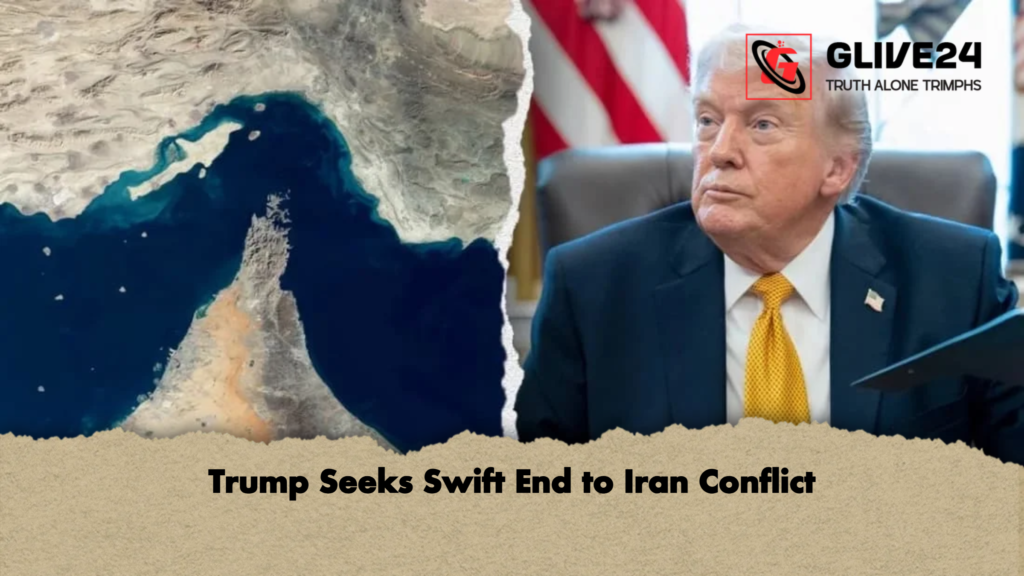
US President Donald Trump has reportedly informed his closest advisers that he is keen to bring the ongoing military operations against Iran to a conclusion, despite the strategically vital Strait of Hormuz not being fully reopened. According to a report by The Wall Street Journal, citing senior administration officials, Trump believes that attempting to forcibly reopen the waterway at this stage could prolong the conflict well beyond his intended four- to six-week timeframe.
Officials indicate that in recent consultations, Trump and his advisers assessed that the primary objectives of the US military campaign—neutralising Iran’s naval capabilities and destroying stockpiles of ballistic missiles—have largely been achieved. With these goals accomplished, the administration now seeks to de-escalate tensions and shift focus towards diplomatic measures to ensure the free flow of commerce through the Hormuz Strait.
Rather than continuing military pressure, Trump prefers leveraging international diplomatic and economic pressure on Tehran. If these efforts fail, Washington may defer responsibility for reopening the strait to European and Gulf allies, thereby avoiding prolonged US involvement in direct combat. This approach would allow allied nations to assume leadership of future operations, reducing the risk of entanglement in a protracted regional conflict.
Despite this emphasis on diplomacy, the White House maintains several military contingencies that the President could authorise if necessary. For now, however, ending hostilities and lowering regional tensions remains his immediate priority. Analysts suggest that Trump’s stance reflects a desire to swiftly conclude the confrontation and restore both political and economic stability.
The strategic importance of the Hormuz Strait cannot be overstated. Approximately one-third of global seaborne oil passes through this narrow waterway, making its security a matter of international economic concern. The table below summarises the current situation and US strategic considerations:
| Factor | Current Status | US Approach | Intended Outcome |
|---|---|---|---|
| Strait of Hormuz | Partially closed | Diplomatic pressure, allied leadership | Secure maritime trade |
| Iranian Naval Forces | Partially degraded | Limited military operations | Reduce offensive capability |
| Missile Stockpiles | Targeted destruction | Ongoing monitoring | Prevent ballistic threat |
| US Military Role | Active but contained | Contingency options retained | Avoid prolonged engagement |
Trump’s measured strategy may create a new geopolitical dynamic in the Middle East. While his rapid-conflict-resolution approach is aimed at minimising disruption, it has elicited mixed reactions among allies, particularly those directly reliant on the strait for energy security. The international community continues to closely monitor whether the US forces will decelerate operations without any formal agreement with Tehran.
Overall, Trump’s initiative signals a pivot from purely military action to a more nuanced combination of strategic pressure and diplomacy, balancing regional stability with global economic interests