The government is actively considering the introduction of a blended learning model—combining in-person and online instruction—for educational institutions in metropolitan areas, excluding universities, in response to the ongoing global energy crisis. The proposal is expected to be presented to the Cabinet for deliberation and possible approval.
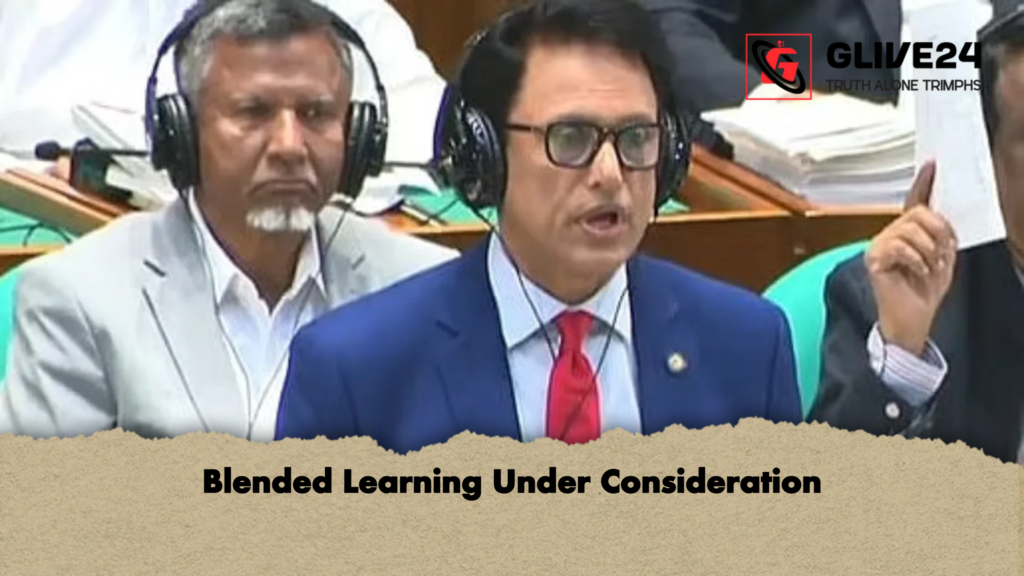
Speaking to journalists at the Secretariat on Tuesday, Education Minister A N M Ehsanul Haque Milan stated that the authorities are exploring ways to encourage online education alongside traditional classroom teaching. He emphasised that the global energy shortage has created uncertainty, with no clear indication of when it will ease, necessitating flexible approaches to maintaining academic continuity.
According to the minister, the government is examining a hybrid system in which schools would operate through a combination of physical attendance and digital learning. This consideration follows disruptions caused by the recent Ramadan period, public movements, and extended holidays, which resulted in missed classroom hours. In response, schools have already been directed to operate on six days a week, along with additional Saturday classes for the next ten weeks to recover lost teaching time.
The minister further noted that a recent survey indicated that approximately 55 per cent of stakeholders support the adoption of online learning. However, he also acknowledged concerns that a fully online system could have adverse social consequences for students, particularly in terms of interaction and development. As a result, the government is leaning towards a balanced hybrid model rather than a complete shift to virtual education.
He clarified that no final decision has yet been made regarding the exact structure of the proposed system, including how many days would be conducted online or in person. The Ministry of Education is preparing a formal proposal, which will be submitted to the Cabinet meeting scheduled for Thursday. The ultimate decision will rest with the Cabinet.
The minister also confirmed that the initiative primarily targets schools and colleges in metropolitan areas, excluding universities. This geographical focus reflects the government’s attempt to address urban infrastructure capacity while ensuring continued learning without overburdening energy consumption.
The broader context of the discussion is the global energy crisis, which has intensified due to geopolitical tensions, including conflicts involving major international powers. Bangladesh, like many other countries, has been affected by rising energy constraints, prompting authorities to reassess resource allocation across sectors, including education.
Summary of Proposed Blended Education Model
| Aspect | Proposed Approach |
|---|---|
| Mode of Instruction | Combination of in-person and online learning |
| Target Institutions | Schools and colleges in metropolitan areas (excluding universities) |
| Policy Objective | Maintain educational continuity while reducing energy consumption |
| Weekly Structure | Yet to be finalised; mix of physical and virtual classes |
| Decision Authority | Cabinet approval following Ministry proposal |
Following a 40-day closure due to Ramadan and Eid holidays, educational institutions reopened on Sunday. However, the renewed focus on energy conservation has brought urgency to discussions on restructuring academic delivery methods.
Officials indicate that the coming Cabinet meeting could play a decisive role in shaping the future of school education in Bangladesh, particularly in terms of integrating digital learning into mainstream academic practice.