Vietnam’s Techcom Life Insurance Company Limited is accelerating its transition towards an artificial intelligence-led operating model, aiming to overcome a persistent industry challenge in which only a small proportion of AI initiatives successfully scale beyond pilot stages.
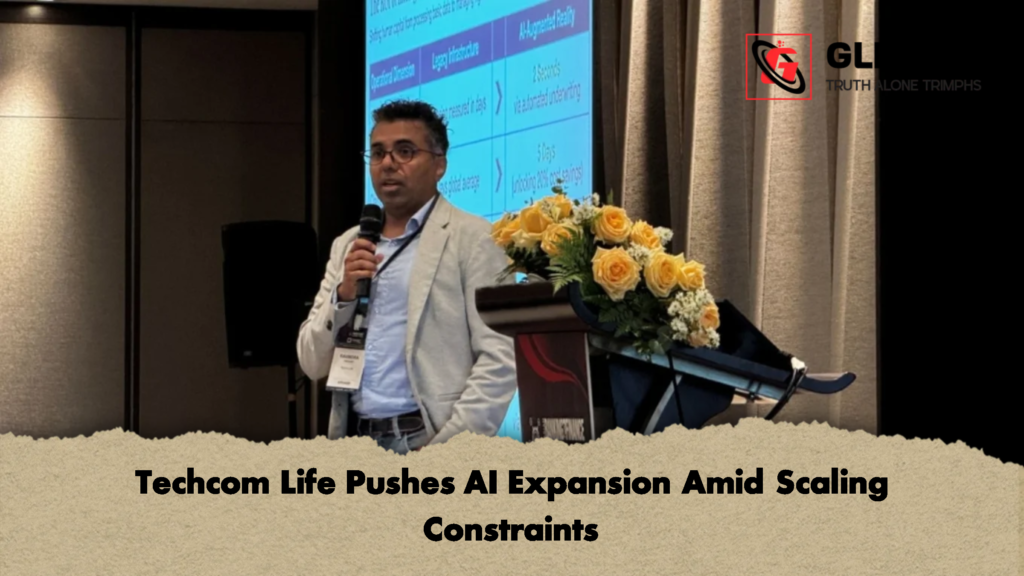
At the Asian Banking & Finance and Insurance Asia Summit in Ho Chi Minh City, Ravindra Venisetti highlighted a striking gap within the global insurance sector: despite rising investment and widespread experimentation, fewer than 10% to 15% of AI use cases are deployed at enterprise scale. This disconnect, he noted, reflects not a lack of innovation, but a failure to translate promising pilots into operational realities.
Techcom Life is attempting to defy this trend. Established only recently, the insurer has embedded AI across key business functions within a remarkably short timeframe. Rather than expanding its workforce along traditional lines, the company is building a lean structure underpinned by automation, data, and machine learning. Its ambition, according to Venisetti, is to become a fully “AI-native” organisation, where technology drives efficiency, decision-making, and customer engagement.
A cornerstone of this transformation is the firm’s proprietary AI assistant, “Tori”. Already adopted by approximately 85% of its 1,500-strong agent network, the tool provides real-time guidance during client interactions, offering prompts, recommendations, and insights to improve sales performance and consistency. This level of adoption reflects a broader shift within the industry, where AI is increasingly being deployed not only in back-office functions but also as a frontline enabler of customer engagement.
The regional context further strengthens Techcom Life’s strategic positioning. Insurance penetration in Vietnam remains at around 2%, significantly below levels seen in more developed markets. This relatively low baseline presents substantial growth potential, particularly for firms capable of leveraging digital infrastructure and AI-driven solutions to expand access and improve service delivery.
Venisetti pointed out that newer insurers in Southeast Asia benefit from the absence of legacy systems that often hinder innovation in mature markets. Long-established insurers, some with decades or even centuries of operational history, frequently struggle with fragmented data environments and outdated IT architectures. These constraints can make large-scale AI deployment both complex and costly. In contrast, Techcom Life’s cloud-native foundation enables faster integration and more agile experimentation.
Insights from McKinsey & Company reinforce the economic case for AI adoption. A 2025 report suggests that AI-driven underwriting and claims automation could reduce operating costs by up to 40%, whilst improving loss ratios by three to five percentage points. Similarly, Deloitte estimates that global investment in insurance-focused AI exceeded $10 billion in 2024, with Asia-Pacific accounting for an increasing share of this growth.
Within its own operations, Techcom Life is applying AI to core insurance processes such as pricing, underwriting, and claims management. Pricing, long reliant on static actuarial models and spreadsheet-based analysis, is being transformed through dynamic algorithms capable of real-time risk assessment. This shift promises not only greater accuracy but also enhanced responsiveness to changing market conditions.
Fraud detection represents another critical application. In Southeast Asia, fraudulent claims are estimated to account for between 10% and 20% of total claims. Whilst AI cannot eliminate fraud entirely, it significantly enhances detection capabilities through advanced pattern recognition, helping insurers identify anomalies and mitigate losses at an earlier stage.
The company’s operational innovation extends beyond core insurance functions. Venisetti revealed that an AI-powered document management system was recently built and deployed in just three days, with no human coding required. Furthermore, AI agents are already functioning as virtual employees, supporting administrative processes and even contributing to software development tasks.
Key Metrics in Techcom Life’s AI Transformation
| Area | Details |
|---|---|
| AI Adoption Rate | 85% of 1,500 agents using “Tori” |
| Industry Scaling Rate | Only 10%–15% of AI use cases reach full deployment |
| Insurance Penetration (Vietnam) | Approximately 2% |
| Fraudulent Claims Estimate | 10%–20% of claims in Southeast Asia |
| Cost Reduction Potential | Up to 40% through AI automation (McKinsey) |
| Global AI Investment | Over $10 billion in 2024 (Deloitte) |
Despite this progress, Venisetti acknowledged that the principal challenge now lies in prioritisation rather than capability. The organisation continuously generates new AI ideas—often as many as a dozen at a time—but determining which initiatives to scale first has become increasingly complex.
He emphasised that disciplined execution and strategic focus will ultimately define success. As competition intensifies across Southeast Asia’s insurance sector, Techcom Life’s AI-first model may offer a compelling blueprint for how emerging players can bypass legacy constraints, accelerate innovation, and reshape the future of insurance operations.