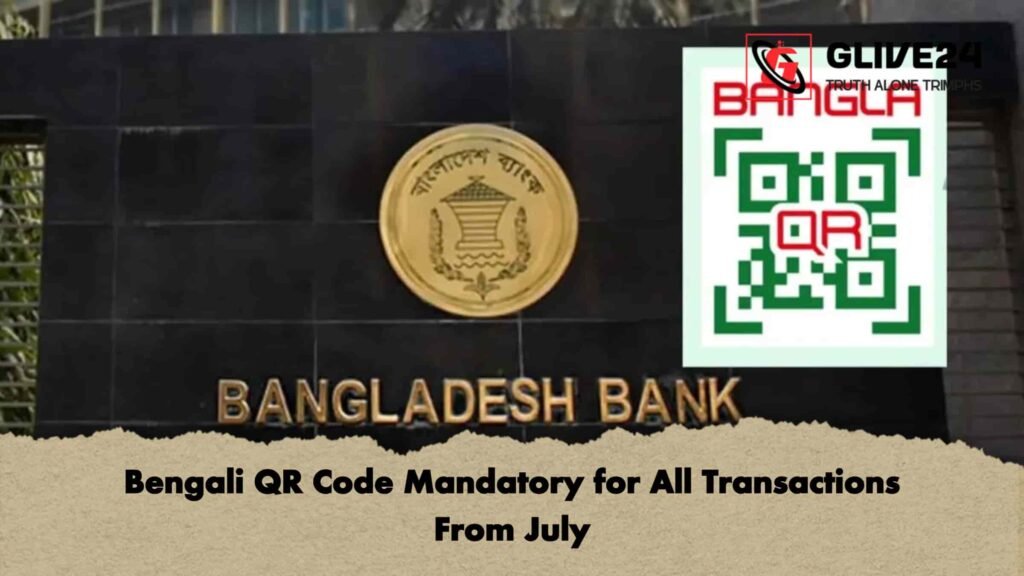
Starting July 2026, all digital transactions at merchant points across Bangladesh must exclusively use the Bengali QR code, according to a new directive from Bangladesh Bank. Transactions via any other QR code or digital payment system will no longer be permitted.
The central bank has mandated that all banks, mobile financial service (MFS) operators, and payment service providers implement the Bengali QR code across all merchant outlets. The initiative is aimed at standardising digital payments, enhancing interoperability, and reducing reliance on cash.
The directive specifies that all merchant points must replace their existing proprietary QR codes with the Bengali QR code by 30 June 2026. The central bank has also instructed institutions to address any technical challenges and ensure smooth cross-platform transaction compatibility.
Mostak Ahmed, Governor of Bangladesh Bank, highlighted that the measure is designed to encourage digital transactions and reduce cash usage nationwide. The April 1 notification further warns that any merchant point continuing to operate cash-outs or transactions using non-Bengali QR codes will have their QR licence revoked.
Several major MFS operators currently use their proprietary QR codes across more than one million merchant points. Transitioning to the Bengali QR code, while necessary, will involve logistical challenges and additional expenses for these institutions.
| Aspect | Details |
|---|---|
| Effective Date | July 2026 |
| Transition Deadline | 30 June 2026 |
| Coverage | All merchant points nationwide |
| Responsible Parties | Banks, MFS providers, transaction operators |
| Current Merchant Points | Over 1,000,000 using proprietary QR codes |
| Pilot Launch | January 2023 (1,200 small businesses) |
| Enforcement | Non-compliance leads to QR licence cancellation |
The Bengali QR code was first introduced in January 2023, initially covering 1,200 small businesses. While the pilot phase faced difficulties, the central bank now plans full-scale enforcement nationwide, making adoption compulsory.
Experts suggest that the unified QR system will require MFS operators to share transaction data and revenue, a change some companies are hesitant to accept. Observers note that introducing incentives could help overcome initial resistance and ensure smoother implementation.
Bangladesh Bank has stressed that any institution failing to comply with the mandatory Bengali QR code system will face legal consequences under existing regulations. The move represents a major step towards a fully digitised and interoperable payment ecosystem in the country.