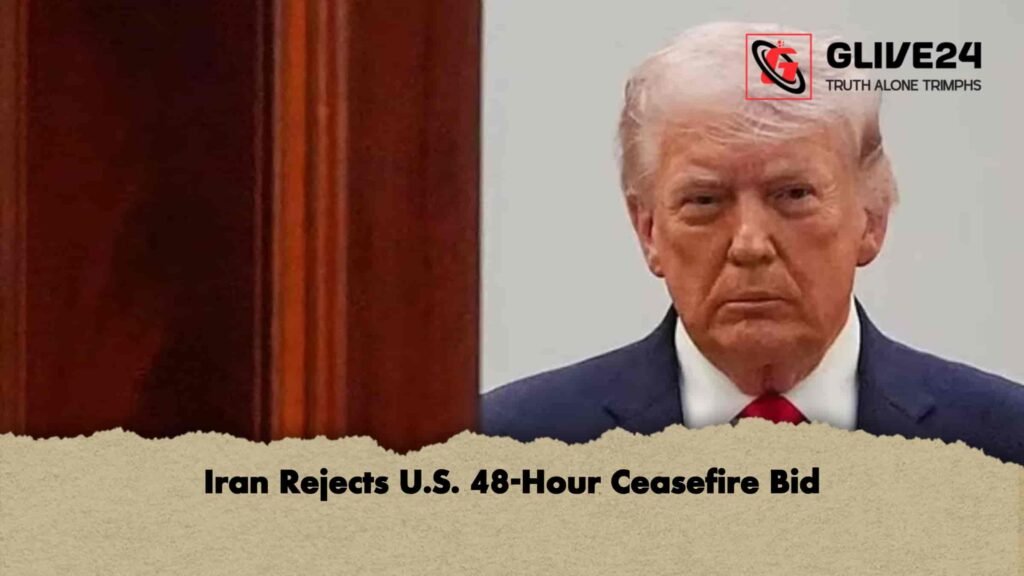
Iran has reportedly rejected a 48‑hour ceasefire proposal from the United States, according to the semi‑official Fars news agency, citing an anonymous source. The offer was said to have been delivered on Wednesday through an unnamed friendly third nation, but Tehran chose not to provide a written response. The United States has not confirmed or publicly commented on the proposal.
The refusal comes amid intensifying tensions across the Middle East, with Iranian forces continuing to engage in military operations despite diplomatic overtures. According to Fars, the rejection followed a series of Iranian retaliatory attacks, including drone and missile strikes on US and allied military positions. Analysts suggest that Iran’s decision signals a determination to maintain pressure on US and Israeli forces rather than temporarily halt hostilities.
Conflict Overview
The current escalation traces back to 28 February 2026, when coordinated US and Israeli strikes targeted Iranian military positions, resulting in significant casualties. Sources report that at least 1,340 individuals have been killed since the beginning of the strikes, including military personnel and civilians. Iran has responded with attacks on Israel, Jordan, Iraq, and Gulf states hosting US bases, deploying drones and missiles in a strategy aimed at both retaliation and deterrence.
A recent assault on a US military facility on Bubiyan Island, Kuwait, has been highlighted as a key factor prompting Washington’s temporary ceasefire proposal. The move underscores the heightened risks and operational challenges faced by US forces in the region.
Details of the Ceasefire Proposal
Although the exact contents of the 48‑hour ceasefire offer have not been made public, media reports suggest the following:
| Element | Reported Details |
|---|---|
| Duration | 48‑hour temporary truce |
| Delivery Method | Via an unnamed third-party country |
| Iran’s Response | Rejected; no written acceptance; continued attacks |
| US Confirmation | No official statement |
| Regional Context | Proposed amid ongoing US-Iran-Israel hostilities |
Sources: Reuters, Anadolu Agency, The Hindu.
Strategic and Diplomatic Implications
Iran’s refusal highlights deep mistrust between Washington and Tehran and reflects Iran’s confidence in its operational capabilities. Diplomatic analysts suggest that the rejection may also signal Iran’s scepticism over US intentions and its unwillingness to halt offensive actions in a high-stakes conflict.
Efforts by international intermediaries, including Gulf states, have so far failed to mediate a pause in hostilities. As the conflict continues, the region faces heightened instability, potential disruptions to global energy markets, and escalating humanitarian concerns. Without renewed diplomatic engagement, the stalemate appears likely to persist, prolonging both military and political risks across the Middle East.