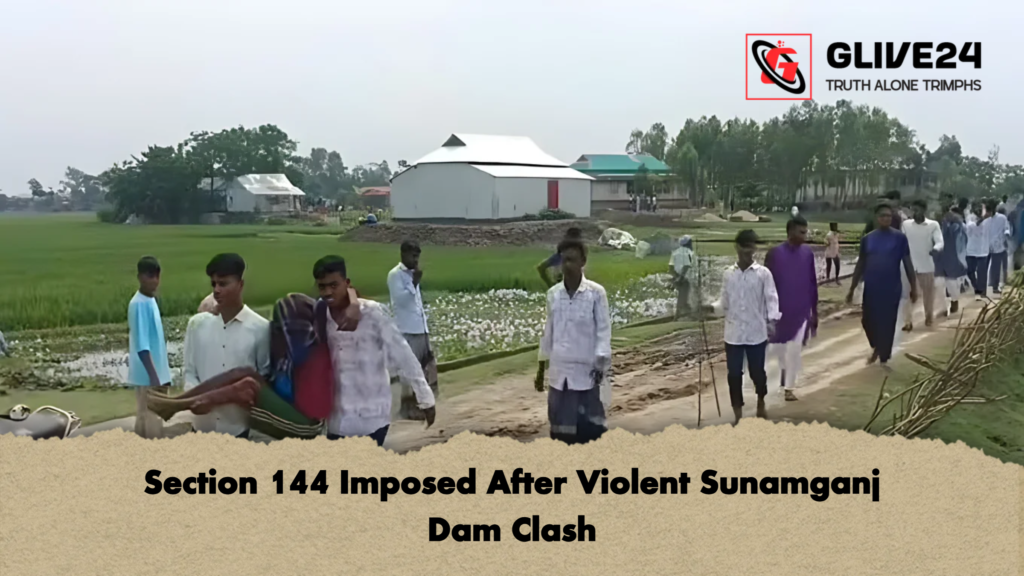
A violent confrontation erupted on Saturday in the Sunamganj Sadar Upazila over the strategic breaching of an embankment in Dakuar Haor. The skirmish, which left at least 15 individuals injured, highlights the desperate struggle of local farmers to protect their livelihoods against rising floodwaters. In response to the escalating volatility, local authorities have imposed Section 144, strictly prohibiting gatherings to prevent further bloodshed.
The Catalyst: Agriculture and Heavy Rainfall
The wetlands of Dakuar Haor serve as the agricultural backbone for several villages across the Mohanpur and Kathoir unions. Following several days of relentless torrential rain, the haor (a wetland ecosystem) suffered from severe waterlogging. With the Boro paddy harvest—the region’s primary crop—at stake, farmers faced a harrowing dilemma.
The dispute arose from a fundamental geographical conflict:
-
The Pro-Breach Group: Farmers from Noagaon and Ulutul villages argued that cutting the embankment was essential to drain stagnant water and save their drowning crops.
-
The Opposition Group: Residents of Mohanpur, Sardarpur, and Joynagar opposed the move, fearing that breaching the dam would divert the floodwaters directly into their own low-lying fields, causing irreparable damage.
A Breakdown of Diplomacy
On Friday, tensions peaked when residents of Noagaon made an initial attempt to cut the dam. To prevent a riot, the district administration intervened, summoning representatives from both sides to the District Magistrate’s office on Saturday morning.
During this emergency hearing, the Additional District Magistrate (ADM) ordered the formation of an expert committee to inspect the site and provide a balanced solution. However, diplomacy proved too slow for the rising tide. Even as the meeting was in progress, reports reached the office that a group from the Kathoir Union had proceeded to breach the embankment unilaterally.
The Conflict and Administrative Response
The news triggered an immediate retaliatory mobilization. Villagers from Mohanpur rushed to the site to halt the demolition, leading to a fierce clash involving sticks, stones, and indigenous weapons. At least 15 people sustained injuries, several of whom required urgent care at the Sunamganj Sadar Hospital.
| Affected Unions | Involved Villages | Stance on Embankment |
| Mohanpur Union | Mohanpur, Sardarpur, Joynagar | Against breaching (Fear of flooding) |
| Kathoir Union | Noagaon, Ulutul | For breaching (To drain stagnant water) |
| Sunamganj Sadar | Local Administration | Neutral (Ordered 144, Committee formed) |
Current Status and Legal Measures
To restore order, the administration invoked Section 144 of the Code of Criminal Procedure, effectively locking down the embankment area. This legal measure bans any assembly of five or more people and the carrying of weapons.
Sub-Inspector Mohammad Nuruzzaman of the Sunamganj Sadar Police Station confirmed that a significant police contingent remains deployed at the scene. “The situation is currently stable but remains sensitive. We are maintaining a high-visibility presence to ensure the ADM’s committee can conduct their assessment without further interference,” he stated.
This incident underscores the precarious nature of farming in Bangladesh’s haor regions, where the margin between a successful harvest and total economic ruin is often a single earthen dam. Local leaders are now calling for a permanent drainage solution to prevent such communal strife in future monsoon seasons.