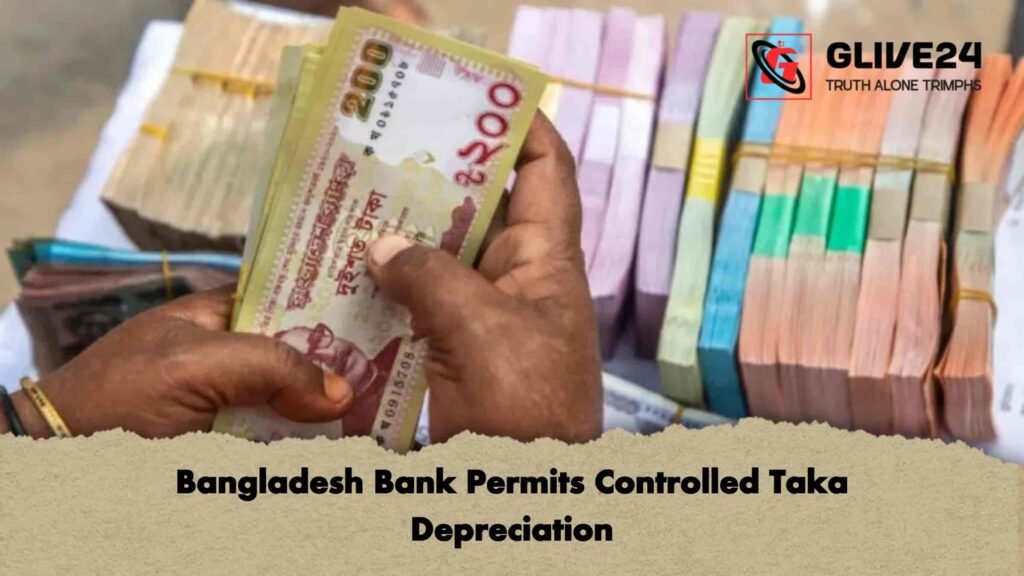
The Bangladesh Bank has begun allowing a measured depreciation of the taka against the US dollar, reversing its earlier policy of actively defending the currency. This policy shift, initiated in March, responds to the sharp rise in global energy prices triggered by the ongoing Iran conflict, which has intensified pressures on import payments, foreign exchange reserves, and domestic inflation.
The central bank faces a complex challenge: maintaining price stability while ensuring sufficient foreign exchange reserves. Rising fuel import costs risk depleting reserves and amplifying inflationary pressures. A controlled depreciation of the taka is seen as a strategic response to manage these dual risks.
Why Depreciation Is Necessary
Although depreciation can be inflationary, Bangladesh Bank officials consider it essential, given the Real Effective Exchange Rate (REER) indicates the taka remains overvalued relative to major trading partners. Controlled depreciation is also expected to support exports and remittance inflows, which may slow amid regional uncertainties caused by the Middle East crisis.
Ezazul Islam, Director General of the Bangladesh Institute of Bank Management (BIBM), noted that gradual depreciation is prudent, particularly in the context of upcoming expansionary fiscal policies and post-election loan demand. “Allowing the taka to depreciate gradually will create a buffer against potential shocks if international instability continues,” he said.
A senior Bangladesh Bank executive highlighted that the pace of depreciation is deliberately slower than in India, whose more undervalued currency makes Indian imports cheaper for Bangladeshi consumers. A measured decline of the taka will enhance export competitiveness, encourage resource allocation toward export-oriented sectors, and make domestic products more competitive against imports.
Exchange Rate Trends and Band
The taka has depreciated gradually since 8 March, moving close to Tk123 per dollar after remaining stable at Tk122.30 for several months. According to REER calculations, based on 17 major currencies and inflation adjustments, the current rate of Tk126 suggests a potential room for Tk3.24 further depreciation.
The central bank employs an internal daily exchange rate band, designed per IMF recommendations, with a lower limit of Tk125 and an upper limit of Tk130. The current rate remains below the lower band, allowing flexibility for depreciation without using reserves.
| Indicator | Value | Observation |
|---|---|---|
| Current interbank rate | Tk122.75/USD | As of 30 March |
| REER | Tk126 | Overvaluation relative to trade partners |
| Exchange rate band | Tk125 – Tk130 | Internal monitoring only |
| FX reserves | $29.29 billion | Down from $29.59 billion two weeks prior |
| Potential depreciation | Up to 5.6% | Until upper band is reached |
Economic Risks and Forecasts
An internal Bangladesh Bank study forecasts that a combined oil price and exchange rate shock could reduce foreign exchange reserves by $6.5 billion by 2026. Inflation may rise by 0.5–2 percentage points above the baseline of roughly 10.5% if global fuel prices remain elevated. The study recommends allowing gradual currency depreciation, partial domestic fuel price adjustments, and a contractionary monetary stance.
To mitigate short-term balance of payments pressures, Bangladesh Bank plans to request emergency IMF support for fuel imports, separate from the ongoing $4.7 billion programme, with $1.5 billion expected by June. Discussions are also underway for a $2 billion credit line to strengthen reserves.
Market Practices and IMF Guidance
Despite allowing depreciation, the process is still partly influenced by price guidance, with banks reportedly instructed to trade dollars within specific ranges. The IMF has raised concerns, advocating for market-determined exchange rates to ensure transparency and efficiency.
Overall, the central bank’s gradual depreciation strategy aims to protect reserves, support exporters, and provide a buffer against international price shocks while navigating complex domestic economic pressures.