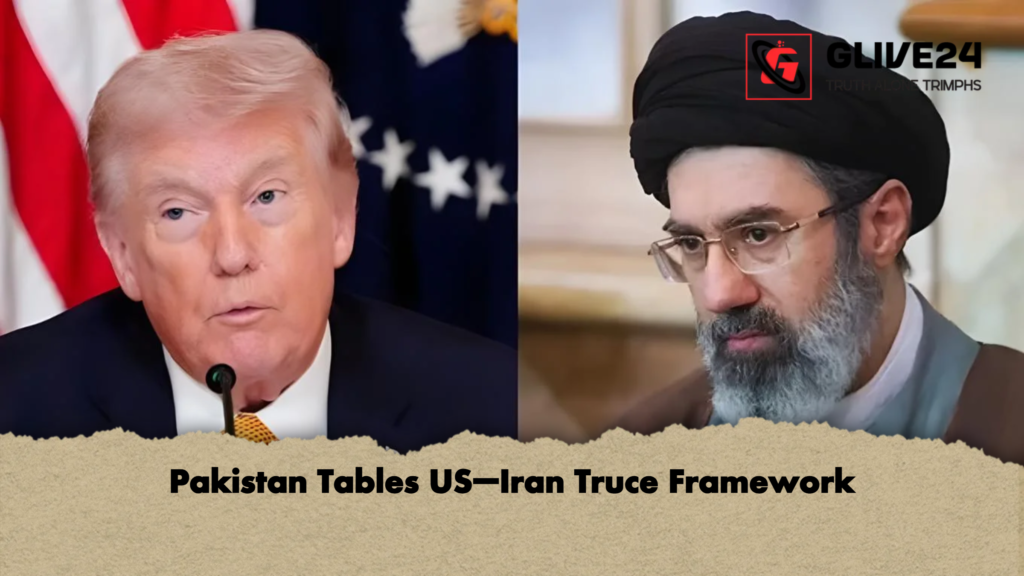
Pakistan has reportedly put forward a structured ceasefire proposal aimed at halting the escalating tensions between the United States and Iran, with hopes that the arrangement could take effect as early as Monday (6 April). According to diplomatic sources cited by The Express Tribune, the initiative also envisions the gradual reopening of the strategically vital Strait of Hormuz, a key artery for global energy shipments.
The proposal, which was transmitted overnight to both Washington and Tehran, is understood to outline a two-phase roadmap. The first phase calls for an immediate cessation of hostilities, while the second focuses on negotiating a comprehensive and durable peace settlement. Pakistani officials are said to be facilitating communications as the sole intermediary channel between the two sides.
Earlier reporting by US outlet Axios suggested that discussions have already been underway involving the United States, Iran, and regional mediators, exploring a potential 45-day interim ceasefire designed to transition into a longer-term agreement.
Diplomatic sources further claim that Pakistan’s Chief of Army Staff, Field Marshal Asim Munir, has been engaged in sustained high-level contacts with US Vice President JD Vance, special envoy Steve Witkoff, and Iranian Foreign Minister Abbas Araghchi. These engagements are believed to have helped shape the emerging framework.
A central component of the plan is the immediate restoration of maritime traffic through the Strait of Hormuz upon implementation of the ceasefire. The subsequent phase envisions a broader agreement to be concluded within 15 to 20 days, potentially culminating in what has been tentatively referred to as the “Islamabad Accord”. This proposed agreement could establish a regional maritime security and governance structure for the strait, with final negotiations expected to take place in Islamabad through direct talks.
However, neither Washington nor Tehran has issued any formal response to the proposal thus far. Pakistan’s Foreign Office spokesperson, Tahir Andrabi, has declined to comment on the matter.
Iranian officials, meanwhile, have previously indicated that any sustainable ceasefire must include guarantees against future military strikes by both the United States and Israel. They have also acknowledged receiving messages through multiple intermediaries, including Pakistan, Türkiye, and Egypt.
According to additional diplomatic briefings, the prospective final agreement may involve Iran committing to scaling back its nuclear weapons-related activities. In return, discussions could include the easing of sanctions and the unfreezing of Iranian assets held abroad. Nonetheless, Pakistani sources suggest that Tehran has not yet formally agreed to the current proposal, despite intensified diplomatic and military-level engagement.
The stakes remain high, particularly given the Strait of Hormuz’s role in global energy supply chains. Any disruption in navigation through the waterway could trigger volatility in international oil markets, compounding existing economic pressures.
US President Donald Trump has recently urged rapid progress towards a ceasefire, warning of unspecified consequences should negotiations fail to produce results within a limited timeframe.
Proposed Framework Overview
| Phase | Key Measures | Timeline | Expected Outcome |
|---|---|---|---|
| Phase 1 | Immediate ceasefire; restoration of maritime navigation in Strait of Hormuz | Immediate (from 6 April) | De-escalation of military tensions |
| Phase 2 | Comprehensive peace negotiations; potential sanctions relief and nuclear commitments | 15–20 days | Long-term settlement and regional stability |
| Final Stage | “Islamabad Accord” regional maritime framework | Post-negotiation | Institutionalised security mechanism for Hormuz |
Analysts suggest that if the initiative succeeds, it could significantly reduce regional instability while restoring confidence in global energy markets. However, the outcome remains uncertain and is heavily dependent on Iran’s final stance and the willingness of all parties to commit to sustained diplomatic engagement.