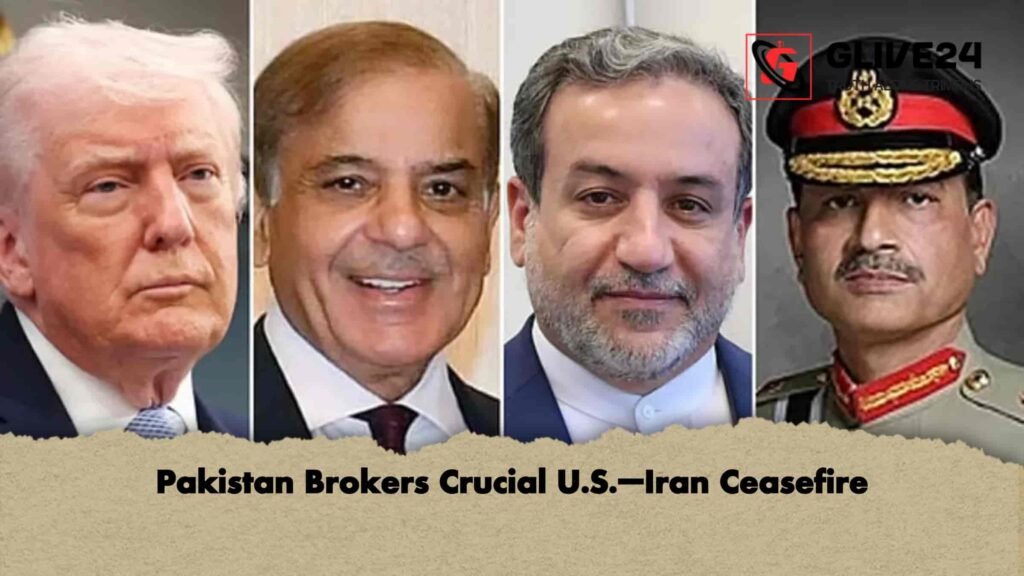
In a remarkable diplomatic achievement, the United States and Iran have agreed to a two-week ceasefire, facilitated by Pakistan. Iran’s Foreign Minister, Seyed Abbas Araghchi, publicly acknowledged the pivotal role of Pakistan’s Prime Minister Shahbaz Sharif and Chief of Army Staff Asim Munir. In a social media post, he addressed them as “my dear brothers” and expressed gratitude for their “tireless efforts.” The message was subsequently shared by U.S. President Donald Trump on his platform, signalling Washington’s endorsement of Islamabad’s mediation.
Prime Minister Sharif took to X (formerly Twitter) to announce the ceasefire, stating, “With utmost humility, I declare that Iran and the United States have agreed to an immediate ceasefire across all fronts, including Lebanon, which is now in effect.” He praised the foresight of both nations’ leadership, expressed gratitude, and invited delegations from Tehran and Washington to Islamabad on 10 April for in-depth negotiations aimed at establishing durable peace.
According to CBS News, prior to finalising the ceasefire, President Trump consulted with Israeli Prime Minister Benjamin Netanyahu and Pakistan’s Field Marshal Munir. Pakistan’s army chief maintained continuous communication with U.S. Vice President JD Vance, special envoy Steve Witkoff, and Araghchi throughout the night, facilitating the exchange of proposals and responses.
Timeline of Pakistan’s Mediation
| Date | Key Participants | Action | Outcome |
|---|---|---|---|
| 29 March | Pakistan, Turkey, Saudi Arabia, Egypt | Preliminary discussions | Islamabad positioned as mediator |
| Early April | Field Marshal Munir & U.S./Iran officials | Night-long communications | Draft ceasefire shared and reviewed |
| 7–8 April | Trump, Netanyahu, Munir | Strategic consultations | Agreement on two-week ceasefire reached |
Pakistan’s credibility stems from its longstanding diplomatic ties with Iran and neutral stance regarding Israel, enhancing Tehran’s confidence. Meanwhile, U.S.-Pakistan relations have strengthened, with Islamabad actively participating in peace initiatives, including the Gaza-focused “Board of Peace.”
For Pakistan, the ceasefire holds profound strategic and economic significance. The nation depends on Middle Eastern oil and the remittances of expatriate workers. Rising tensions had caused surges in global oil prices, placing severe pressure on the domestic economy. Regional instability—from Afghanistan to India and Iran—also posed additional risks.
Despite this success, the ceasefire remains precarious. Islamabad’s role as mediator carries high stakes: any breakdown could damage its diplomatic credibility, potentially embroiling the country in renewed conflict. Balancing relationships with Washington and Tehran while safeguarding domestic stability remains Pakistan’s central challenge.