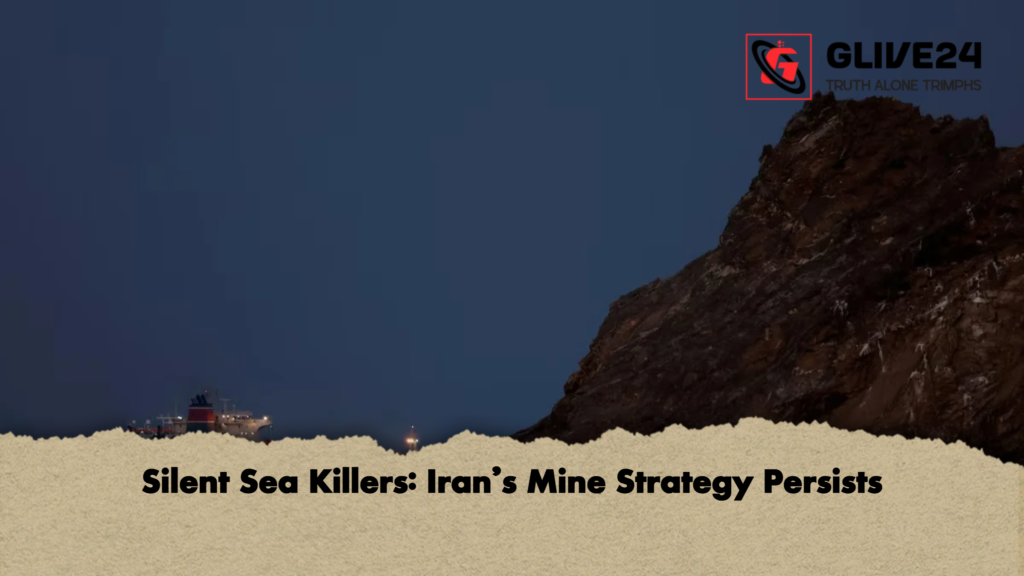
The tranquil blue waters of the Persian Gulf hide a perilous legacy, one that continues to haunt global powers decades after it first emerged. In 1987, a small boat drifting silently near Farsi Island signalled to the world that colossal American warships were vulnerable. The attack on the 414,000-ton American oil tanker SS Bridgeton demonstrated that a handful of naval mines could render modern military might ineffective—without a single missile fired. Iran’s tactical ingenuity and audacity overshadowed even the most sophisticated naval assets.
The Bridgeton incident remains one of the most embarrassing chapters in U.S. naval history. During Operation Earnest Will, the United States deployed advanced destroyers to protect Kuwaiti tankers. Yet, despite their technological edge, American warships struggled to counter the threat. A combination of mine strikes and inadequate detection systems forced U.S. vessels to seek shelter behind the very tanker they were protecting. Iran’s demonstration revealed that a $15 mine could neutralise assets worth billions.
| Event | Year | Description |
|---|---|---|
| Bridgeton Mine Strike | 1987 | Iranian naval mines crippled the U.S. tanker SS Bridgeton |
| Operation Earnest Will | 1987 | U.S. Navy escorted Kuwaiti oil tankers amid Iran-Iraq tensions |
| Aftermath | 1987 | U.S. destroyers sought refuge due to ineffective mine detection |
Fast forward to 2026, and the same strategy has reignited tensions in the Strait of Hormuz. In light of escalating conflicts with Israel, Iran has reportedly deployed Mahm-3 to Mahm-7 series mines along the strategic waterway. Unlike conventional mines, Mahm devices are domestically produced, capable of months-long submersion, and feature gold-coated casings that absorb sonar signals, making detection extremely difficult.
These mines are equipped with multi-sensor arrays that detect minute magnetic fields, engine vibrations, and subtle changes in water pressure. Despite strong warnings from U.S. President Donald Trump, these silent killers have disrupted global commerce, reducing shipping through the Strait by nearly 90%.
| Mine Type | Technology | Active Duration | Special Features |
|---|---|---|---|
| Mahm-3 | Iranian domestic | 1 month | Magnetic & pressure sensors, sonar-resistant coating |
| Mahm-5 | Iranian domestic | 3 months | High-sensitivity multi-sensor detection |
| Mahm-7 | Advanced Iranian | 6+ months | Detects ships’ magnetic & vibration signatures |
The situation is exacerbated by U.S. naval limitations. By 2025, older mine-sweeping vessels were retired, leaving reliance on littoral combat ships dependent on drones and helicopters. The effectiveness of these platforms against Mahm mines remains uncertain.
Attention has turned to British expertise. The Royal Navy, famed since World War II for mine countermeasures, continues to innovate. Modern “degaussing” methods, once used to protect ships from German mines, are now paired with robotic submarines, AI-assisted detection, and laser-based scanning—techniques collectively dubbed the British “broom” for cleaning underwater hazards.
Despite emerging technologies and diplomatic developments, the precise number of active mines beneath the Strait remains unknown. The Persian Gulf’s undersea battlefield underscores a simple truth: while the form of weapons evolves, Iran’s stealthy mine warfare continues to shape modern geopolitics, silently controlling the movement of nations’ commerce and military assets beneath the blue waves.