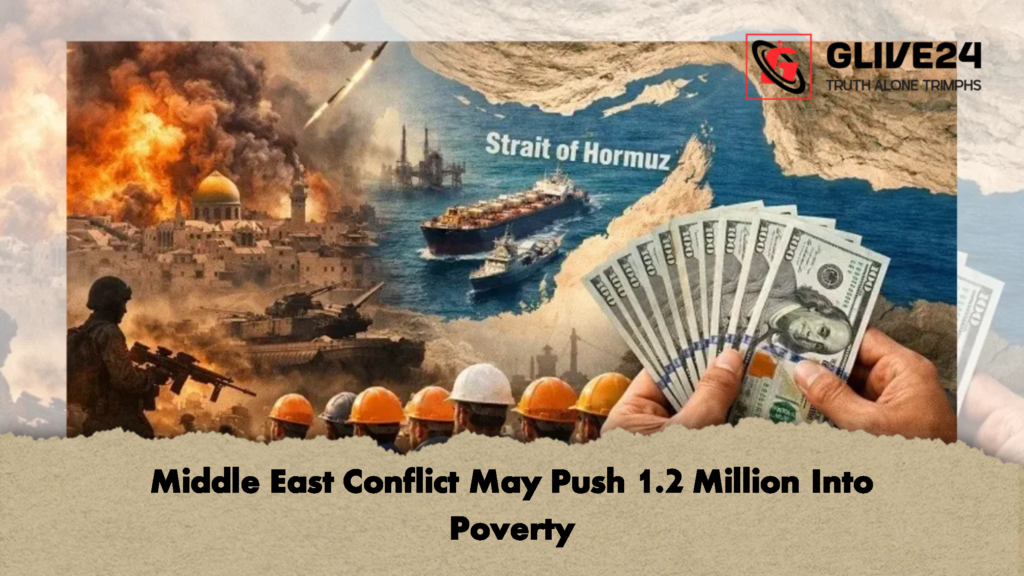
A new assessment by the World Bank warns that escalating geopolitical tensions in the Middle East could significantly deepen economic hardship in Bangladesh, potentially pushing an additional 1.2 million people below the poverty line this year. The report underscores how external shocks, combined with persistent inflationary pressures and domestic structural weaknesses, are eroding earlier gains in poverty reduction.
The findings are presented in the April edition of the Bangladesh Development Update, launched at a briefing in Dhaka. The analysis was delivered by senior economist Dhruv Sharma alongside other World Bank officials responsible for Bangladesh operations.
At the centre of the projection is a sharp downward revision of earlier expectations. Prior to the escalation of conflict, it was estimated that around 1.7 million Bangladeshis would move above the poverty threshold in 2025. Under current global conditions, however, only about 500,000 are expected to do so. This implies that approximately 1.2 million people who would have escaped poverty are now likely to remain below the line.
Table of Contents
Poverty Trends Under Renewed Pressure
The report highlights a worrying upward trend in poverty over recent years. Using the international benchmark of USD 3 per day for working-age individuals, Bangladesh’s poverty rate has risen from 18.7% in 2022 to 21.4% in 2025. During this period, an estimated 14 million people have fallen into poverty.
Under a stable global scenario without conflict-related disruptions, poverty was projected to decline to around 19.3% by 2028. However, the report notes that this trajectory is now increasingly uncertain due to heightened external volatility.
Growth Outlook Weakens Amid Global Uncertainty
The World Bank has also revised Bangladesh’s macroeconomic outlook downward, forecasting GDP growth of just 3.9% for the 2025–26 fiscal year. The weaker outlook reflects subdued external demand, persistent inflation, and disruptions in global trade flows linked to geopolitical instability.
Key Transmission Channels of Impact
The report identifies six major channels through which Middle East tensions are expected to affect Bangladesh’s economy:
| Impact Channel | Expected Effect |
|---|---|
| External balance | Pressure on current account via trade, remittances, and currency depreciation |
| Economic growth | Reduced consumption and investment slowing GDP expansion |
| Inflation | Higher fuel and transport costs driving price increases |
| Poverty levels | Up to 1.2 million additional people pushed into poverty |
| Fiscal pressure | Rising subsidy costs, particularly for fuel and fertiliser |
| Inequality | Gini coefficient projected to rise by 0.2% in 2026 |
Inflation, Wages and Employment Challenges
The report points to persistent inflation, weak real wage growth, and slowing job creation as key domestic factors worsening living standards. Rising prices have significantly eroded household purchasing power, particularly among low-income groups, while employment growth has lagged behind labour supply pressures.
It also warns that income inequality is likely to widen further. The projected increase in the Gini coefficient, though modest, signals uneven recovery patterns across different income segments of the population.
Policy Concerns and Reform Priorities
At the Dhaka briefing, Jean-Pascal Nguessa highlighted structural challenges facing Bangladesh, particularly in revenue mobilisation and external competitiveness. He noted that fiscal constraints, combined with trade pressures such as countervailing tariffs, are limiting the country’s economic resilience.
While acknowledging ongoing reform efforts, he stressed the importance of sustaining and accelerating them. However, he cautioned that implementing meaningful reforms would be more difficult under current global conditions, making short-term policy responses increasingly critical.
Outlook: Heightened Risks to Poverty Reduction Gains
Overall, the World Bank’s outlook suggests that Bangladesh’s progress in reducing poverty is facing renewed setbacks from both global shocks and domestic structural constraints. Although long-term development objectives remain intact, the near-term path is increasingly vulnerable to geopolitical instability, inflationary pressures, and slowing growth momentum.
Without timely policy intervention—particularly in fiscal management, job creation, and inflation control—the risk of rising poverty and widening inequality is expected to persist well into the medium term, potentially reversing years of incremental progress.