
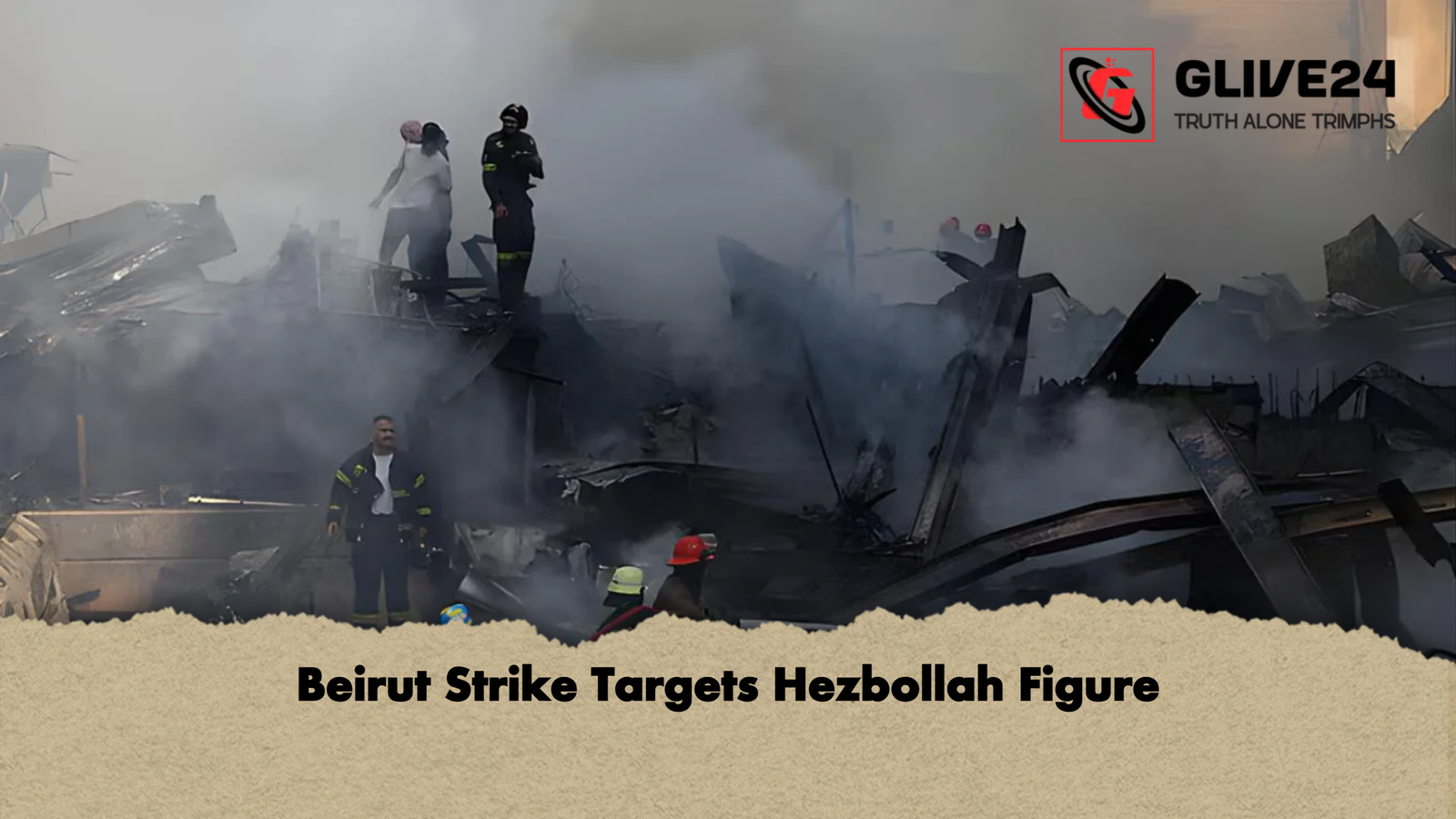
Israeli military authorities have claimed responsibility for a targeted strike in the Lebanese capital, Beirut, asserting that it killed a close associate of Hezbollah’s senior leadership. The individual identified as the victim is Ali Yusuf Harshi, described as both the nephew and personal secretary of Hezbollah’s deputy leader Naeem Qassem.
In a statement released on Thursday, the Israel Defense Forces said the operation was conducted late on Wednesday night, based on what it described as precise intelligence. According to the statement, the strike was carried out at a specific location in Beirut and successfully eliminated Harshi, whom it accused of playing a significant role within Hezbollah’s strategic and operational networks. Israeli officials characterised the action as part of a broader policy of targeted strikes aimed at weakening militant command structures and disrupting coordination within hostile organisations.
Lebanese authorities have not issued an immediate or detailed official response regarding the incident. However, local reports indicate that the strike caused heightened tension in the affected area, prompting increased security deployments. Residents in parts of Beirut reportedly experienced alarm following the explosion, with many expressing concern over the potential for further escalation amid already fragile regional conditions.
The incident comes at a time of sustained volatility in the Middle East, where tensions between Israel and Hezbollah have been steadily intensifying. Analysts suggest that the killing of a figure so closely connected to Hezbollah’s senior leadership could carry implications beyond the immediate tactical outcome. It may signal an attempt to disrupt internal communication channels and exert psychological pressure on the organisation’s command hierarchy.
Hezbollah, a powerful political and military force in Lebanon, has long maintained a complex and adversarial relationship with Israel. Targeted operations of this nature are often viewed as part of a wider strategic contest between the two sides, with both seeking to assert deterrence while avoiding full-scale war.
The broader regional context remains highly sensitive, with fears that retaliatory actions could trigger further exchanges of force along the Israel-Lebanon border. Diplomatic observers warn that even limited escalations risk widening into a broader confrontation, given the interconnected nature of current regional conflicts.
Incident Summary
| Aspect | Details |
|---|---|
| Location of strike | Beirut, Lebanon |
| Time of incident | Late Wednesday night |
| Reported victim | Ali Yusuf Harshi |
| Position | Hezbollah secretary and nephew of senior leadership |
| Claimed responsibility | Israel Defense Forces |
| Stated objective | Disruption of militant command structure |
| Regional context | Heightened Israel–Hezbollah tensions |
Overall, the strike is being interpreted by analysts not merely as a tactical operation, but as part of an evolving strategic struggle that could further destabilise an already fragile regional security environment.