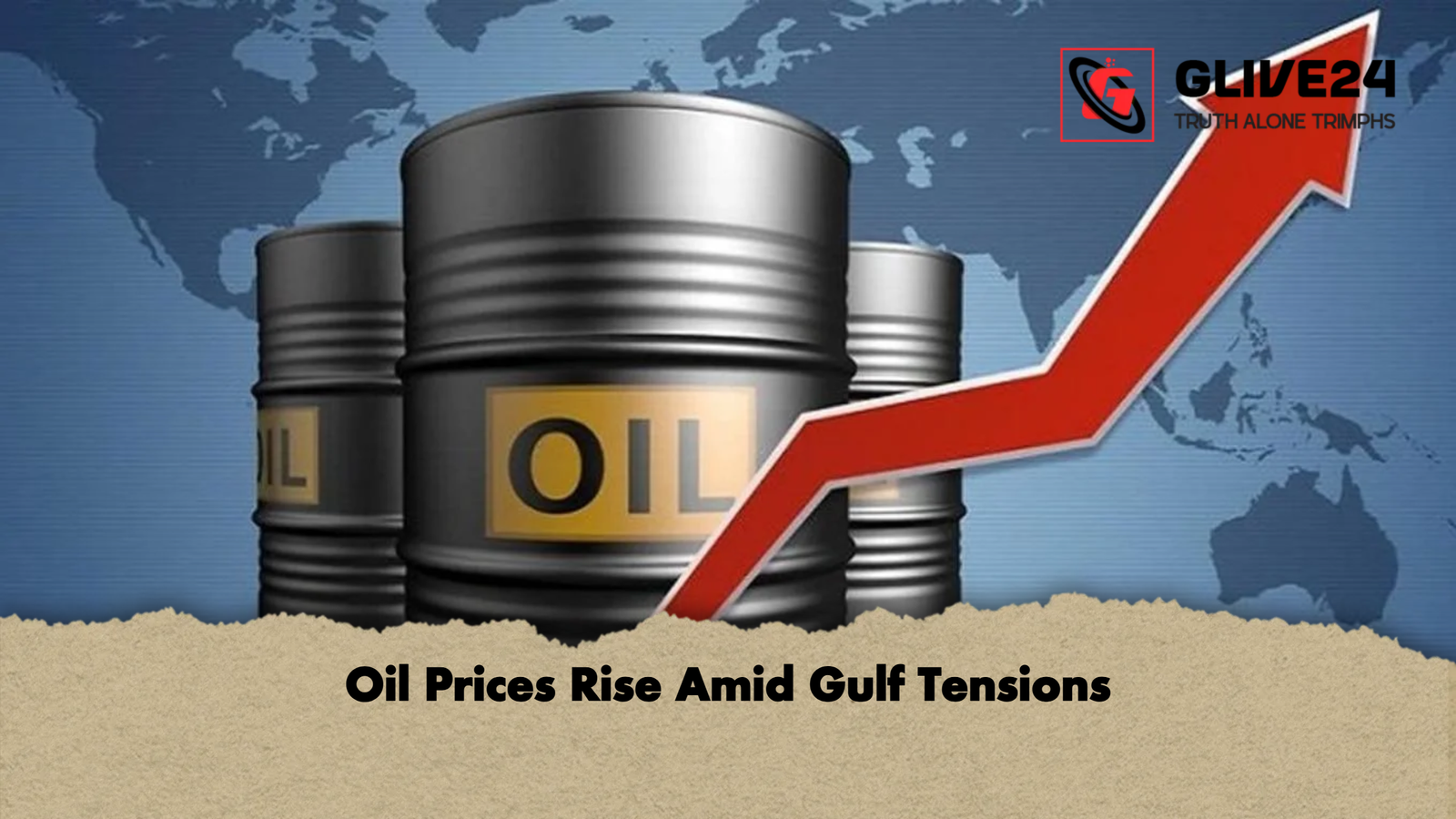
Renewed geopolitical strain across the Middle East, coupled with disruptions to critical maritime routes, has once again unsettled global energy markets. The impact has been particularly pronounced in the Strait of Hormuz, where partial restrictions on shipping have triggered a fresh surge in crude oil prices on international exchanges.
As trading opened in Asian markets early Friday, Brent crude climbed to approximately $96.75 per barrel, marking an increase of around 0.87 per cent compared with the previous session. At the same time, US West Texas Intermediate (WTI) crude recorded a rise of over one per cent. Market analysts suggest that growing fears of supply shortages, alongside heightened uncertainty, have driven investors towards oil as a relatively secure asset, thereby reinforcing upward price momentum.
The underlying driver of the current volatility is the intensifying instability across the Middle East. Although a fragile ceasefire remains in place between Iran and the United States, ongoing Israeli military operations in Lebanon have added further complexity to an already delicate regional balance. These developments have placed vital energy supply corridors under increased threat, with immediate repercussions for global markets.
The strategic significance of the Strait of Hormuz cannot be overstated. A substantial proportion of the world’s seaborne oil trade passes through this narrow waterway. Consequently, even limited disruptions can rapidly ripple through global supply chains. Recent security concerns in the area have not only constrained vessel movements but have also raised insurance and transportation costs, compounding the pressure on prices.
Saudi Arabia, one of the world’s leading oil producers, has also experienced notable production setbacks following recent attacks on its energy infrastructure. Official sources indicate that daily output has declined by roughly 600,000 barrels. In addition, throughput via the East–West pipeline has fallen by approximately 700,000 barrels per day, further tightening global supply conditions.
A snapshot of the current situation is presented below:
| Indicator | Level / Change |
|---|---|
| Brent crude price | $96.75 per barrel |
| Daily price increase | প্রায় 0.87% |
| WTI crude increase | Over 1% |
| Saudi production decline | প্রায় 600,000 barrels/day |
| Pipeline transport reduction | প্রায় 700,000 barrels/day |
Experts caution that unless stability returns swiftly to the region, oil prices may continue their upward trajectory. Such a trend would have far-reaching consequences for the global economy, particularly for import-dependent nations. Rising energy costs tend to cascade through transport, manufacturing, and consumer sectors, fuelling inflationary pressures and dampening economic growth.
In summary, the evolving crisis in the Middle East has injected a renewed sense of fragility into global energy markets. While the full long-term implications remain uncertain, the immediate outlook points to sustained volatility and heightened risks for both producers and consumers worldwide.
> Congratulations Warm Birthday Wishes to Bangladesh’s Living Musical Legend, Ferdousi Rahman
> Deschamps Returns After Mother’s Funeral
> Farmer Fatally Stabbed in Kishoreganj Attack
> Benapole Smuggling Case Names Eleven Accused
> Journalist Assault Sparks Condemnation in Kalapara
> Second Arrest Over Dog River Killing
> Tk 90 Million Gazipur Road Collapses After Three Months
> Powerful Afghanistan Quake Shakes South and Central Asia
> Iran launches new strikes against Kurdish groups in Iraq
> Club Goal Rankings in World Cup History
> Anupam Roy Live Concert Announced Dhaka
> Footballer’s Family Missing After Venezuela Quake
> Oxford Authorities Contradict Claims by Hasnat, Sadik
> Two Arrested With Tapentadol
> The Psychology and Philosophy of Unwarranted Defamation
> Sanjoy Joins World Cup Album

সম্পাদক ও প্রকাশক: এ বি এম জাকিরুল হক টিটন
যোগাযোগের ঠিকানাঃ পশ্চিম কাফরুল, বেগম রোকেয়া সরণি, ঢাকা
© Copyright 2026 Khaborwala। All Rights Reserved




Comments