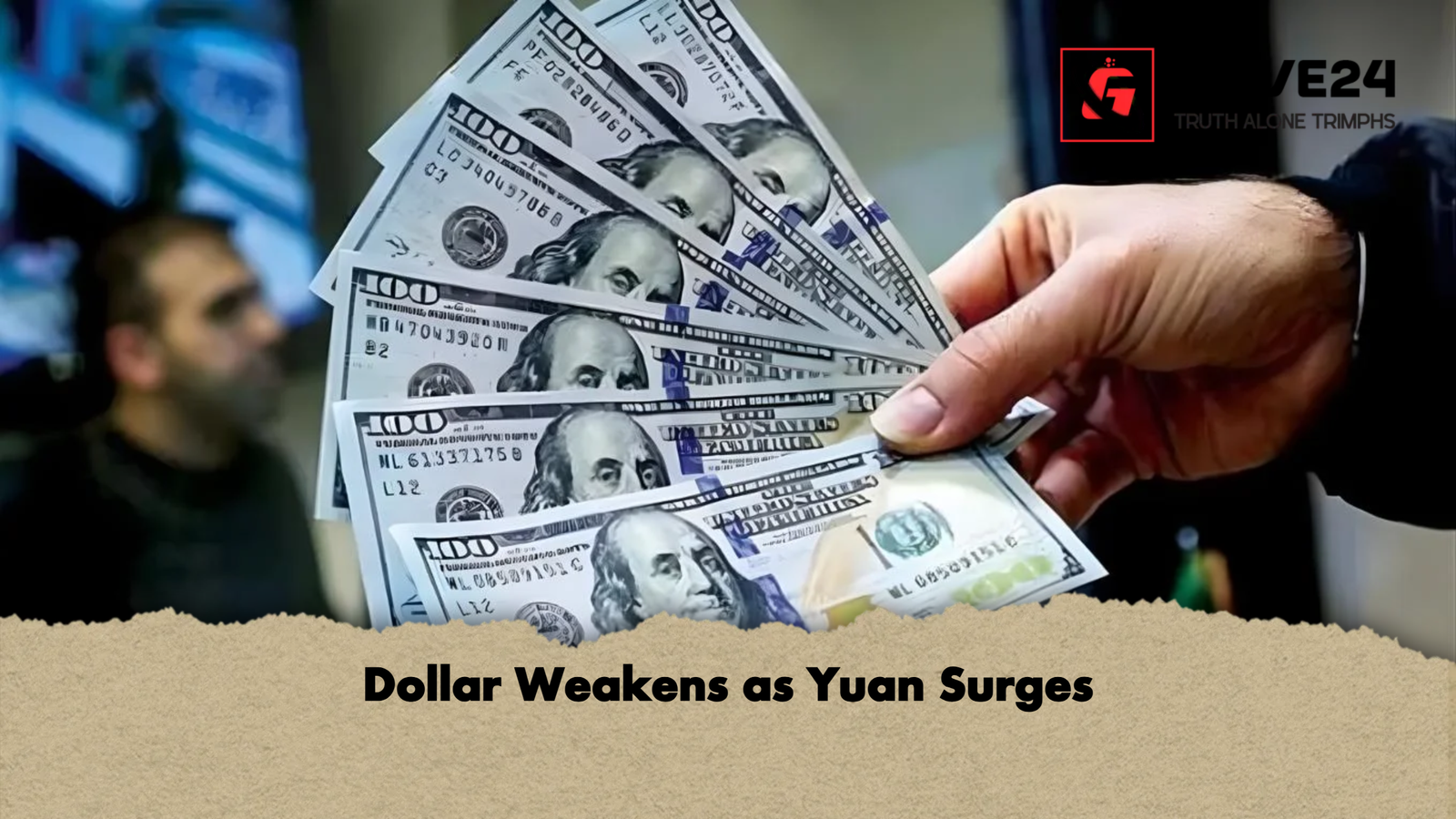
A notable shift has emerged in global currency markets as prolonged geopolitical tensions show tentative signs of easing. The US dollar has come under renewed pressure, recording its sharpest decline since January, while major alternative currencies—particularly the Chinese yuan, the euro, and the British pound—have strengthened, signalling a recalibration in global investor sentiment.
According to market analysts, expectations of stabilised energy flows through the Strait of Hormuz have played a crucial role in restoring confidence across financial markets. As the likelihood of sustained ceasefire arrangements in parts of the Middle East improves, investors are increasingly moving away from traditional safe-haven assets such as the US dollar and reallocating capital into a broader basket of global currencies.
Over the past week, the US Dollar Index fell by approximately 1.3 per cent, marking a significant weekly contraction. In contrast, the euro and the British pound registered steady gains, supported by improved risk appetite and expectations of more predictable monetary policy conditions in Europe. Commodity-linked and Asian currencies also benefited from the shift in sentiment, with the Chinese yuan standing out as the strongest performer.
The yuan’s rise has been particularly striking. It has climbed to its highest level since 2023, defying earlier concerns about slowing economic momentum in China. Economists suggest that this resilience reflects a combination of stronger-than-expected domestic economic stability, improved trade flows, and a broader diversification trend among global investors seeking alternatives to dollar dominance.
Despite China remaining the world’s largest crude oil importer, its currency has continued to appreciate, underscoring the complex interplay between energy dependence and financial inflows. Analysts also point to capital rotation into Asian markets as a contributing factor, as investors reassess geopolitical risk exposure.
Meanwhile, the International Monetary Fund has cautioned that ongoing instability in Iran and wider West Asia could continue to weigh on global growth prospects. IMF Managing Director Kristalina Georgieva warned that even if diplomatic progress is achieved, the global economy may struggle to return quickly to pre-crisis conditions due to lingering structural disruptions.
Energy infrastructure damage and intermittent supply chain disruptions remain key concerns. Economists argue that such vulnerabilities could have lasting effects on industrial output, global trade efficiency, and inflationary pressures in multiple regions. The IMF has already indicated that global growth could moderate to around 3.1 per cent in 2026 if current uncertainties persist.
| Currency / Index | Direction | Recent Status |
|---|---|---|
| US Dollar Index | Decline | Down ~1.3% over the week |
| Chinese Yuan | Rise | Strongest level since 2023 |
| Euro | Rise | Steady upward trend |
| British Pound | Rise | Gradual appreciation |
| Global Currency Market | Stable bias improving | Signs of renewed confidence |
Looking ahead, analysts believe that sustained diplomatic progress in the Middle East could further stabilise currency markets in the coming months. However, they caution that until geopolitical risks and energy security concerns are fully resolved, volatility is likely to remain a defining feature of the global financial landscape.
> Deschamps Returns After Mother’s Funeral
> Farmer Fatally Stabbed in Kishoreganj Attack
> Benapole Smuggling Case Names Eleven Accused
> Journalist Assault Sparks Condemnation in Kalapara
> Second Arrest Over Dog River Killing
> Tk 90 Million Gazipur Road Collapses After Three Months
> Powerful Afghanistan Quake Shakes South and Central Asia
> Four Shot During Cape Verde Victory Celebrations
> Iran launches new strikes against Kurdish groups in Iraq
> Club Goal Rankings in World Cup History
> Anupam Roy Live Concert Announced Dhaka
> Footballer’s Family Missing After Venezuela Quake
> Oxford Authorities Contradict Claims by Hasnat, Sadik
> Two Arrested With Tapentadol
> The Psychology and Philosophy of Unwarranted Defamation
> Sanjoy Joins World Cup Album
সম্পাদক ও প্রকাশক: এ বি এম জাকিরুল হক টিটন
যোগাযোগের ঠিকানাঃ পশ্চিম কাফরুল, বেগম রোকেয়া সরণি, ঢাকা
© Copyright 2026 Khaborwala। All Rights Reserved

Comments