A dramatic and widely circulated incident at the historic shrine of Hazrat Khan Jahan Ali (RA) in Bagerhat has triggered a formal investigation after a video showing a dog being taken by a crocodile in a pond went viral on social media, sparking national debate and widespread speculation.
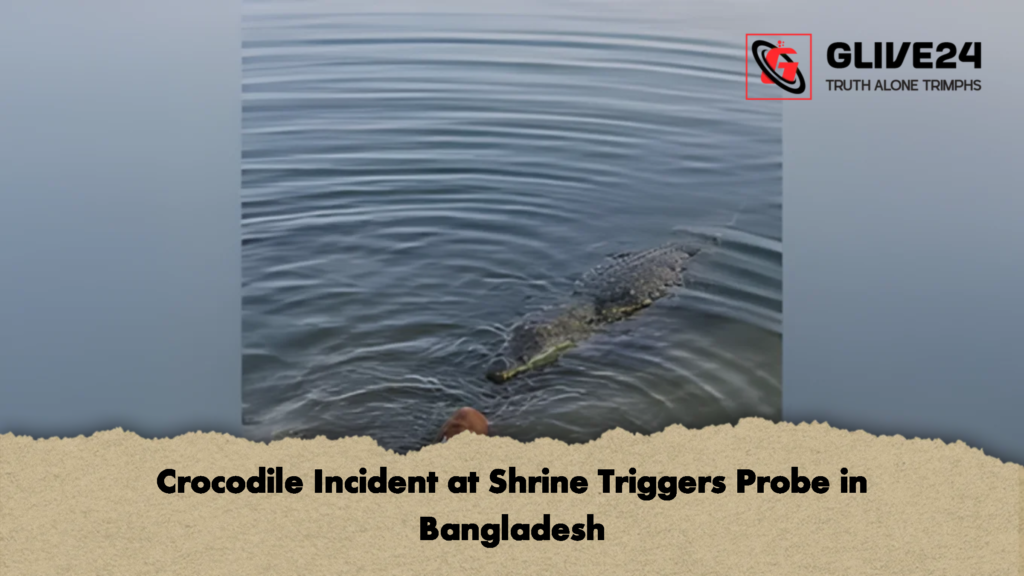
The incident occurred on Wednesday afternoon at the main ghat of the southern pond within the shrine complex. The video, lasting around 56 seconds, shows a dog entering the water before being seized by a crocodile and dragged underwater. The footage quickly spread online, with conflicting claims suggesting either deliberate human involvement or natural predatory behaviour.
Authorities have since formed a three-member inquiry committee led by Atiya Khatun, Upazila Nirbahi Officer of Bagerhat Sadar. A General Diary (GD) has also been filed by the shrine administration, while a post-mortem examination of the animal has been completed under the supervision of the Department of Livestock Services.
Preliminary findings and eyewitness accounts, however, suggest a different sequence of events from what was widely alleged online. According to witnesses, the dog was already in an agitated and unwell condition prior to the incident. It is reported to have bitten several people earlier in the day and had already created panic among visitors.
The animal reportedly entered the shrine premises near the women’s ghat area, where it again attacked a security guard before running towards the pond. At that point, the crocodile—known locally as “Dhola Pahar”, the only crocodile inhabiting the shrine pond—emerged and dragged the dog into the water.
Eyewitnesses stated that visitors and local shopkeepers were present at the time, as the site regularly attracts crowds. The security personnel on duty attempted to control the situation but were unable to intervene once the crocodile struck.
A local shopkeeper, Bina Akhter, claimed the dog had earlier attacked her children and livestock, further supporting the view that the animal was already behaving aggressively before entering the water.
Local resident Mehedi Hasan (Tupu), known for his familiarity with the shrine’s crocodile, noted that the reptile had recently laid eggs and was likely more defensive than usual. He added that intervening during such an encounter would have been extremely dangerous.
Shrine caretaker Fakir Tariqul Islam dismissed claims circulating on social media that the dog had been deliberately fed to the crocodile. He said the narratives being shared online were misleading and exaggerated for viral attention, adding that the administration had already lodged a GD to address misinformation.
“We are deeply saddened by the incident. False interpretations being spread on social media are unfortunate and misleading. We have filed a GD regarding the matter,” he said.
Official Investigation Measures
| Action | Authority | Status |
|---|---|---|
| Inquiry committee formed | District Administration | Active |
| General Diary filed | Shrine authority | Completed |
| Animal post-mortem | Department of Livestock Services | Completed |
| Sample sent for lab analysis | Central Disease Investigation Lab | In progress |
District Commissioner Golam Md Baten clarified that there is no evidence to suggest that crocodiles at the shrine are intentionally fed live animals. He described such claims as baseless, though he acknowledged that occasional unauthorised actions by visitors, such as throwing poultry into the pond, have been reported.
He further emphasised that all forms of feeding live animals into the pond must stop immediately, instructing shrine caretakers to enforce stricter supervision around the crocodile habitat.
Initial medical analysis is expected to determine whether the dog was suffering from rabies or other illness that may have contributed to its behaviour. The results from the Central Disease Investigation Laboratory will play a key role in clarifying the circumstances surrounding the incident.
The case continues to attract public attention, highlighting both the risks of wildlife-human interaction in religious heritage sites and the growing challenge of misinformation on social media platforms.