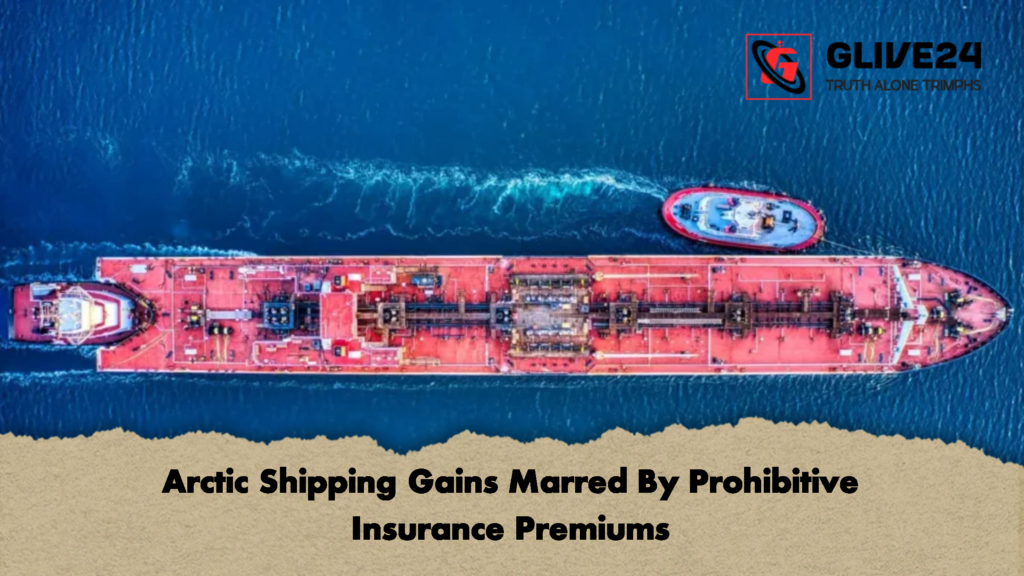
While the gradual recession of polar ice caps has sparked considerable discourse regarding the opening of northern maritime frontiers, recent empirical analysis suggests that the Arctic remains a peripheral arena for global logistics. Despite the undeniable allure of significantly shorter transit times, the market is currently defined by heightened risk profiles and exorbitant coverage costs. According to a recent report by Coface, Arctic shipping is unlikely to precipitate a major shift in global trade patterns in the foreseeable future, remaining instead a specialised niche for specific cargo types rather than a mainstream alternative to traditional corridors.
Table of Contents
The Allure of Polar Shortcuts
The primary catalyst for Arctic exploration is the sheer efficiency of the geography. Routes such as the Northern Sea Route (NSR) and the Northwest Passage can reduce sailing distances between East Asia and Northern Europe or North America by a staggering 20% to 40%. In an industry where fuel consumption and “days at sea” dictate the thin margins of profitability, such a reduction is theoretically revolutionary, offering the potential to bypass the bottlenecks of the Suez and Panama Canals.
However, the physical reality of the Arctic environment presents a formidable barrier that numbers on a map cannot fully convey. Navigating these frigid waters requires specialised ice-class vessels equipped with reinforced hulls and, frequently, the costly assistance of state-owned icebreaker escorts. Even as overall ice coverage declines due to climatic shifts, the remaining sea ice is notoriously variable and unpredictable. For liner services that rely on precision scheduling, the threat of being trapped or forced to divert makes the Arctic a logistical nightmare.
The Insurance Conundrum: A 40% Surcharge
For the global insurance industry, underwriting an Arctic voyage is a high-stakes gamble. The region suffers from a chronic lack of traditional maritime infrastructure; there is a dearth of deep-water ports, salvage tugs, and comprehensive search-and-rescue capabilities. Consequently, a minor mechanical failure or a hull breach that would be a routine fix in the Mediterranean can escalate into a total loss in the High North.
Coface’s cost model applies a staggering 40% surcharge to insurance premiums for Arctic voyages. This reflects the extreme risks associated with geographical remoteness and volatile operating conditions. In stark contrast, traditional routes like the Suez Canal typically carry a negligible risk premium of approximately 0.07% of vessel value. This massive fiscal disparity explains why the Arctic remains a difficult “sell” for mainstream shipowners who are already battling rising operational costs.
Comparative Analysis of Maritime Route Costs and Risks
| Feature | Suez Canal Route (Baseline) | Arctic Northern Sea Route |
| Distance (Asia to Europe) | Standard (~21,000 km) | Reductions of 20% to 40% |
| Insurance Risk Premium | 0.07% of vessel value* | 40% Surcharge on standard rates |
| Infrastructure Density | Highly developed; frequent ports | Minimal; remote with few repair hubs |
| Vessel Requirements | Standard commercial vessels | Ice-class hulls / Icebreaker escorts |
| Primary Risk Factor | Geopolitical (e.g., Red Sea) | Environmental (Ice, sub-zero temps) |
| Search & Rescue | Rapid response available | Extremely limited and delayed |
| Environmental Impact | Standard carbon emissions | High (Black carbon & fragile biomes) |
*Based on pre-2024 rates prior to recent escalations in the Red Sea region.
Bulk Cargo: The Only Competitive Frontier
The “cost gap” between traditional and polar routes ensures that Arctic shipping is only economically viable for a very narrow segment of the market. Coface suggests that bulk cargo—specifically liquid bulk—is where the mathematics of the Arctic truly begin to make sense.
-
Liquid Bulk (Oil & LNG): Transport cost savings could reach between 45% and 50% on specific routes. This is largely because many of these vessels originate from northern extraction points in Russia or Norway, making the northern exit a natural choice.
-
Dry Bulk (Minerals & Coal): These commodities also see benefits, though the margins are less pronounced than those for liquid energy exports.
-
Containerised Freight: Conversely, the “just-in-time” nature of global consumer goods makes the Arctic’s unpredictability a deal-breaker. Major container lines prefer the reliability of the Suez Canal, as a single ice-related delay could disrupt entire global supply chains.
Environmental Liability and the ESG Factor
Beyond the mechanical and navigational risks, insurers are increasingly wary of Environmental, Social, and Governance (ESG) exposures. An oil spill in the Arctic would be an ecological catastrophe of unparalleled proportions. The low ambient temperatures prevent oil from breaking down naturally, meaning any discharge would persist for decades, leading to astronomical clean-up costs and reputational ruin for underwriters.
Furthermore, the emission of “black carbon” (soot) from heavy fuel oil used by ships in the region accelerates ice melting by reducing the Earth’s albedo effect—absorbing heat rather than reflecting it. For insurers, the Arctic represents a paradox: while the physical path is clearing, the financial and ethical path is becoming more cluttered. Until there is a massive investment in polar infrastructure and a standardised framework for polar underwriting, the Arctic will remain a high-cost detour rather than a new highway for global commerce. The $1.4 trillion global insurance market remains, quite sensibly, content to stay in warmer, more predictable waters.