
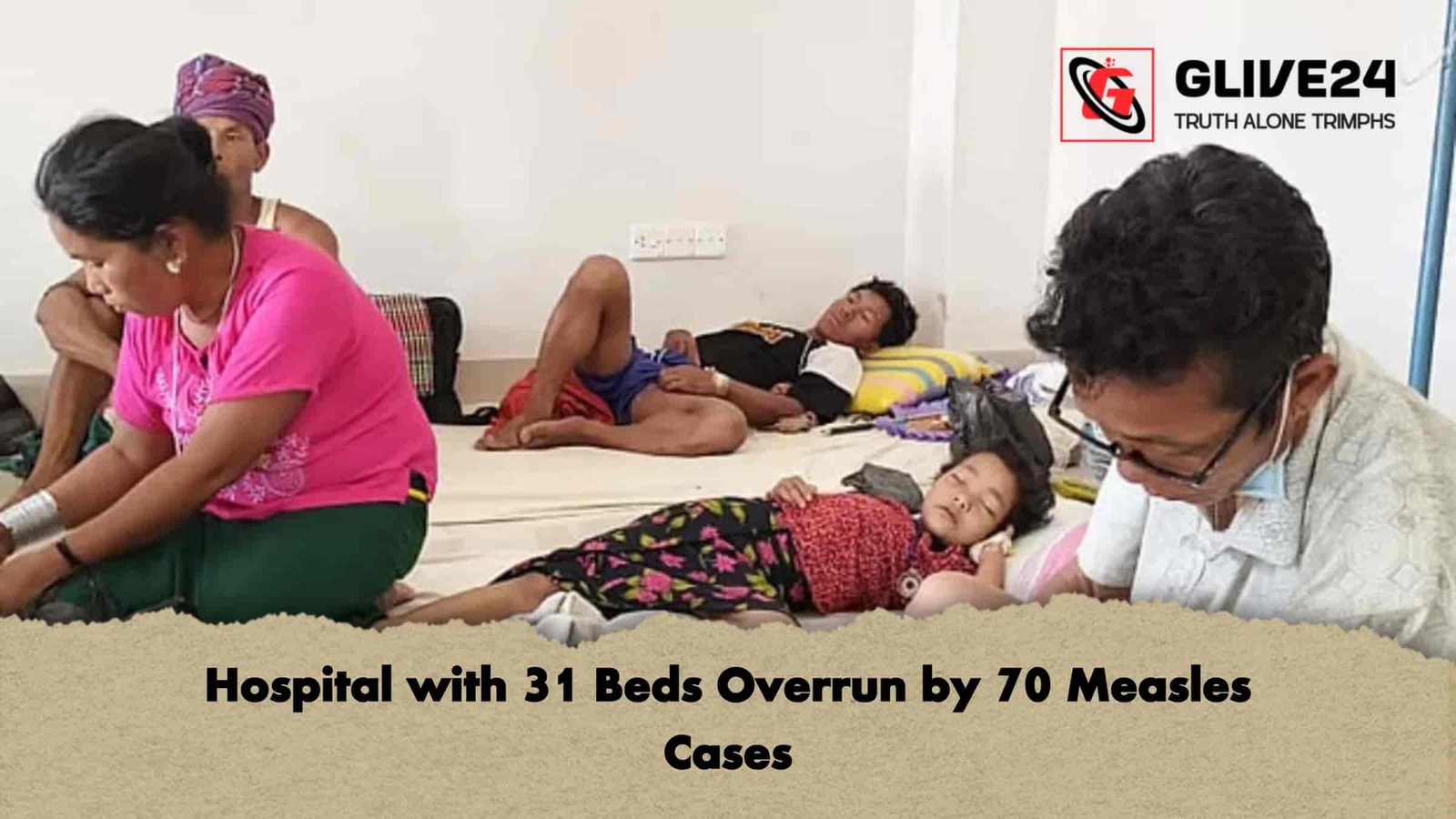
A 31-bed Upazila Health Complex in Alikadam, Bandarban, is currently treating more than 70 children showing symptoms of measles, alongside other patients, resulting in extreme overcrowding and strain on limited hospital resources.
The facility is now accommodating over 100 patients in total. With official bed capacity far exceeded, many patients are receiving treatment on floors and in corridors due to lack of space.
Health authorities reported that 15 children with measles-like symptoms were admitted on Monday from a temporary clinic located in the Poamuhuri area of Kurukpata Union. This followed earlier admissions of 55 children with similar symptoms. In total, at least 70 children with suspected measles are currently being treated at the hospital. In addition, more than 30 patients are receiving treatment for other illnesses, including diarrhoea and malaria.
Hospital Patient Load Overview
| Category | Number |
|---|---|
| Children with measles symptoms | 70+ |
| Other patients (diarrhoea, malaria, etc.) | 30+ |
| Total patients under treatment | 100+ |
| Official hospital capacity | 31 beds |
| New admissions from Poamuhuri (Monday) | 15 children |
| Earlier admissions | 55 children |
According to Upazila Health and Family Planning Officer Mohammad Hanif, the hospital was designed with infrastructure suitable for a 50-bed expansion. However, official approval for upgrading has not been granted. As a result, the facility continues to operate with only 31 sanctioned beds while treating more than three times its capacity.
He further noted that the hospital is facing acute shortages of bedding, food supplies, and manpower. Meals intended for 31 patients are now being distributed among more than 100 individuals, creating significant operational pressure.
The outbreak has been concentrated in Kurukpata Union, a remote, predominantly Mro-inhabited area of Alikadam. The region has reported measles-like symptoms over the past month. At least four children have died in the union during this period, while more than a hundred people have reportedly received treatment.
Access to healthcare remains a major challenge in this hilly and remote area. Patients often need to travel around 12 kilometres on foot through difficult terrain to reach the nearest hospital, delaying treatment in many cases.
To address this, a temporary clinic was established in Kurukpata on 25 April 2026. The clinic is being operated with support from the army, which is also assisting in transporting patients to the hospital and returning recovered individuals to their homes. Medical services and medicines for suspected measles cases are being provided free of cost.
Local organisations are also supporting the response. Community representatives and youth groups are assisting in transporting patients from remote villages to health facilities and providing food for accompanying relatives staying at the hospital.
According to the district civil surgeon’s office, measles-like cases were initially reported from Alikadam, Lama, and Naikhongchhari from 28 March. However, the situation in Kurukpata has intensified over the last two weeks, with a marked increase in cases reported from the remote union, placing further pressure on already limited health infrastructure.