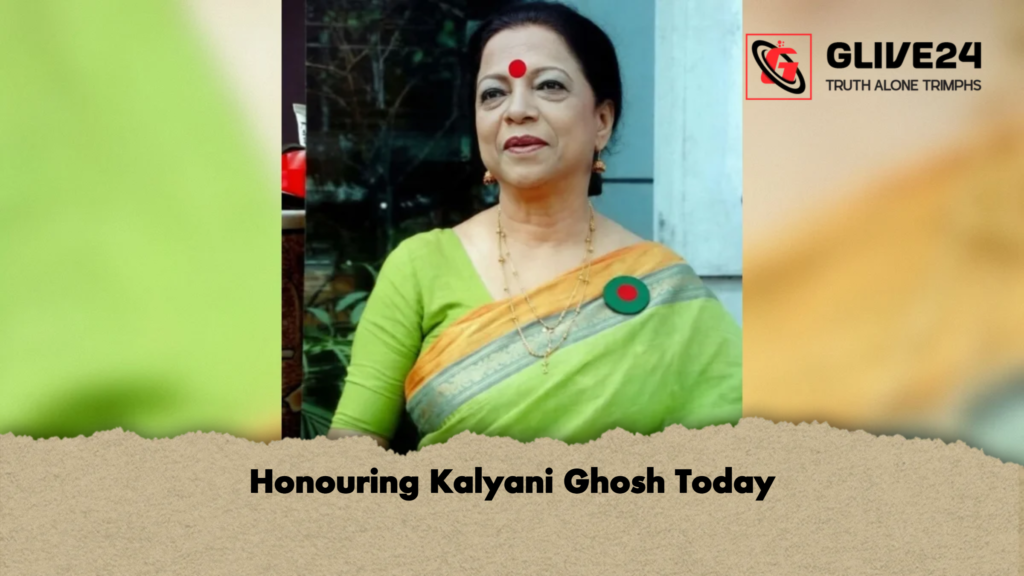
Kalyani Ghosh, a distinguished cultural figure of Bangladesh and a celebrated voice of the 1971 Liberation War, is being honoured on her birthday in recognition of her lifelong contributions to music, literature, and national identity. Her career embodies a rare blend of artistic excellence and historical significance, particularly through her role as a vocal supporter of the liberation struggle.
Born on 5 May 1946 in Rahmatganj, Chattogram, she hails from Binajuri village in Rauzan Upazila. Raised in a culturally enriched household, her mother, Leelabati Chowdhury, nurtured her early interest in music, dance, and acting, while her father, Manomohan Chowdhury, also contributed to her artistic upbringing. From an early age, she demonstrated strong creative inclination and discipline in the performing arts.
Her academic journey was equally notable. She studied at Khastagir Government Girls’ High School, progressed through Chattogram Government College, and later completed her master’s degree in Bengali literature at the University of Chittagong. She subsequently pursued Library Science at the University of Dhaka. Her professional artistic career began in 1962 with her first performance on Chattogram Radio.
During the Liberation War of 1971, Kalyani Ghosh became associated with the Swadhin Bangla Betar Kendra, where her voice played a significant role in motivating freedom fighters and civilians alike. Her performances were broadcast to frontline fighters, refugee camps, and across border regions, helping sustain morale during a critical period in national history. She also worked with the Bangladesh Mukti Sangrami Shilpi Sangstha alongside prominent cultural personalities, including Sangeeta Khan, Wahidul Haq, and Zahir Raihan. In Kolkata, she was a member of Ruma Guha Thakurta’s Calcutta Youth Choir, performing across various locations in India to support the liberation movement.
Following independence, she continued her cultural and professional work for over five decades, performing regularly on Bangladesh Betar, Bangladesh Television, and various stage platforms. She also served at the Bangla Academy for 32 years, retiring as Deputy Director. Her contributions extended into lexicography and literary compilation, strengthening cultural documentation in Bangladesh.
Her published works include titles on regional songs of Chattogram, patriotic music, biographical references of Bangladeshi writers, children’s dictionaries, and character encyclopaedias, reflecting her wide intellectual engagement.
Selected Profile Overview
| Category | Details |
|---|---|
| Full Name | Kalyani Ghosh |
| Date of Birth | 5 May 1946 |
| Place of Birth | Rahmatganj, Chattogram |
| Education | MA in Bengali Literature; Library Science (University of Dhaka) |
| Career Start | 1962, Chattogram Radio |
| Key Role (1971) | Swadhin Bangla Betar Kendra artist |
| Institution Service | Bangla Academy (32 years) |
| Major Recognition | Ekushey Padak (2024) |
| Fields of Work | Music, literature, cultural research, lexicography |
Over the decades, she has received numerous honours both nationally and internationally. In 2024, she was awarded the Ekushey Padak, one of the highest civilian honours in Bangladesh, recognising her enduring contributions to culture and the nation’s Liberation War heritage.
On this occasion, tributes are being extended to Kalyani Ghosh in recognition of her enduring voice, which continues to symbolise artistic dedication and historical remembrance.