
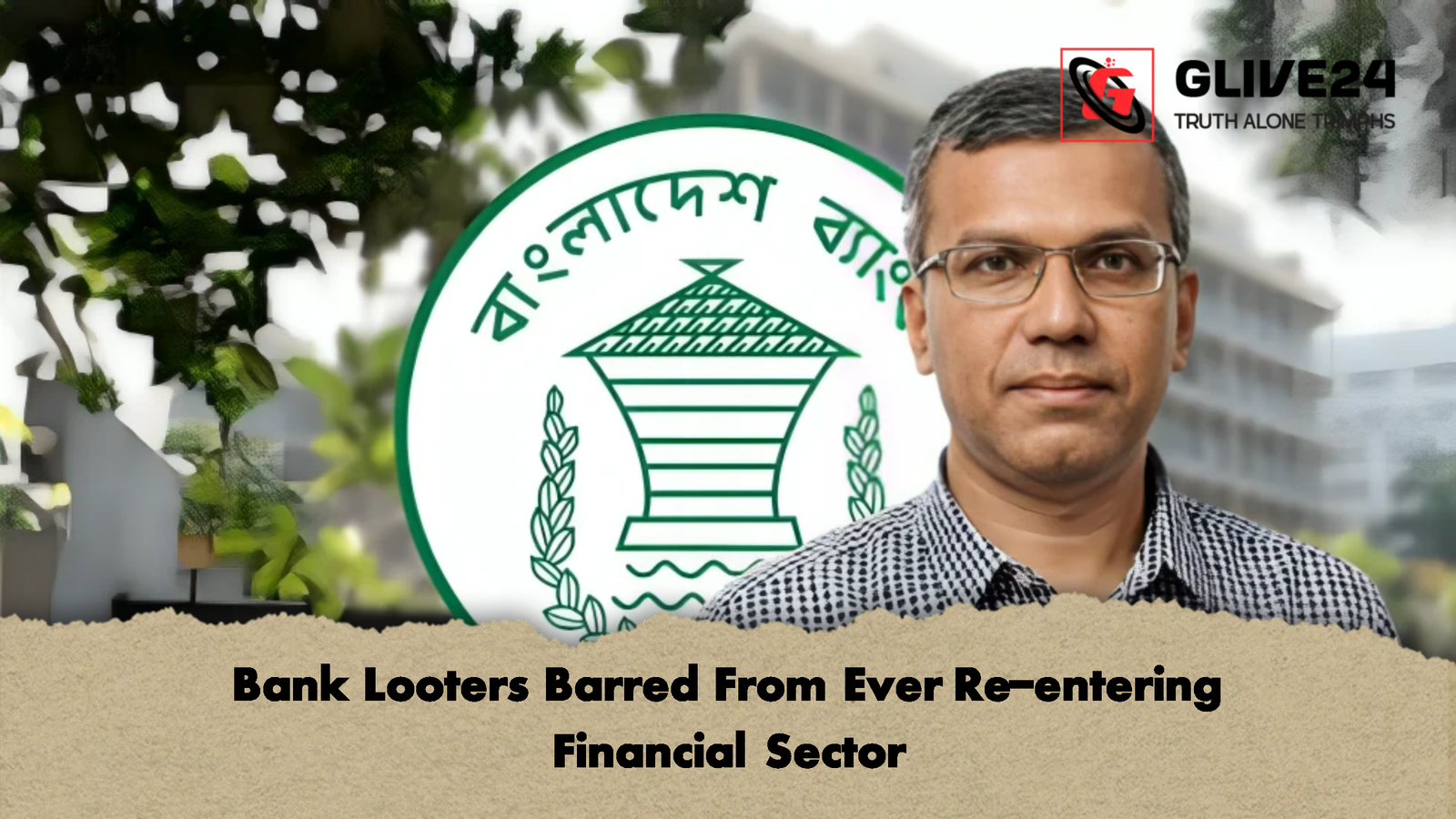
The Bangladesh Bank has adopted a definitive and stringent stance aimed at restoring discipline and integrity within the nation’s banking industry. The Governor of the central bank, Mostakur Rahman, has formally declared that individuals or groups who have damaged the sector through irregularities, corruption, or the systematic looting of assets will be permanently prohibited from returning to bank management or ownership. This policy represents a fundamental shift in the regulatory environment, designed to insulate financial institutions from repeat offenders.
Furthermore, the Governor clarified the central bank’s position on recent structural changes, stating explicitly that there is no possibility of reversing bank mergers. Banks that have already undergone the amalgamation process will not be permitted to decouple or return to their previous independent status, as the regulator seeks to maintain long-term stability.
The Legal Framework: Section 18(A) of the Bank Resolution Act
Governor Mostakur Rahman grounded these enforcement measures in existing legislation, specifically citing Section 18(A) of the Bank Resolution Act. According to this legal provision, any person or group found to be complicit in the looting of bank funds or significant financial malpractice is legally disqualified from holding future positions of influence within the sector.
The Governor emphasised that the doors to bank ownership and board-level management are now “closed forever” for those who have historically weakened the industry through self-serving irregularities. This proactive application of the law is intended to serve as a deterrent against the mismanagement of public funds and to ensure that only those with proven records of ethical conduct can oversee the nation’s capital.
Finality of Bank Mergers and Consolidation
Addressing ongoing discussions regarding the consolidation of the industry, the Governor addressed the status of merged entities. To strengthen the overall financial fabric of the country, several weaker banks were integrated with more robust institutions through a formal merger process. The Governor confirmed that these processes are final.
“There is no scope to break apart or separate the banks that have been merged,” the Governor stated. He explained that the decision to merge these institutions was based on a comprehensive strategy to enhance efficiency and effectiveness. By consolidating assets and liabilities, the central bank aims to create more resilient financial entities capable of withstanding economic shocks. Reversing these mergers, according to the Governor, would undermine the progress made toward sector-wide stability and create unnecessary administrative and financial complications.
Restoring Discipline and Protecting Depositors
This move by the central bank is widely regarded by economists and financial analysts as a critical step toward restoring public confidence in the banking system. For several years, the sector has faced challenges related to non-performing loans (NPLs) and the influence of powerful interest groups on board decisions. By implementing a lifetime ban on “looters,” the regulator is directly addressing the root cause of these systemic vulnerabilities.
The primary objective behind these measures is the protection of depositors’ interests. The central bank operates on the principle that a bank’s primary responsibility is to safeguard the hard-earned money of the public. By ensuring that those who have previously misappropriated funds are permanently excluded from the system, the Bangladesh Bank aims to create a more transparent and accountable environment.
The Governor’s announcement underscores a broader commitment to reform. The Bangladesh Bank is currently engaged in a series of evaluations to identify further areas where regulatory oversight can be tightened. This includes stricter monitoring of large loan approvals and a more rigorous vetting process for potential board members of private commercial banks. As the 2026-2027 fiscal year approaches, the central bank’s emphasis on “discipline at all costs” signals a departure from previous eras of regulatory forbearance, marking a new phase of accountability for the Bangladeshi financial landscape.