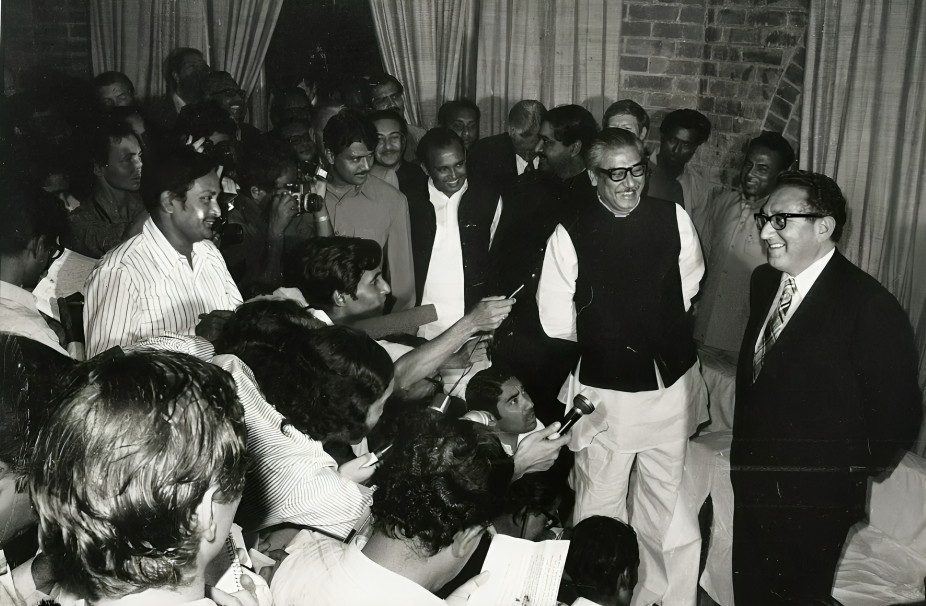
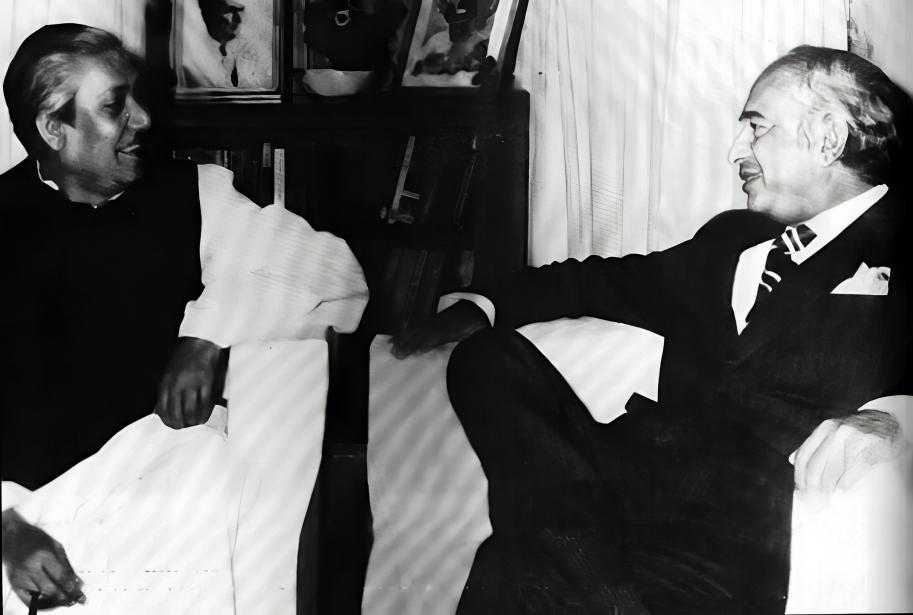
The visit of US Secretary of State Henry Kissinger to Dhaka on 30th October 1974, merely months before the assassination of the Father of the Nation, Bangabandhu Sheikh Mujibur Rahman, remains a significant event in Bangladesh’s political history. His brief yet crucial visit included a two-hour meeting with Bangabandhu at the Ganabhaban, followed by a three-minute press conference. Notably, during the press conference, Kissinger refused to explain why the USS Enterprise had been deployed to the Bay of Bengal during the Liberation War of 1971.
The Prelude: Bhutto’s Visit to Dhaka
Before Kissinger’s visit, Pakistani Premier Zulfikar Ali Bhutto had arrived in Dhaka on 24th June 1974, staying for three days with an entourage of 107 individuals. His visit was overshadowed by the stark reminders of Pakistan Army’s brutalities in 1971, as local newspapers prominently displayed images of war atrocities on the day of his arrival.
Kissinger’s Remarks and Diplomatic Undertones
Renowned US journalist Lawrence Lifschultz, in his book Bangladesh: The Unfinished Revolution, writes, “Within a month of Kissinger’s visit, the US Embassy in Dhaka had become a beehive of activity.”
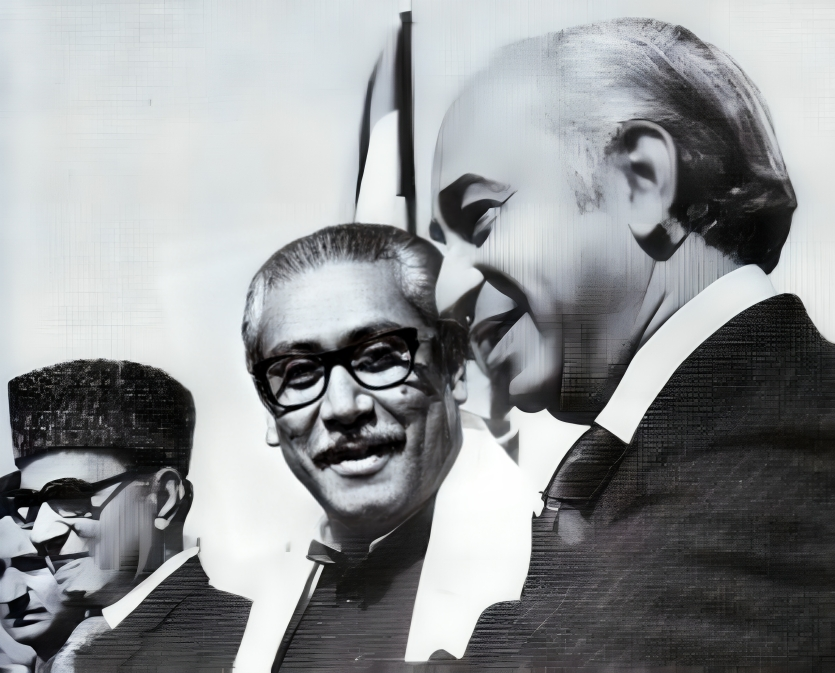
During his meeting with Bangabandhu, Kissinger made a remark that seemed overly grandiose: “I would not have realised that it is possible for a human being to reach that height if I had not seen Bangabandhu.”
However, Lifschultz notes that those aware of Kissinger’s political manoeuvrings felt his words were satirical rather than genuine.
The US Stance Towards Bangabandhu
The reluctance of US authorities to fully embrace Bangladesh’s newly established leadership was evident. Traditionally, when a foreign head of government visits the United Nations for the first time, they receive an invitation to the White House. However, despite repeated inquiries from Bangladesh’s Foreign Ministry, the White House remained non-committal regarding such an invitation for Bangabandhu.
Eventually, as Bangabandhu was determined to visit Washington D.C. to meet his old acquaintances, the US State Department hastily arranged a 15-minute meeting with the American President. The meeting’s atmosphere, however, was notably cold, and Kissinger did not even extend the courtesy of meeting Bangabandhu in Washington. Instead, their only meeting took place at the United Nations headquarters days earlier, reinforcing Lifschultz’s assertion that Kissinger’s praise was mere rhetoric.
Kissinger’s Controversial Role in 1971
Kissinger’s role in the 1971 War of Liberation remains contentious. Former Finance Minister Abul Maal Abdul Muhith, during a discussion in Dhaka in 2016, remarked that Kissinger should be held accountable for war crimes, given his involvement in supporting Pakistan during the conflict.
Other Pivotal Events Leading to the Assassination
Several critical events in both domestic and international spheres unfolded before Bangabandhu’s assassination, contributing to the volatile political landscape:
- Recognition of the Revolutionary Government in South Vietnam – Bangladesh formally recognised the government, which held ideological opposition to Western powers.
- Devastating Floods and Famine (1974) – The natural calamity led to widespread suffering and economic instability.
- Khandaker Mushtaq Ahmed’s Visit to Iran – This visit remains a subject of political speculation regarding its potential implications in Bangladesh’s internal affairs.
Political analysts argue that these events were interconnected with the eventual assassination of Bangabandhu on 15th August 1975. The visits by Kissinger and Bhutto, coupled with diplomatic and geopolitical developments, highlight the complex international factors that may have influenced the tragic event. The shadows of Cold War politics, regional conflicts, and internal conspiracies continue to fuel discussions about the true motives behind one of the darkest chapters in Bangladesh’s history.