
DAMASCUS, 7 March 2025 (BSS/AFP) – Syria’s new authorities have launched a large-scale security operation following violent clashes with fighters loyal to former president Bashar al-Assad, which have left at least 71 people dead, according to a war monitor.
The latest violence represents the most significant challenge to the new leadership since Assad was ousted in December 2024, after a swift offensive led by Islamist rebel factions.
Restoring security has been one of the most daunting tasks for Syria’s new rulers following Assad’s downfall, which marked the end of a 13-year-long civil war ignited by his brutal crackdown on pro-democracy protests.
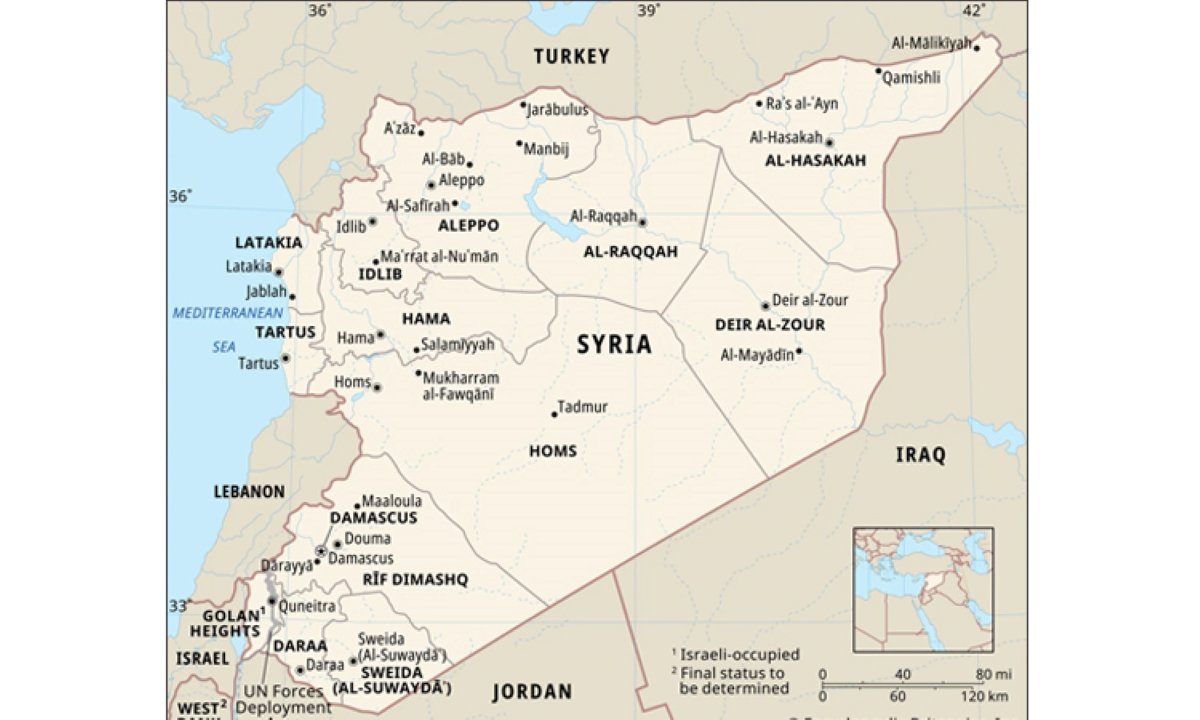
A curfew has been imposed in the coastal province of Latakia, a former stronghold of the Assad family and home to a sizeable Alawite population, the same religious minority as the ex-president.
Security forces have initiated what state news agency SANA described as a “large-scale” operation targeting cities, towns, and the mountainous regions of Latakia and neighbouring Tartus. This came after the arrival of military reinforcements in the area.
“The operation is directed at eliminating the remnants of Assad’s militias and their supporters,” a security official told SANA, urging civilians to “remain indoors.”
The Ministry of Defence confirmed the deployment of additional troops to both Latakia and Tartus to reinforce security.
Table of Contents
Casualties and Security Measures
According to the Syrian Observatory for Human Rights, the latest confrontations have resulted in 71 fatalities over the past 24 hours. These include 35 security personnel, 32 armed militants, and four civilians. The Britain-based monitor also reported numerous injuries and instances of both sides taking prisoners.
Curfews have also been imposed in the cities of Homs and Tartus as a preventive measure.
Mustafa Kneifati, a senior security official in Latakia, stated that “in a well-coordinated and deliberate attack, multiple groups of Assad militia remnants targeted our positions and checkpoints, ambushing several patrols in the Jableh area.”
Kneifati affirmed that the security forces would “eliminate their presence” and “restore stability to the region while safeguarding the people’s property.”
Meanwhile, SANA reported that security forces had arrested Ibrahim Huweija, a former general accused of orchestrating hundreds of assassinations under the rule of Assad’s father and predecessor, Hafez al-Assad.
Tensions Among Residents
Ali, a resident of Jableh, described scenes of “urban warfare and intense street battles.”
“We heard gunfire and explosions throughout the night,” he told AFP. “People are terrified… we are trapped indoors and unable to leave our homes.”
The clashes escalated after Assad loyalists, including those affiliated with the notorious special forces commander Suhail al-Hassan, launched attacks in the village of Beit Ana, also in Latakia.
According to the Observatory, tensions flared when local residents of Beit Ana, where Suhail al-Hassan was born, resisted security forces’ attempts to detain an individual accused of arms smuggling. Security forces responded with a military operation, triggering armed confrontations.
Ongoing Security Campaigns and Regional Support
Since Assad’s removal from power, Syria’s interim government has been actively seeking to dismantle remaining pockets of resistance loyal to the former regime. Several high-ranking Assad supporters have fled the country, though many remain embedded within Syria.
There have been widespread reports of human rights violations during these security operations, including home confiscations, extrajudicial killings, and abductions. The new authorities, however, insist that these incidents are isolated cases and have vowed to hold perpetrators accountable.
Ahmed al-Sharaa, the leader of the Islamist rebel group that led the campaign to depose Assad, now serves as interim president. He has engaged in diplomatic efforts with various governments to gain international recognition and support.
Saudi Arabia, which hosted Sharaa for diplomatic discussions in February, reaffirmed its backing of Syria’s new leadership on Friday, condemning the attacks on security forces as “criminal acts” perpetrated by “outlaw groups.”
Background and Wider Context
The downfall of Bashar al-Assad in December 2024 marked a pivotal shift in Syria’s political landscape. The rapid military campaign by Islamist-led rebels ended over a decade of conflict, during which Assad’s forces had waged a brutal war against opposition groups. His removal has left Syria in a fragile transitional period, with new authorities struggling to impose control over all regions.
The Alawite community, long associated with Assad’s rule, now faces an uncertain future, with many fearing retaliation from the new government. Meanwhile, neighbouring countries and international actors remain cautious, wary of Syria’s potential for further instability.
As security operations continue, analysts suggest that Syria’s path forward will be fraught with challenges, including governance issues, economic recovery, and potential sectarian conflicts.