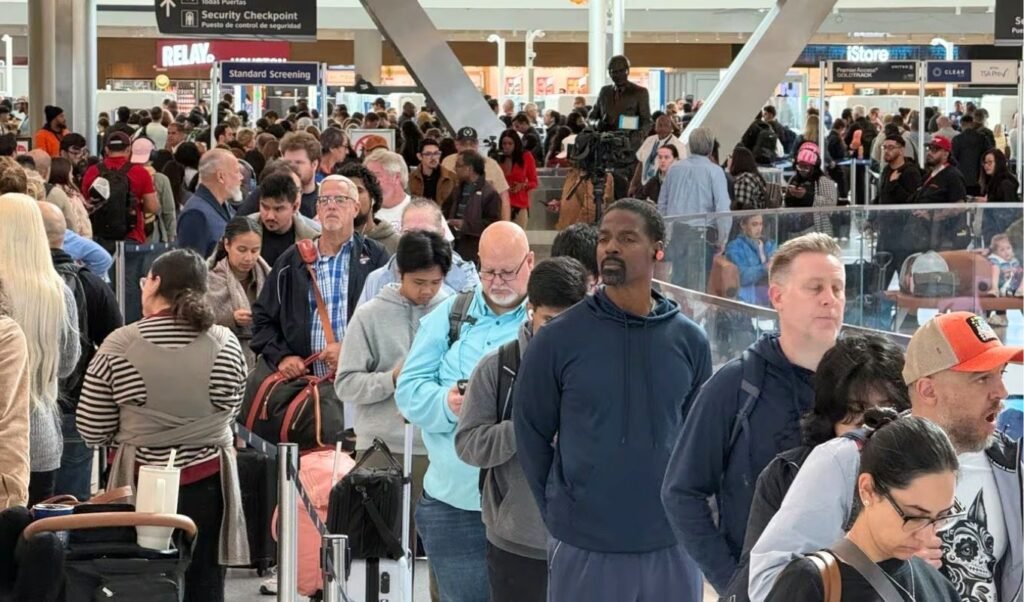
The United States is set to cancel or delay thousands of flights as the country’s longest-ever government shutdown continues to cripple federal operations. Officials confirmed that scheduled flight capacity will be reduced by 10 percent across 40 major air traffic areas from Friday, citing the mounting impact of the budget impasse.
Transportation Secretary Sean Duffy announced at a White House press briefing on Wednesday that the cuts would target “40 of our busiest locations,” beginning Friday morning. Federal Aviation Administration (FAA) chief Bryan Bedford added that the affected zones include “high-traffic environment markets,” with airports in Atlanta, Dallas, Los Angeles, and New York City among those likely to be hit, according to CBS News.
Since Congress failed to approve funding past 30 September, federal agencies have been forced into partial shutdown. More than 1.4 million federal employees, including air traffic controllers and park wardens, are either furloughed or working without pay.
The FAA and Department of Transport have yet to release the full list of affected airports, but experts warn that the capacity cut could cause severe disruptions at the nation’s largest hubs.
This week’s shutdown officially became the longest in US history, surpassing the 35-day record from Donald Trump’s first term. In 2019, widespread absenteeism among unpaid airport staff led to chaos at terminals and prompted Trump to reopen the government.
More than 60,000 air traffic controllers and Transportation Security Administration officers are currently working without pay, a situation that has sparked concerns over safety and morale. The White House has acknowledged that growing absenteeism could lead to gridlock at check-in counters and security lines.
House Speaker Mike Johnson said staffing shortages had already increased flight delays dramatically—from 5 percent in late October to more than 50 percent now. “The longer this shutdown continues, the greater the risk to the safety of the American people,” he warned.
Despite the crisis, Democrats and Republicans remain deadlocked over healthcare spending, the central issue behind the funding standoff. Democrats insist they will only vote to end the shutdown after an agreement is reached to extend subsidies that help millions afford health insurance. Republicans, however, demand that Democrats first approve a budget before discussing healthcare reforms.
Former President Donald Trump has intensified the pressure, threatening mass layoffs of federal workers and hinting at the suspension of key welfare programmes to force Democrats into concessions. Earlier this week, he revived his threat to halt the Supplemental Nutrition Assistance Program (SNAP), which provides food aid to 42 million Americans.
Although two courts blocked the move, the White House later clarified that it was “fully complying” with legal orders and working to deliver partial SNAP payments “as quickly as possible.”
As the shutdown enters yet another week, the political stalemate shows little sign of resolution—leaving travellers, federal employees, and millions of Americans caught in the crossfire.