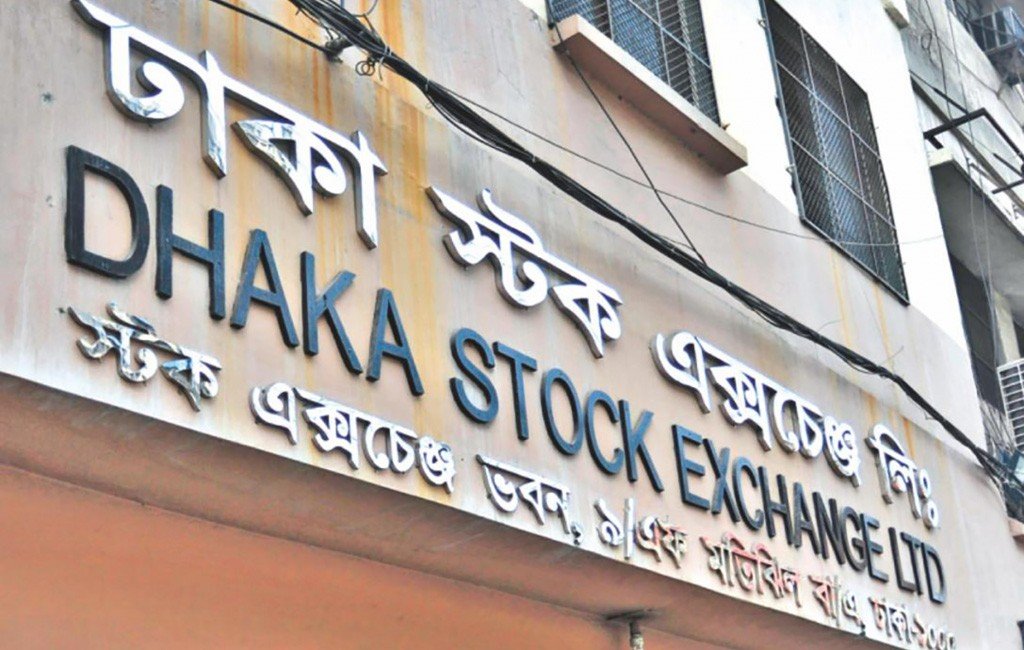
Bangladesh’s stock market has sunk deeper into decline as share prices continue to fall without pause. Each trading session at the Dhaka Stock Exchange (DSE) opens with a rapid downward slide in the indices, and the same pattern is mirrored at the Chittagong Stock Exchange (CSE). Over the last week, the two bourses together have shed more than Tk 26,500 crore in market value, prompting frustrated small investors to stage street demonstrations.
The downturn comes at a time when foreign investors are also withdrawing capital rather than injecting fresh funds. Updated figures show that in October, foreign and expatriate Bangladeshi investors reduced their holdings in 34 listed companies, worth at least Tk 169 crore, while increasing positions in only 13 firms.
Hopes Once High, Now Replaced by Uncertainty
There had been widespread expectation that the stock market would rebound after the political upheaval last August. Those hopes initially appeared justified: following the resignation of Sheikh Hasina on 5 August, the benchmark DSEX leapt nearly 200 points the next day and continued climbing through the week, eventually gaining around 800 points in four trading sessions. Trading volumes also surged past Tk 2,000 crore.
But the upswing was short-lived. As months passed, the index drifted steadily downward. By the end of May, turnover had dwindled to Tk 250 crore, and the DSEX had lost over 1,200 points, settling at 4,785. Attempts at recovery since then have been brief and insufficient to offset the broader sense of turbulence and fragility.
According to many in the sector, a change of leadership at the market regulator, the BSEC, has not translated into renewed confidence. Declining turnover has hit every segment of the financial ecosystem—from brokerages and merchant banks to the exchanges themselves.
What Is Driving the Crisis?
Market analysts point to three major issues:
-
Political uncertainty surrounding the timing of the national election, officially scheduled for February.
-
A complex and restrictive new margin-loan regulation, which investors say is discouraging market participation.
-
The dramatic zero-valuation announcement for the shares of five Islamic banks undergoing merger, followed by a trading halt.
The Bangladesh Bank Governor’s declaration on 5 November—that the equity of the five banks had fallen below zero and that shareholders would not receive compensation—sparked immediate alarm. The BSEC froze trading in the banks’ shares the next morning. Small investors demonstrated outside the DSE and announced further protests, including a planned siege of the central bank.
Economic Adviser Salehuddin Ahmed later tried to ease some concerns by stating that the governor’s announcement was not final and would be reviewed by the government.
Market Voices and Rising Fears
Saiful Islam, head of the DSE Brokers’ Association, believes the situation was mishandled. Had the trading of the five banks been suspended at the start of the merger plans, he argues, the severe erosion of share prices could have been prevented. He adds that three issues have deeply unsettled investors: the new margin rules, the merger of the five Islamic banks, and rising political tension ahead of the election.
Rumours that more banks, financial institutions and insurers may face closure or forced consolidation are adding fuel to the sell-off, spreading fear across the market. Political uncertainty has also made institutional investors—both domestic and foreign—wary of increasing exposure.
Latest Weekly Snapshot
Sunday brought a brief respite: the DSEX rose by 29.46 points to close at 4,732, though turnover dropped to Tk 298 crore from Tk 383 crore. Out of all traded firms, 236 advanced while 113 declined.
The CSE, however, continued its downward run for the 11th consecutive session, with the CASPI losing 74 points and turnover shrinking to Tk 4.76 crore.