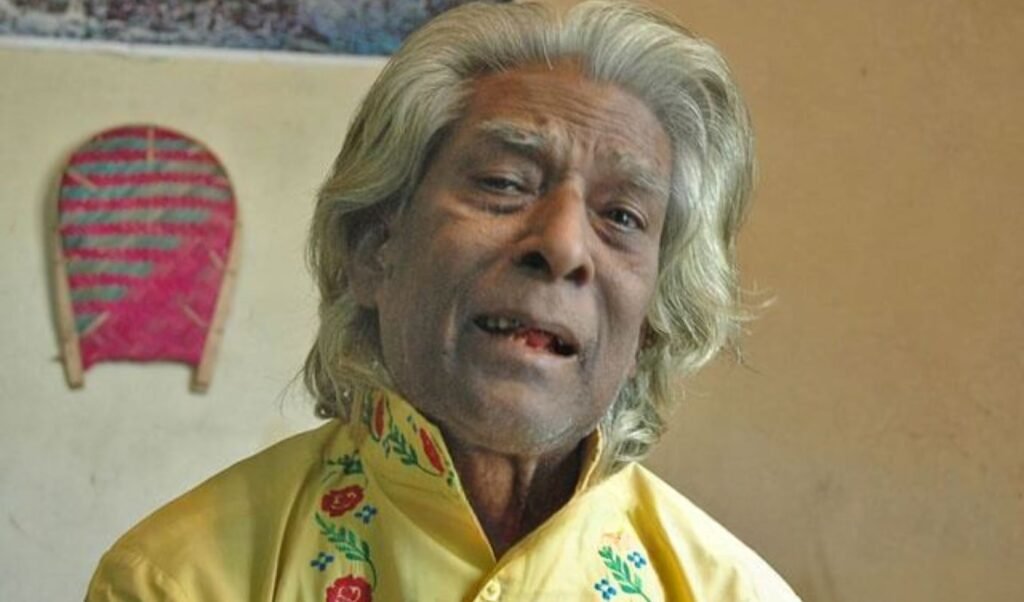
Abdul Rahman Boyati was a true bearer of Bengal’s soil, soul and raw human emotion. He embraced the timeless heritage of folk music as a way of life and expressed it through his powerful voice and spiritual melodies, touching generations across borders. His songs reflected inner philosophy, social reality and the search for truth within the human soul.
Born on 21 November 1936 in Dayaganj, Sutrapur of Old Dhaka, Boyati developed a deep connection with folk and Baul music from an early age. Over time, he emerged as a distinguished lyricist, composer, music director and an extraordinary master of the dotara. For him, the dotara was not merely an instrument but a medium to communicate profound spiritual feelings.
In recognition of his outstanding contribution to folk music, he was awarded the Ekushey Padak in 2015, one of Bangladesh’s highest civilian honours. This award further highlighted the importance of his lifelong dedication to music. In 1982, he founded his own Baul troupe, “Abdul Rahman Boyati,” which played a crucial role in promoting Baul music nationally and internationally.
Apart from the dotara, he was equally skilled in instruments such as the harmonium, khanjani and violin. As a special-grade artist of Bangladesh Television and Radio, Boyati released more than five hundred solo albums, an astonishing achievement that secured his legendary status in the history of Bengali folk music.
Beyond Bangladesh, he performed in 42 countries including India, Nepal, the United States, the United Kingdom, Canada, Japan, Australia, Austria, China and several Middle Eastern nations. One of the most remarkable moments of his career was performing at the White House at the invitation of former US President George H. W. Bush, a rare honour for a Bangladeshi folk artist.
His immortal songs such as “Mon Amar Dehoghori,” “Ma Amenar Kole Futlo Phool,” and “Chhere De Nouka Majhi Jabo Madina” continue to resonate with listeners. He also appeared in the 1989 film “Asoti,” showcasing his versatility. Although he passed away on 19 August 2013, his music and spiritual philosophy remain alive in the hearts of the Bengali people.
GLIVE/TSN