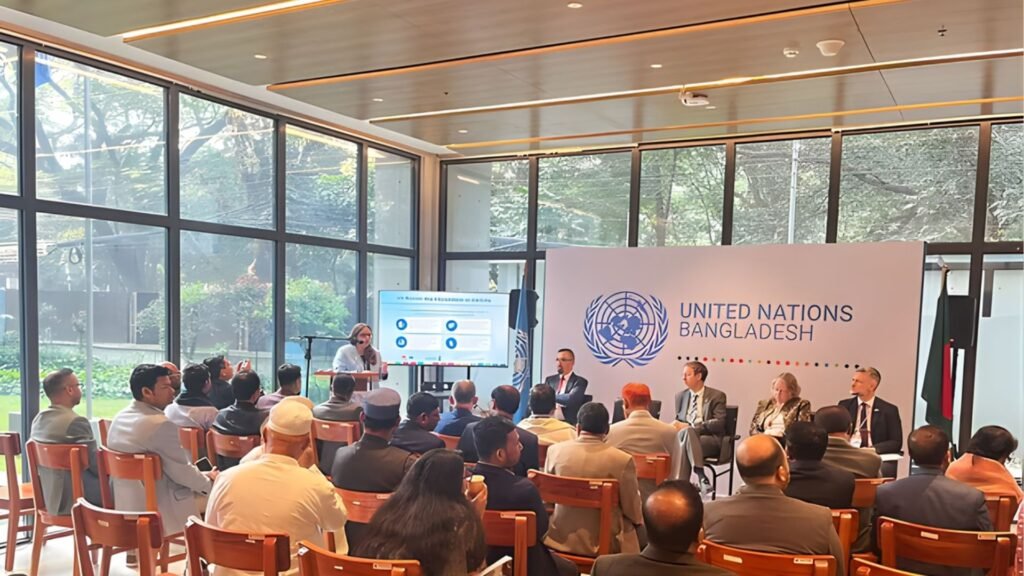
The United Nations office in Dhaka has held a comprehensive briefing with Bangladesh’s political parties, detailing the forms of electoral support it is providing in advance of the country’s forthcoming national election. The briefing, confirmed through a statement released on Thursday, marks one of the most extensive consultations between the UN and domestic political actors ahead of a Bangladeshi election in recent years.
Scope of the UN’s Electoral Engagement
At the briefing, UN officials presented a broad summary of the assistance being delivered to the Election Commission. This includes training, capacity-building, voter education, and logistical support. The presentation aimed to give political parties a transparent overview of how international partners are helping to strengthen the technical backbone of the country’s electoral machinery.
The UN clarified that its involvement is limited to technical cooperation and does not extend into political decision-making. Its focus, representatives said, is on creating an election environment that is fair, inclusive, and efficient, and where integrity is upheld throughout registration, voting, and counting processes.
The Ballot Project: Expanding Capacity and Inclusion
A significant portion of the briefing centred on the Ballot Project, which has been operating since May 2025. The project seeks to enhance the Election Commission’s functional readiness through training programmes, improved civic outreach, and the supply of essential election materials.
One of the most important achievements highlighted was voter registration expansion. The statement from the UN office reported that, alongside the existing 120 million registered voters, an additional eight million citizens have recently been added to the electoral roll. These include over 3.8 million new male voters and more than four million new female voters. The UN described this expansion as a positive indicator of growing public engagement, particularly among women and first-time voters.
Officials explained that modernised registration systems, wider deployment of mobile enrolment centres, and targeted outreach in rural and underserved regions played a key role in reaching millions of new voters. The UN said these efforts are vital to ensuring that the upcoming polls reflect a truly national democratic mandate.
Importance of Transparency and Confidence-Building
The question-and-answer portion of the briefing allowed political parties to voice their queries about the logistical challenges the Election Commission faces, as well as the reliability of new voter data. Some party representatives raised concerns about electoral fairness, while others emphasised the need for neutral oversight of the voting process.
Analysts say the UN’s briefing indicates a broader international expectation that Bangladesh will ensure a credible election widely accepted by its citizens and political actors. With political polarisation a recurring challenge, external technical support is seen as a means of building confidence among competing parties.
Looking Ahead to the Election
As the election draws nearer, preparations will intensify. The Election Commission is expected to roll out further training, refine operational protocols, and expand voter education campaigns. The UN noted that its support will continue, but ultimate responsibility for a free and fair election rests solely with Bangladesh’s own institutions.
Political observers believe that the success of the upcoming polls will depend not only on administrative readiness but also on political goodwill and cooperation. With millions of new voters added and technical capacities being strengthened, the stage is being set for one of the largest electoral exercises in the country’s history.