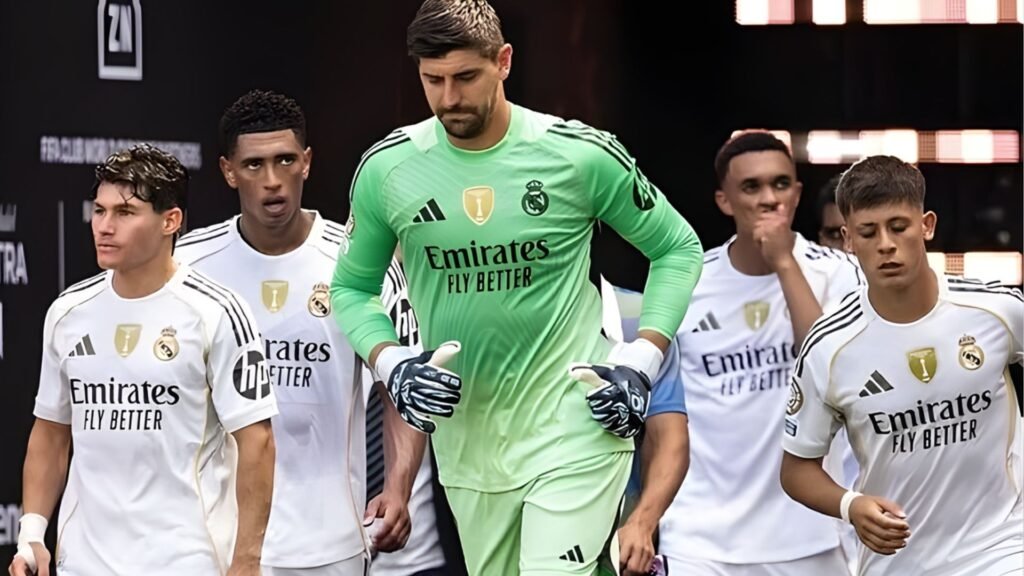
Real Madrid, the club synonymous with dominance and resilience, is facing one of its most concerning periods in recent years. A mere two wins in their last seven fixtures is not just disappointing—it is alarming for a team built on winning at all costs. But this slump is not about injuries, luck, or fixture congestion. It is, at its core, a crisis of leadership and identity.
The Madrid sides of the past decade were defined by strong, commanding figures: Ronaldo’s hunger, Ramos’s courage, Modrić’s intelligence, Benzema’s composure. These players did more than play football—they embodied Real Madrid. They led comebacks, dictated the tempo, and carried the team through difficult moments. That legendary 2023 comeback at Anfield serves as a prime example. Benzema’s calmness, his brief chat with teammates, shifted the match’s entire momentum.
Today’s Real Madrid does not possess such leaders. When Celta Vigo silenced the Bernabéu with their opening goal, there was no player rallying the team, no strong voice urging belief. Instead, anxiety crept in, mistakes multiplied, and Madrid slumped to a damaging defeat. With Barcelona pulling ahead in the league table, tensions are rising.
The squad is rich in talent, but talent without mentality is insufficient. Injuries have plagued the defence, and unnecessary red cards have weakened the full-back positions. Yet these are surface-level issues. The deeper problem is psychological fragility. Once Madrid fall behind, they unravel. Players lose composure. Their structure collapses.
Xabi Alonso’s arrival created optimism. Early performances hinted at tactical clarity and renewed motivation. But recently, his approach appears uncertain. Critics have questioned his team selections, strange substitutions, and perceived reluctance to innovate. Some even argue he prioritises star reputation over performance.
The Rodrigo situation exemplifies this: 31 games without a goal, yet he remains an automatic starter. In contrast, Endrick—young, fast, technically sharp—sits idle. When he did get the chance, even for a few minutes, he demonstrated promise. Yet Alonso seems hesitant to deploy him, possibly due to rumours of Endrick’s potential January move to Lyon.
Another puzzling decision was using Raúl Asensio, a natural centre-back, as a right-back against Celta. Not only did he struggle defensively, but the team also lacked attacking support on that flank—something Endrick could have provided.
Madrid’s midfield is failing to keep up with opponents, and the defensive line panics during set pieces. These weaknesses stem not merely from form but from a loss of confidence.
Rumours of managerial change have inevitably emerged. Zidane? Klopp? Both require strict discipline and total commitment from players. Would either want to take over a squad lacking confidence and cohesion? Would Madrid once again cycle through managers if results falter?
The club’s culture demands bravery. Alonso must rediscover that spirit. He must decide whether to stick rigidly to established stars or start rewarding merit. The Mbappé–Gonzalo–Endrick front line remains unexplored, even though it offers balance: Mbappé’s explosiveness, Gonzalo’s link-up play, Endrick’s unpredictability.
Madrid’s problems will not vanish by simply replacing Alonso. The team needs strong personalities, renewed belief, and decisive leadership. Without these, Real Madrid risks drifting through the season—winning occasionally, collapsing often, and watching their rivals seize the moment.