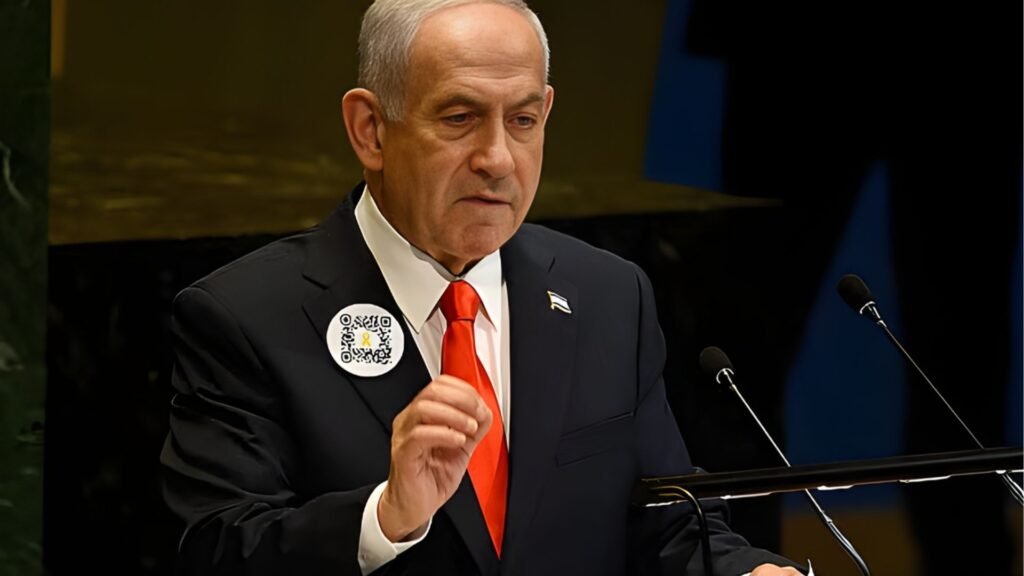
Israeli Prime Minister Benjamin Netanyahu has confirmed that the second stage of the American-proposed peace initiative designed to end the Gaza conflict is expected to begin in the near future. Yet, despite the momentum suggested by his remarks, the Israeli leader made it clear that several major components of the proposal continue to be subjects of intense debate.
The peace initiative, drafted by the US administration and presented as a potential roadmap to de-escalation, consists of a phased plan that requires tangible commitments from both Israel and Hamas. The second stage calls for Israel to implement further troop withdrawals from Gaza, a move intended to facilitate the establishment of an interim governing arrangement. The plan also outlines the deployment of an international security force tasked with maintaining order and enabling political transition. Hamas, on the other hand, would be obliged to relinquish its weapons and undertake internal restructuring.
Netanyahu told journalists that he plans to delve deeper into these issues during a forthcoming meeting with President Trump. The Israeli government has since confirmed that the meeting is scheduled for 29 December, offering one of the clearest indications yet of Washington’s renewed diplomatic engagement in the region.
During a press briefing following talks with German Chancellor Friedrich Merz in Jerusalem, Netanyahu reiterated Israel’s longstanding position: Hamas must not only be removed from power but must surrender all military capability. He insisted that only a complete dismantling of Hamas’s armed wing would pave the way for genuine peace. In a separate appearance, Netanyahu openly questioned whether an international force could effectively manage the disarmament of Hamas. He argued that Israel alone possesses both the operational capability and the commitment necessary to ensure that Hamas is fully demilitarised.
In a notable development, Hamas senior figure Basem Naim told the Associated Press that the organisation is willing to discuss the issue of disarmament. This marks a shift from Hamas’s previous position, in which it repeatedly stated that disarmament was not possible until a sovereign Palestinian state was formally recognised and established.
Two months after the implementation of a ceasefire, the situation on the ground remains tense and vulnerable to renewed escalation. Both sides continue to accuse one another of breaking the terms of the truce almost daily. Gaza’s Health Ministry reports that more than 370 Palestinians have been killed since the ceasefire came into effect, highlighting the fragility and partial nature of the calm.
Israel still maintains effective control over more than half of the territory in Gaza. Humanitarian organisations acknowledge that aid deliveries into the enclave have increased compared to earlier in the conflict. Nevertheless, these groups also emphasise that Israeli restrictions and persistent security concerns continue to impede relief operations. At the same time, disagreements remain over the reopening of the critical Rafah border crossing, a major lifeline for humanitarian access.
The potential launch of the second stage of the peace initiative signals a moment of cautious optimism in what has otherwise been a prolonged and devastating conflict. But with lingering disputes over demilitarisation, governance, and long-term security mechanisms, the path to a sustainable peace remains fraught with difficulty. While Netanyahu’s announcement suggests forward movement, many observers argue that genuine resolution will depend on far more than diplomatic meetings and provisional agreements.