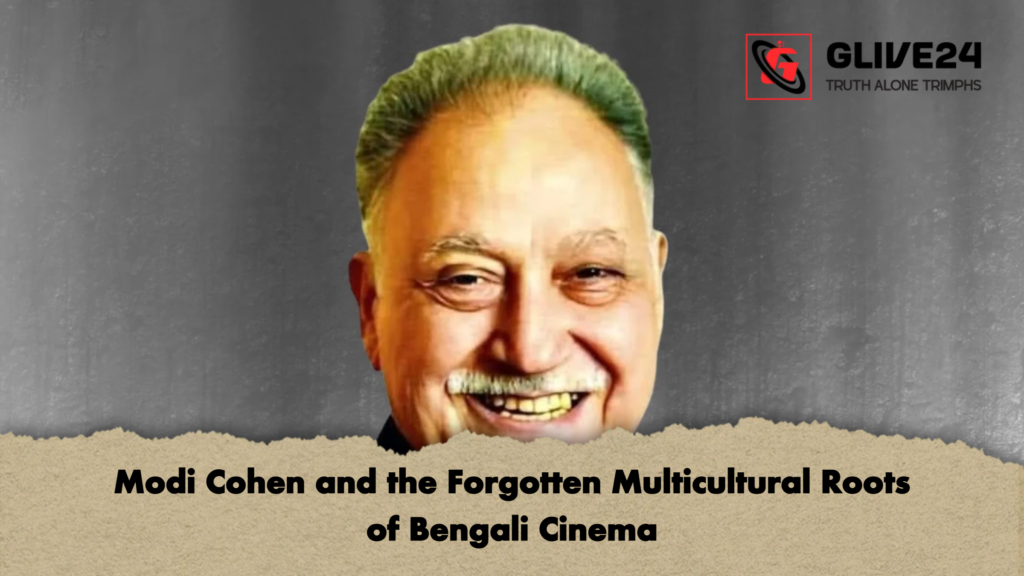
The story of Bengali cinema is often told through the lens of directors, leading stars, and political movements. Yet, within this narrative lie quieter stories of individuals whose contributions shaped cultural consciousness in less obvious but equally profound ways. Modi Cohen was one such figure—an actor, announcer, and cultural bridge whose life reflected the layered identity of Bengal itself.
Cohen’s most enduring cinematic memory comes from Nawab Sirajuddaula (1967), where he portrayed a French officer allied with the Nawab during the Battle of Palashi. The character’s declaration of loyalty was not merely a line of dialogue but a moral stance, articulated with a seriousness that elevated the role beyond its screen time. It served as a reminder that resistance, dignity, and loyalty are values that transcend nationality.
Born in Rajshahi in 1944, Cohen grew up in a Jewish family deeply integrated into local society. His ancestors had arrived in the region generations earlier, and by the time of his birth, the family was firmly rooted in the city’s commercial and cultural life. Religious identity existed, but it did not define social boundaries. Instead, language, shared customs, and mutual respect shaped everyday interactions.
From a young age, Cohen displayed a restless energy. Whether cycling along the banks of the Padma River, participating in school sports, or organising cultural events, he was a familiar and admired presence in Rajshahi. His tall frame and confident manner made him easily recognisable, and his social ease ensured he was rarely unnoticed.
Education followed a conventional path, but Cohen’s engagement with life was anything but ordinary. While studying at Rajshahi City College, he simultaneously developed a broadcasting career at Radio Pakistan. His voice—clear, measured, and expressive—stood out in an era when radio was the most influential medium of communication. Through the airwaves, he reached listeners far beyond his hometown.
Cinema offered another avenue for expression. During the 1960s, Cohen appeared in a range of films in both Bengali and Urdu, navigating the multilingual cinematic landscape of the time. His work in Kolkata-based films further expanded his reach, placing him within a broader South Asian cultural context.
However, Cohen’s most historic contribution came not through film but television. When East Pakistan Television was inaugurated in December 1964, he became its first announcer and newsreader. This moment marked a turning point in regional media history, and Cohen’s composed delivery helped establish credibility and trust in the fledgling institution.
Political changes eventually forced his family to relocate, first to Dhaka and later to Kolkata. During the Liberation War, the family quietly supported Bengali freedom fighters, offering shelter and assistance where possible. Though displacement altered the geography of Cohen’s life, it did not diminish his emotional ties to Bangladesh.
Until his passing in 2015, Cohen returned to the country several times, witnessing firsthand how his contributions continued to be remembered. His life remains an understated yet powerful reminder of a time when Bengal’s cultural identity was enriched by diversity rather than constrained by difference.