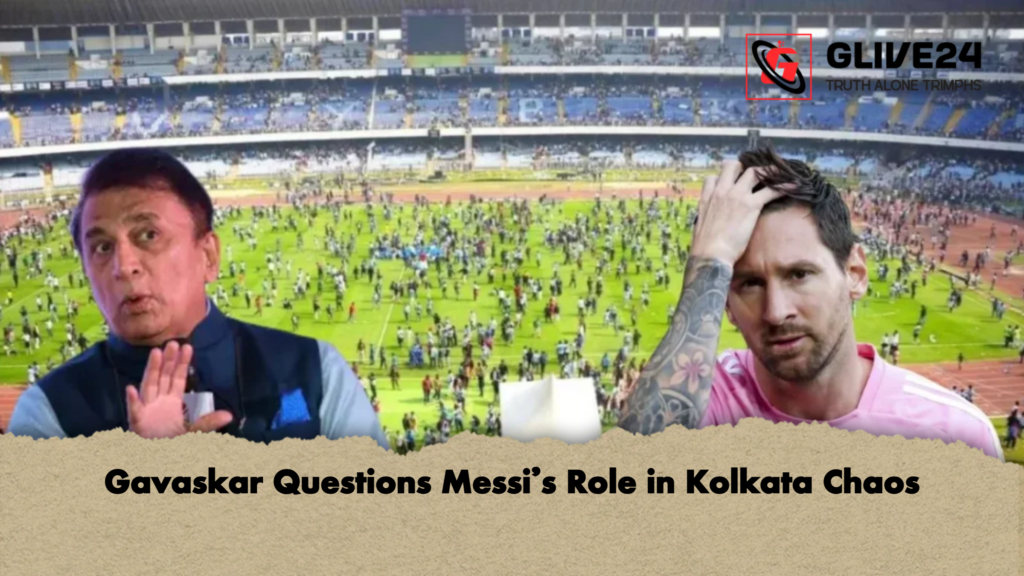
Although Lionel Messi’s much-anticipated visit to India has formally concluded, its impact continues to reverberate across the country’s sporting landscape. What was meant to be a once-in-a-lifetime celebration for millions of Indian football fans has also become the subject of intense debate, criticism, and introspection. At the heart of the controversy lies the disorder that unfolded at Kolkata’s iconic Salt Lake Stadium, an episode that has raised uncomfortable questions about expectations, responsibility, and accountability. Adding a powerful voice to the debate, Indian cricket legend Sunil Gavaskar has publicly questioned whether Messi himself bears a degree of responsibility for the chaos.
From the very outset of Messi’s visit to Kolkata on 13 December, the atmosphere was charged with excitement and anticipation. Thousands of fans gathered around the stadium from early morning, many having waited for hours after purchasing expensive tickets, all in the hope of catching a clear glimpse of the Argentine icon. According to the organisers’ announced schedule, Messi was expected to enter the pitch and complete a full lap of the stadium, allowing spectators to see him up close. However, events did not unfold as planned, and the gap between promise and reality soon became apparent.
A significant number of spectators later expressed frustration, claiming they barely saw Messi at all. Once on the field, he was quickly surrounded by politicians, VIPs, officials, and layers of security personnel. As a result, the footballer remained largely obscured from view, leaving ticket-holding fans disappointed and agitated. As tensions escalated, sections of the crowd began throwing chairs and bottles, leading to damage inside the stadium. Images and videos of the unrest rapidly spread across social media, amplifying public outrage and scrutiny.
In a widely discussed column published in the Indian media, Sunil Gavaskar addressed the incident with characteristic bluntness. He argued that Messi spent far less time in the stadium than had been anticipated, a factor that directly contributed to the fans’ anger. Gavaskar suggested that if a contractual agreement stipulated a certain duration of appearance, failing to honour it inevitably carried consequences. In his view, the emotional investment and financial commitment of supporters deserved greater respect.
Gavaskar also questioned the narrative surrounding Messi’s security concerns. He noted that no significant threat had been reported and suggested that Messi could have engaged more meaningfully with the crowd. Even a brief footballing gesture—such as taking a penalty kick or participating in a short on-field activity—might have satisfied fans and helped control the overwhelming VIP presence.
Importantly, Gavaskar cautioned against placing all the blame on local organisers without examining every aspect of the event. He pointed out that Messi’s appearances in Hyderabad, Mumbai, and Delhi passed off peacefully, largely because expectations were managed and commitments were fulfilled.
On the day of the incident, Messi reportedly spent just 22 minutes inside Salt Lake Stadium. As conditions deteriorated, he was escorted out well before the scheduled time. While Messi’s India tour will remain memorable, the Kolkata chapter has left behind lingering questions. Gavaskar’s remarks have added a new dimension to the debate, prompting deeper reflection on shared responsibility between global icons, organisers, and the expectations of devoted fans.