In the packed carriages of Dhaka’s metro, during weary bus rides home with headphones firmly in place, or in the hush of midnight YouTube sessions, two songs often find their way into the listener’s heart: “Ishwar, could you not have written our union?”
or
“Ghurhi, in whose sky do you now fly?”
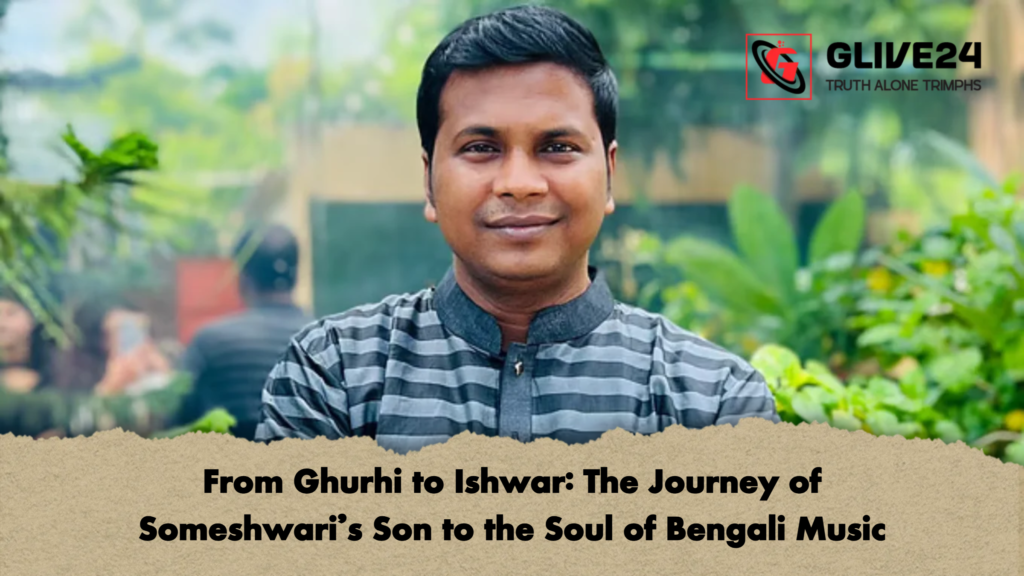
Both songs carry a quiet ache—an unspoken sigh of love shaped by gentle melodies and restrained melancholy. Listeners hum along almost instinctively, often unaware that behind these haunting words stands a man who prefers silence to spectacle. That man is lyricist Someshwar Ali, a writer who has shaped modern Bengali music while deliberately remaining in the shadows.
Ali is not reclusive, merely selective. He lives in the city, meeting friends and fellow writers occasionally, most comfortable when conversations turn to lyrics, poetry, and music. For more than fifteen years, his words have woven themselves into the emotional memory of Bengali listeners. The reason he is being spoken of today is simple: it is his birthday. While social media fills with tributes and quotations from his songs, Ali himself spends the day moving house—quietly packing boxes, uninterested in celebration. The contrast defines him perfectly: widespread popularity paired with an understated personal life.
A Childhood by the Someshwari River :
Born and raised in Durgapur, Netrokona, on the banks of the Someshwari River, Ali grew up in a farming household surrounded by cattle, rice fields, and ritual. His earliest memories blend the dawn recitation of the Qur’an by his father with his mother’s voice, alongside the sounds of conch shells, drums, and ululations from neighbouring Hindu homes. Television was absent; radio discouraged. Yet forbidden curiosity led him to secret film screenings and stolen radio hours—forming the earliest shape of his listening self.
At school, while others played football, Ali lingered with poetry and song. His formal entry into literature came later, during college in Netrokona town, where long days in the public library and evenings in literary gatherings transformed his worldview. Poetry became his means of resistance—against compromise, conformity, and silence.
From Poetry to Journalism, and Back to Art :
That devotion to poetry brought him to Dhaka, where the “good son” of a rural household encountered urban precarity: no permanent address, no steady income, only conviction. After years of freelancing, he joined Jaijaidin newspaper in 2007 as a sub-editor, later working at Samakal and various online platforms. Nearly a decade in journalism—largely entertainment reporting—gave him stability and insight into artists’ inner lives. Yet by 2017, the routine of headlines and promotional interviews dulled his creative spirit. He resigned, choosing lyrics as a profession with renewed confidence.
From Television to OTT and Cinema :
Ali’s work on television dramas further cemented his reputation, particularly the song Tai Tomar Kheyal from the drama Boro Chhele. His ability to absorb a narrative and translate character conflict into lyrical form became his signature.
As Bengali music evolved—from CDs to YouTube to OTT platforms—Ali adapted seamlessly. His major OTT breakthrough came with Rupkothar Jogote from the web film Networker Baire, composed by Sajid Sarkar. The song continues to circulate widely on social media.
His cinematic milestone arrived with Ishwar from the blockbuster film Priyotoma, starring Shakib Khan. Composed by Prince Mahmud and sung by Riyad, the song brought Ali national acclaim and international offers, including from Kolkata. It earned him the BFDA Award for Best Lyricist (2023).
Key Information at a Glance :
| Category | Details |
| Full Name | Someshwar Ali |
| Birthplace | Durgapur, Netrokona, Bangladesh |
| Profession | Lyricist, Poet |
| Active Since | Mid-2000s |
| Breakthrough Song | Ghurhi Tumi Kar Akashe Oro (2011) |
| Notable Works | Ishwar, Tai Tomar Kheyal, Rupkothar Jogote |
| Awards | BFDA Best Lyricist (2023), CJFB Award, Blender’s Choice–Daily Star OTT Award |
| Poetry Book | Kichuta Upor Theke Manush Dekhte Bhalo Lage (2023) |