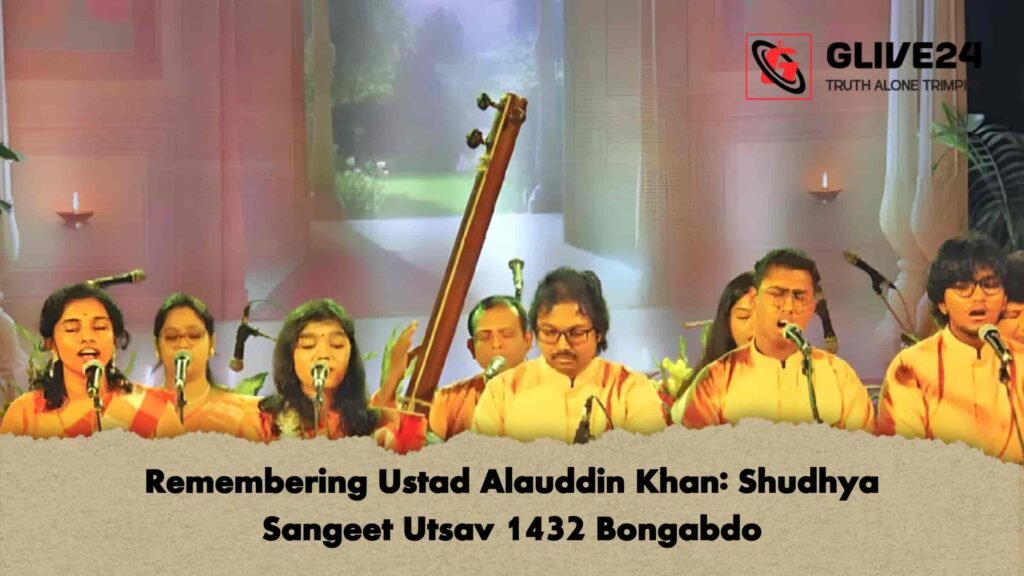
Yesterday evening, Dhaka’s Chhayanaut Auditorium witnessed the grand inauguration of the two-day Shuddha Sangeet Utsav 1432, a festival dedicated to honouring the legendary classical musician Ustad Alauddin Khan. The event commenced with the rendition of the national anthem, setting a solemn tone, and the first session extended until 9:30 PM, immersing the audience in the depth and elegance of Bengali classical music.
In his opening address, Sarwar Ali, President of Chhayanaut, reflected on the institution’s recent trials: “Earlier this year, our organisation faced a serious attack. Unknown intruders entered our six-storey building late at night, attempting to destroy every room. Their fury was chiefly directed at our musical instruments. In addition, textbooks and teaching materials at the ‘Nalanda’ children’s school were destroyed. While the financial loss was significant, the deepest impact was on the hearts of our students and teachers. Yet, this adversity has become a symbol of our resilience.”
He further emphasised, “Our mission is to cultivate a safe environment where music can be practiced, performed, and celebrated freely. The uninhibited pursuit of Bengali culture is our fundamental right.”
The evening programme began with Chhayanaut Sammelon Gan Dal, conducted by Asit Kumar De, presenting five ragas in a meditative performance. The ensemble’s rhythmic interplay between the tabla and harmonium captivated the audience with its intricate melodies. Next, Dipra Nishant performed Purbi Raga, blending somber evening moods with subtle light.
Subsequent performances paid homage to the resilience following the fire incident. Ignatius Rosario and Apratim Roy performed a dual tabla recital, evoking memories of the damaged building, while Ebadul Haque Saikat presented Imonkollyan Raga on sitar, accompanied by Ridwan Rahman on tanpura. Shayla Tasmin rendered Shyamkollyan Raga, reflecting serenity and steadfastness inspired by Bangladesh’s riverine landscape, followed by Bitu Sheel with Bachaspati Raga, a fusion of emotion and resistance. The evening concluded with Mrityunjay Das’s soothing Rageshri Raga on the flute, providing a sense of musical healing.
Festival Programme and Artist Highlights
| No. | Artist / Ensemble | Raga / Melody | Instruments | Highlight |
|---|---|---|---|---|
| 1 | Chhayanaut Sammelon Gan Dal | Five Ragas | Tabla, Harmonium | Meditative, immersive performance |
| 2 | Dipra Nishant | Purbi Raga | Tabla, Sarangi, Harmonium | Evening melancholy intertwined with light |
| 3 | Ignatius Rosario & Apratim Roy | Dual Tabla | Tabla | Evocation of fire-damaged building |
| 4 | Ebadul Haque Saikat | Imonkollyan Raga | Sitar, Tabla, Tanpura | Structural exploration of raga |
| 5 | Shayla Tasmin | Shyamkollyan Raga | Harmonium, Tabla, Tanpura | Calm, steadfast river-inspired mood |
| 6 | Bitu Sheel | Bachaspati Raga | Tabla, Harmonium | Fusion of emotion and resilience |
| 7 | Mrityunjay Das | Rageshri Raga | Flute, Tabla | Musical healing for wounded hearts |
The festival concluded with a final performance led by Asit Kumar De, symbolising both struggle and perseverance, inspiring the audience with hope, remembrance, and pride in Bengali cultural heritage.