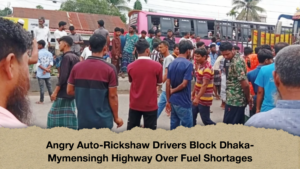
In recent years, a wave of youth-led political and social activism has swept across the globe, particularly in South and Southeast Asia. The driving force behind these movements is predominantly Generation Z, the cohort born roughly between 1997 and 2012. While these uprisings have garnered international attention and temporarily disrupted entrenched power structures, analysts caution that the long-term effectiveness of Gen-Z activism mirrors the mixed legacy of the Arab Spring: initially transformative, yet often falling short of sustained systemic change.
Parallels Between Gen-Z Movements and the Arab Spring
Political scientists note striking similarities between contemporary Gen-Z-led movements and the 2010–2011 Arab Spring. The Arab Spring, initially hailed as a groundbreaking democratic milestone, ultimately produced few enduring reforms. Tunisia, widely considered the only relative success story, now faces renewed authoritarian tendencies despite initial democratic gains. Similarly, contemporary youth movements, while widespread and visibly influential, frequently struggle to convert momentum into lasting institutional change.
Erika Chenoweth, a political scientist at Harvard University, observes that movements historically capable of producing durable change—such as Poland’s Solidarity movement or South Korea’s pro-democracy campaigns—benefited from extensive organisational experience and grassroots networks. In contrast, many Gen-Z movements rely heavily on online mobilisation, enabling rapid expansion but offering limited structural sustainability. Without long-term leadership, ideological cohesion, and institutional discipline, old power structures often reassert themselves, leaving core social and economic grievances unresolved.
Global Scope of Gen-Z Movements
From 2022 onwards, Gen-Z activism has triggered government resignations, reforms, and public debate across several continents. Key examples include:
| Country | Year | Core Issues | Outcome | Structural Reform Status |
| Sri Lanka | 2022 | Corruption, economic collapse, authoritarian rule | Rajapaksa family ousted; government change | Moderate; electoral & presidential reforms underway |
| Bangladesh | 2024 | Prolonged authoritarian rule | Sheikh Hasina’s government ousted temporarily | Limited; interim government; structural reform pending |
| Nepal | 2025 | Corruption, centralized power | KP Sharma Oli resigns | Partial; structural political reforms limited |
| Madagascar | 2025 | Electricity, water, fuel shortages | Government toppled | Minimal; energy & governance reforms incomplete |
| Morocco | 2025 | Education & healthcare budget cuts, taxes | Social programs revised | Limited; structural reforms partial |
| Philippines | 2025 | Education spending, student debt, cost of living | Social aid and scholarship review; some investigations | Partial; structural reforms incomplete |
| Indonesia | 2025 | Corruption, parliamentary privileges | Benefits of parliamentarians limited; foreign travel restricted | Major demands unmet |
| Kenya | 2025 | Tax increases, fuel levies, transparency | Certain bills suspended; investigations opened | Partial; structural reforms not fully implemented |
| Timor-Leste | 2025 | Government spending, parliamentary perks | Temporary suspension of allowances & travel | Partial; structural reforms limited |
| Peru, Chile, Colombia | 2025 | Corruption, inflation, social inequality | Minor policy adjustments | Limited; substantial reforms lacking |
These movements highlight systemic governance issues—corruption, inadequate social safety nets, inflation, unemployment, and structural inequality—that disproportionately affect youth populations.
Youth Perspectives and Key Concerns
Surveys indicate that Gen-Z participants perceive these problems as failures of governance. According to a Globescan survey of international youth participants:
- 64% identified corruption as a severe problem.
- 62% expressed concern over human rights violations.
- 60% regarded unemployment as a critical issue.
The frustrations stemming from these persistent issues have intensified political engagement, protest activity, and demands for reform. Many countries’ street protests have been directly inspired by prior Gen-Z successes, creating a feedback loop of youth mobilisation.
Regional Case Studies
Nepal: Gen-Z protests forced the resignation of KP Sharma Oli in 2025. Yet the youth’s demands for structural political reforms remain largely unmet. Centralised state power continues to reside with established political elites, while economic uncertainty and rising living costs persist.
Madagascar: Initially spurred by power outages and fuel shortages, the movement led to government resignation. However, energy distribution, infrastructure management, and systemic corruption remain largely unaddressed.
Morocco: The ‘Gen-Z 212’ movement protested budget cuts in education and healthcare, rising taxes, and inflation. Authorities responded with limited social program adjustments, but deeper structural reforms are still pending.
Philippines: Youth protests centred on education spending cuts, student debt, rising living costs, and elite nepotism. While some social programmes were revised and corruption investigations launched, structural reform in employment and anti-corruption initiatives remains partial.
Indonesia: Thousands of students and civic organisations launched protests advocating 17 short-term and eight long-term reforms covering corruption, parliamentary privileges, policing, wages, and human rights. Government concessions were limited, and most long-term demands remain unmet.
Kenya: Youth activism focused on tax hikes, fuel levies, digital VAT pressure, and government spending transparency. Some legislative measures were suspended, but inflation, unemployment, and structural corruption persist.
Timor-Leste: Youth protests targeted government spending and parliamentary perks. Some allowances were temporarily suspended, yet significant reforms in corruption control, employment policy, and social investment remain pending.
Latin America: Gen-Z activism in Peru, Chile, and Colombia has targeted corruption, inflation, social inequality, pensions, and policy reforms. Governments implemented minor adjustments, but long-term structural reform remains limited.
Bangladesh: In 2024, widespread student protests led to the temporary fall of Sheikh Hasina’s government. An interim administration under Nobel Laureate Dr. Muhammad Yunus was appointed. Yet many young participants felt the interim government fell short of transformative change.
Sri Lanka: The 2022 youth uprising ended the Rajapaksa family’s two-decade rule. A new government led by Anura Kumara Dissanayake assumed power in 2024, marking a rare case of meaningful electoral and constitutional reform. Presidential power has been curtailed, and decentralisation of authority is underway, making it a model for youth-led reform movements.
Challenges and Limitations
Experts warn that despite the energy and awareness generated by Gen-Z movements, structural change remains limited. Rapid online mobilisation facilitates visibility but does not substitute for institutional leadership, cohesive strategy, or sustainable governance frameworks. As Chenoweth notes, long-term political transformation requires not only mobilisation but also organisational depth, ideological clarity, and continuity—elements often lacking in contemporary youth-led activism.
International relations specialists predict that Gen-Z activism will continue into 2026, with potential impacts on global governance. Joshua Karlantzic, a senior researcher at the Council on Foreign Relations, highlights that without a clear roadmap, converting protest energy into policy or formal political influence remains highly challenging.
Conclusion:Gen-Z movements have undeniably amplified youth voices and exerted pressure on governments, prompting resignations, policy reconsiderations, and some social programme revisions. However, across multiple continents, long-term structural reform—particularly in governance, economic management, and anti-corruption measures—remains incomplete. The contrast between Sri Lanka’s substantive reforms and limited outcomes elsewhere underscores the importance of institutional frameworks, strategic leadership, and sustained policy engagement.
Ultimately, while these movements have created a visible ripple in global politics, their long-term success will depend on the ability to institutionalise reforms and ensure continued youth participation in decision-making processes. Without such mechanisms, old power structures are likely to reassert themselves, leaving many core grievances unresolved. The Gen-Z wave, like the Arab Spring before it, may risk fading into historical memory without producing systemic change, unless future protests are combined with strategic policy action, organisational capacity, and consistent leadership.