Bangladesh is increasingly facing obstacles in facilitating legal labour migration, with the activities of recruitment agencies cited as a major contributing factor. Cases of illegal overseas travel, failure to return after visa expiry, and fraudulent documentation have surged, creating significant socio-economic and regulatory challenges. Experts warn that some recruitment agencies are entangled in human trafficking, financial fraud, and corruption, undermining the integrity of legal labour migration.
Historically, under the previous Awami League government, the sector witnessed widespread allegations of black-market dealings and irregularities, with even senior officials and ministers implicated. These irregularities progressively constrained legitimate migration channels, leaving aspirant workers vulnerable to exploitation.
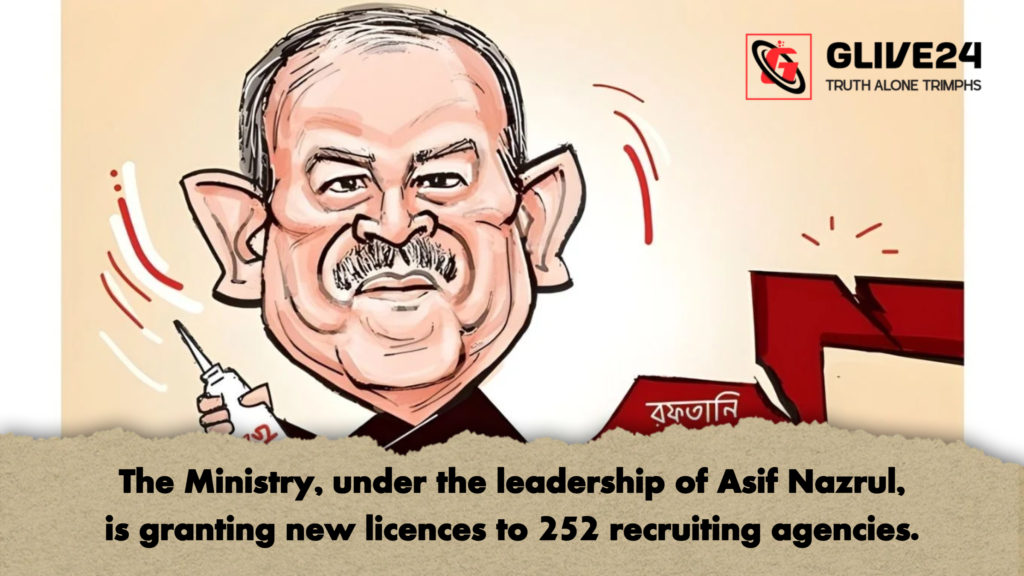
When the caretaker government assumed responsibility, hopes for improved governance in the sector were high. However, tangible results were limited. Recently, under the supervision of Adviser Asif Nazrul of the Ministry of Expatriates’ Welfare and Overseas Employment, the government has issued new licences to 252 recruitment agencies, aiming to formalise operations and expand legal migration pathways.
Despite these efforts, Bangladesh continues to lag behind neighbouring countries in remittances. In 2025, India received US$135 billion from its expatriate workforce, while Bangladesh garnered only US$31 billion, highlighting the need for structural reforms to enhance both compliance and economic outcomes.
Recruitment Agencies in South Asia (2025)
| Country | Number of Recruitment Agencies | Notes |
|---|---|---|
| Bangladesh | 2,646 | Highest in South Asia |
| India | 1,988 | |
| Pakistan | 2,545 | |
| Nepal | 1,041 | |
| Sri Lanka | 857 | |
| Bhutan | 31 | Only 4 active |
Analysts caution that unless the number of agencies is rationalised, human trafficking, fraud, and intermediary exploitation will persist. Over the past decade, nearly BDT 1.35 trillion has reportedly been transferred abroad via informal channels facilitated by recruitment agencies.
According to the Bureau of Manpower, Employment and Training (BMET), in 2025, 1,131,113 Bangladeshi workers went abroad, including 754,629 to Saudi Arabia. Worryingly, irregular migration to Europe is rising, with 22,145 Bangladeshis reaching Europe through unofficial channels in the same year.
Between 2019 and January 2025, 4,546 cases related to human trafficking were filed, implicating 19,280 individuals. However, only 157 convictions were secured, underscoring weaknesses in enforcement.
Experts suggest that the recent licencing initiative could have both positive and negative implications. Positively, newly licensed agencies are expected to operate within legal frameworks, expanding opportunities for legitimate migration. Conversely, there is a risk of repeating past irregularities unless stringent oversight is enforced.
Senior Secretary Dr. Neyamat Ullah Bhuiya emphasised, “Licensing is ultimately a political decision. Government officials implement policies, and strict action is being taken against fraudulent actors. The caretaker government is striving to restore good governance.”
Migration specialists stress that coordinated supervision across all relevant ministries is crucial. Licensing alone is insufficient; rigorous monitoring is needed to ensure skilled workers migrate legally and their rights are safeguarded abroad.