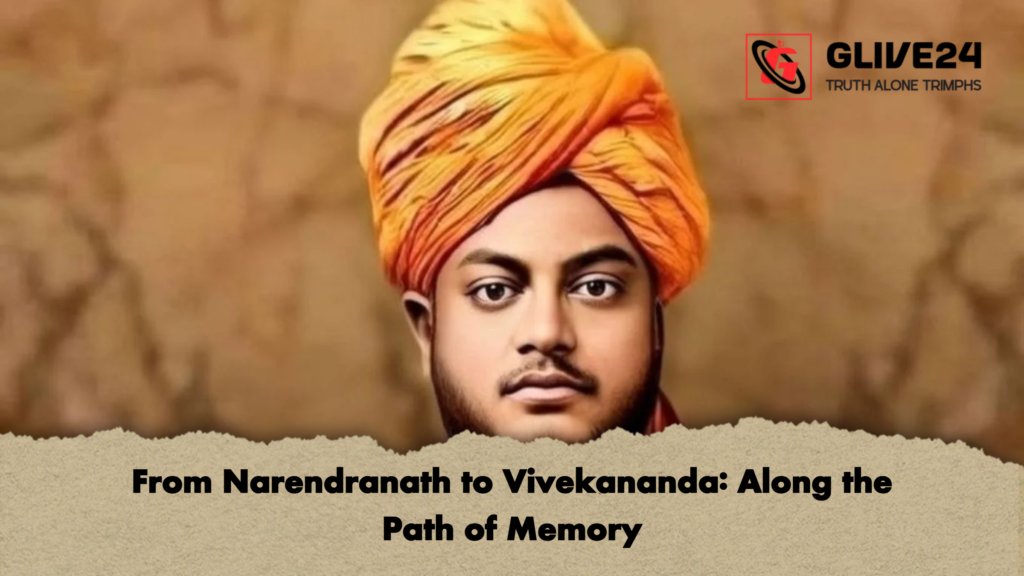
“Arise, awake, and stop not until the goal is reached.” — from Narendranath to Vivekananda
Swami Vivekananda, born Narendranath Datta, remains one of the brightest stars of India’s spiritual and intellectual renaissance. A social reformer, a visionary, and a thinker far ahead of his time, he continues to inspire generations with his ideals, courage, and humanitarian outlook. His life embodies the synthesis of spirituality and practical action, leaving an indelible mark on modern India and the world.
| Fact | Detail |
|---|---|
| Birth | 12 January 1863 |
| Place of Birth | Kolkata, India |
| Birth Name | Narendranath Datta |
| Parents | Father: Vishwanath Datta (rationalist lawyer) Mother: Bhubaneshwari Devi (devout and morally steadfast) |
| Spiritual Mentor | Sri Ramakrishna Paramahamsa |
| Major Contributions | Vedanta Society (USA & UK), Ramakrishna Mission, introduction of Hindu philosophy worldwide |
| Historic Speech | Chicago World Parliament of Religions, 1893 |
| Death | 4 July 1902 (aged 39) |
Early Life and Spiritual Quest
Born into an eminent and learned family in Kolkata, Narendranath’s upbringing was a delicate balance of rational thought and spiritual devotion. His father, Vishwanath Datta, was a liberal-minded lawyer, while his mother, Bhubaneshwari Devi, was deeply religious. This unique blend of logic and faith shaped Narendranath’s intellectual curiosity and spiritual quest.
From a young age, he sought answers to profound questions, particularly: “Have you seen God?” This search led him to the legendary mystic, Sri Ramakrishna Paramahamsa, whose simplicity, direct experience of the divine, and message of harmony among all religions profoundly influenced Narendranath. He eventually became Ramakrishna’s chief disciple, carrying forward his guru’s vision.
Global Influence
Swami Vivekananda’s historic address at the World Parliament of Religions in Chicago, 1893, began with the memorable words, “Sisters and Brothers of America.” The audience’s prolonged applause reflected not only appreciation for his oratory but also the recognition of India’s spiritual heritage on the global stage.
Subsequently, he toured the United States, England, and Europe, delivering lectures on Vedanta, Yoga, and Hindu philosophy in a rational and scientific manner. He founded the Vedanta Societies in the West, spreading awareness of Indian thought while inspiring a sense of universal brotherhood.
Service and Legacy
Upon returning to India in 1897, he established the Ramakrishna Mission, a humanitarian and spiritual organisation committed to education, healthcare, disaster relief, and character-building. His guiding principle was: “Service to man is service to God.” Vivekananda envisioned a nation free of caste prejudice, poverty, and ignorance—a society where self-confidence and human values flourished.
He influenced eminent leaders such as Mahatma Gandhi, Jawaharlal Nehru, Subhas Chandra Bose, Aurobindo Ghosh, and Sarvepalli Radhakrishnan. Today, his birth anniversary, 12 January, is celebrated as National Youth Day in India, inspiring young minds with his vision.
Final Years
Swami Vivekananda passed away on 4 July 1902 at the age of 39, leaving behind a timeless legacy. Though his life was brief, his words and deeds continue to resonate:
“Arise, awake, and stop not until the goal is reached.”
Swami Vivekananda remains not just a spiritual icon but a perennial source of courage, wisdom, and service for humanity.