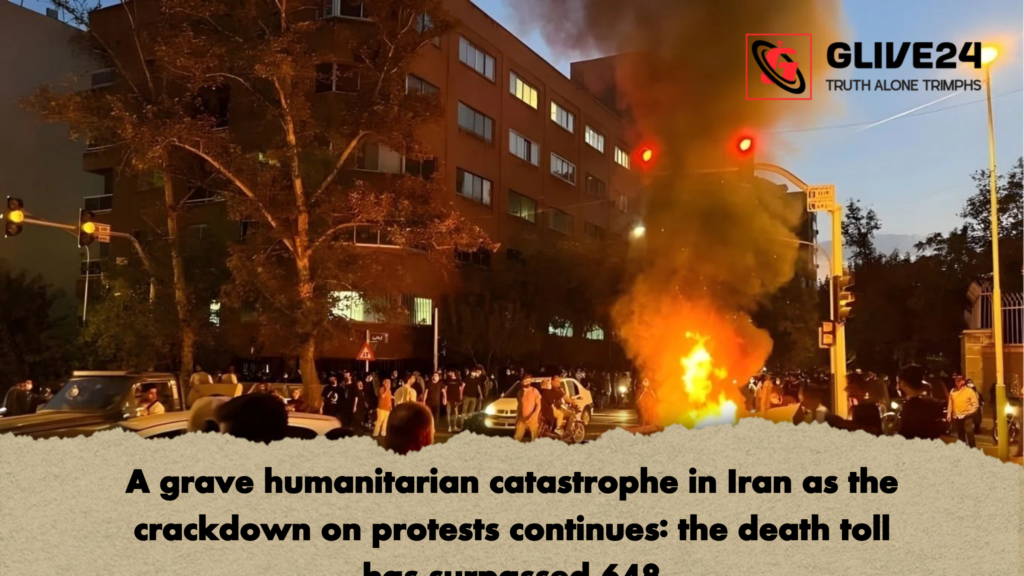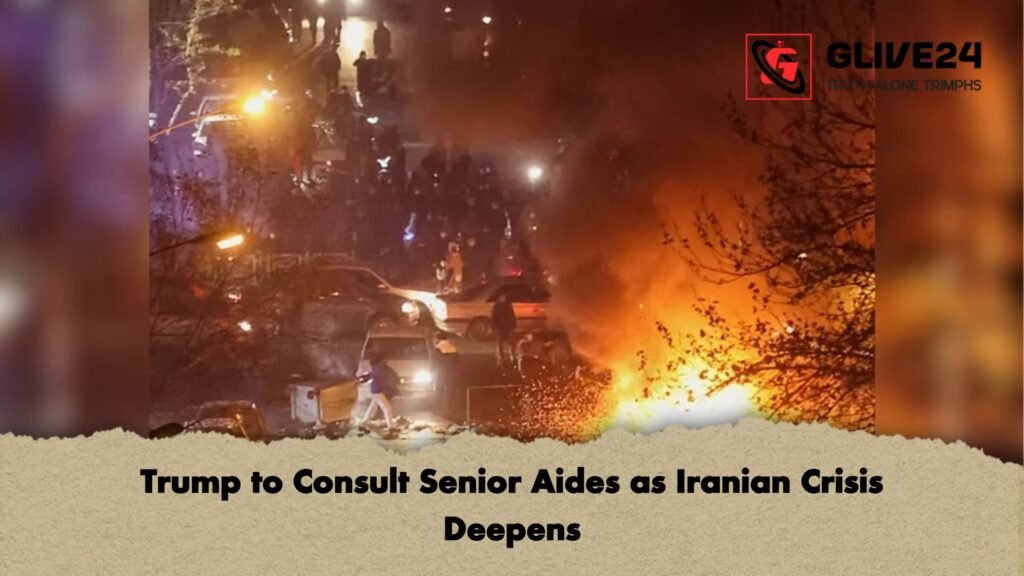
The geopolitical landscape has shifted into a precarious state as President Donald Trump prepares to chair a high-stakes meeting with his senior advisors today, Tuesday, 13 January 2026. The summit follows a series of provocative statements from the White House regarding the Iranian government’s lethal response to ongoing civil unrest. As the protests enter their 17th day, the spectre of American military intervention looms over the Persian Gulf.
A Bloody Standoff: The Casualties of Unrest
The current wave of anti-government demonstrations is being heralded as the most significant threat to the Iranian establishment in nearly half a century. Unlike previous movements, this unrest coincides with a debilitating domestic economic crisis and the regional weakening of Tehran-backed groups. The human cost of the state’s crackdown has reached staggering levels, as detailed by independent monitors.
| Reporting Entity | Status | Data Point |
| Iran Human Rights (Norway) | Protester Fatalities | 648 |
| HRANA (United States) | Total Detentions | 10,500+ |
| Tehran State Media | Security Force Deaths | 109 |
| NetBlocks | Internet Connectivity | Total Shutdown (4 Days) |
Despite these figures, Iranian Foreign Minister Abbas Araghchi insisted in a recent briefing that the situation is “completely under control.” He noted that while Tehran is open to dialogue, the nation is “fully prepared” for a military confrontation should the US choose to intervene.
Trump’s Strategic Calculus
Speaking to the press corps aboard Air Force One, President Trump indicated that Tehran’s actions against its own populace may have crossed a definitive threshold. “They have started to cross [the line], it seems,” Trump remarked, hinting at a range of “harsh measures” currently under review by the Pentagon.
The Wall Street Journal suggests that the White House is weighing several distinct options:
-
Targeted Kinetic Strikes: Precision attacks on IRGC command centres.
-
Covert Cyber Operations: Deploying sophisticated “stuxnet-style” weapons to disable infrastructure.
-
Asymmetric Support: Providing logistical and communication aid to opposition factions.
-
Maximum Sanctions: A total blockade of remaining Iranian oil and petrochemical exports.
Regional Retaliation and Strategic Vulnerability
The threat of US action is complicated by the proximity of American assets to Iranian soil. Tehran has warned that “miscalculations” by Washington will result in immediate strikes against US bases in the Middle East. Currently, the US maintains eight permanent installations in the region, including major hubs in Qatar, Kuwait, and Bahrain.
While Iran’s stockpile of medium-range missiles was reportedly depleted during last year’s skirmishes with Israel, military analysts believe they retain enough short-range ballistic missiles to saturate the air defences of neighbouring US bases.
As President Trump enters today’s deliberations, he faces a divided Congress. Republican Senator Rand Paul and Democrat Mark Warner have both cautioned against repeating the interventionist mistakes of 1953, which many believe sowed the seeds for the 1979 Revolution.