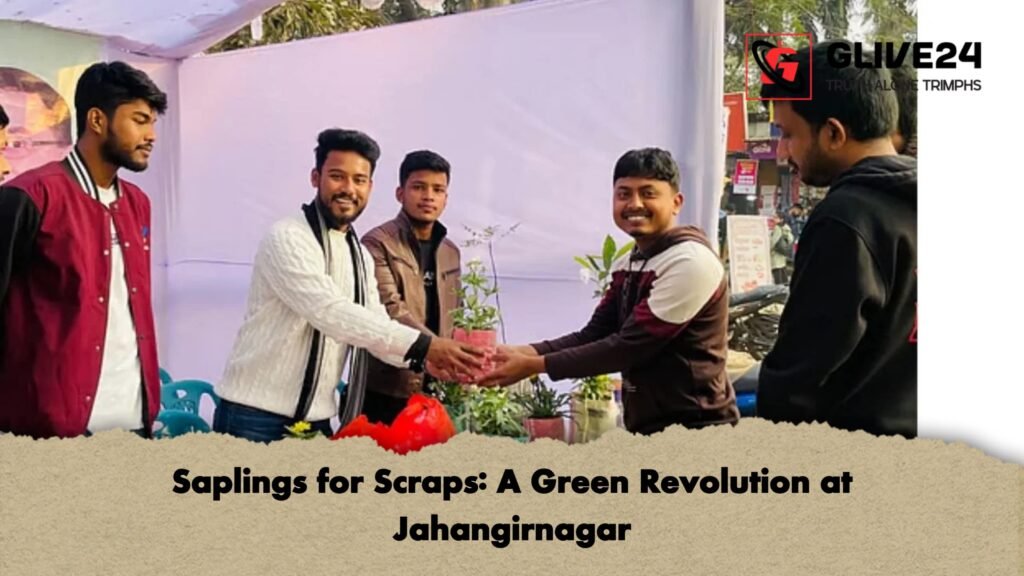
Jahangirnagar University, often referred to as the “sanctuary of natural beauty” in Bangladesh, is witnessing a unique environmental transformation. In an innovative bid to purge the campus of non-biodegradable waste, Ifrat Amin (Akshor), a dedicated student from the Department of Statistics and Data Science, has launched a “Green Exchange” programme. This initiative incentivises ecological responsibility by offering a living sapling in exchange for discarded plastic waste.
The Incentive Structure
The campaign operates on a simple yet effective barter system designed to engage the student body directly. For every ten plastic bottles or an equivalent volume of plastic refuse collected from the campus grounds, a student is presented with a young tree to plant. This dual-purpose strategy simultaneously addresses the crisis of plastic pollution and promotes the expansion of the university’s green canopy.
The results from the initial three-day pilot have been remarkable, demonstrating a high level of civic engagement among the youth:
| Campaign Metric | Details |
| Initiator | Ifrat Amin (Dept. of Statistics & Data Science) |
| Exchange Rate | 10 Plastic Items = 1 Sapling |
| Waste Recovered | Approximately 3,000 units |
| Trees Distributed | 300 Saplings |
| Community Impact | High student participation and faculty endorsement |
Combatting the “Dump Site” Perception
The motivation behind this project stems from a visible decline in campus cleanliness. Amin observed that the proliferation of single-use plastics—particularly beverage bottles and snack packaging—was beginning to mar the university’s scenic landscapes. “Our aim is to cultivate a culture of mindfulness,” Amin stated. “By exchanging waste for life, we remind students that our environment is a shared treasure that requires active protection.”
The initiative has resonated deeply with campus leaders. Ahsan Labib, Social Welfare Secretary of the Jahangirnagar University Central Union (JUCU) and a student of Biotechnology, noted that while the campus is a haven for biodiversity, human negligence had begun to turn pristine areas into makeshift landfills. He praised the project for its “transformative approach” to waste management.
Expert Approval
The academic community has also lent its weight to the cause. Professor Jamaluddin of the Department of Environmental Sciences highlighted the severity of the plastic crisis, noting that such waste causes “irreversible harm” to the soil and local wildlife. He commended the grassroots nature of the campaign, calling it an “admirable blueprint” for sustainable campus life.
As the programme continues, it serves as a poignant reminder that the fight against climate change and pollution often starts with individual initiative and a simple, creative idea.