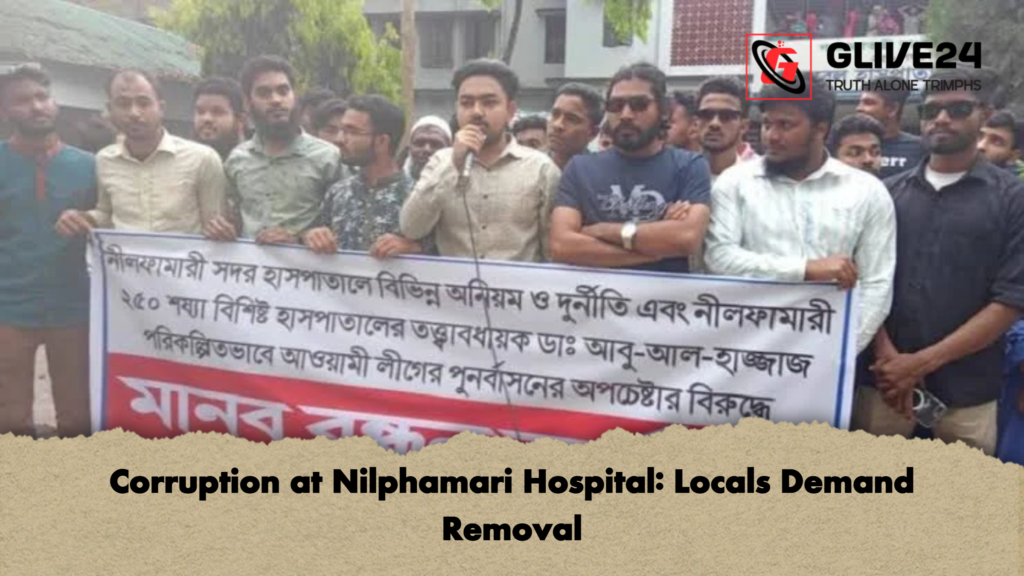
Nilphamari General Hospital, a key public healthcare facility in northern Bangladesh, has become the centre of mounting controversy amid serious allegations of long-running corruption, financial irregularities and abuse of authority. Local residents, patients and sections of hospital staff are now openly demanding the removal of the hospital’s superintendent, Dr Abu Al Hajjaj, accusing him of presiding over a deeply flawed and opaque administration for more than four years.
According to multiple allegations raised by local stakeholders, Dr Hajjaj exercised unilateral control over procurement processes, including the purchase of medical supplies and the management of financial vouchers. While official records reportedly show large volumes of medical equipment and consumables being purchased every year, much of this material is said not to be properly stored or accounted for in the hospital’s inventory. As a result, patients often face shortages of essential items despite substantial public expenditure on paper.
Further scrutiny of financial documentation has allegedly revealed that many payment vouchers lack vendors’ signatures, raising serious questions about transparency, accountability and the lawful use of government funds. Critics argue that such practices not only violate financial regulations but also undermine public trust in the healthcare system.
Local sources claim that the alleged misconduct extended beyond the hospital itself, with accusations that Dr Abu Hanif, a senior director within the Directorate General of Health Services, was directly or indirectly complicit. Despite holding administrative oversight responsibilities, both officials are accused of failing to uphold ethical standards or ensure proper governance.
Perhaps most alarming are estimates suggesting that Dr Hajjaj may have generated approximately BDT 40 million annually through fraudulent voucher claims, amounting to around BDT 160 million over four years. In addition, tender manipulation is alleged to have resulted in misappropriation of nearly BDT 200 million during the same period. It is claimed that, in collusion with contractors, only around 20 per cent of procured goods were physically delivered to the hospital, while the remaining 80 per cent existed solely on paper, enabling large-scale embezzlement.
| Alleged Irregularities at a Glance | Estimated Figures |
|---|---|
| Duration of alleged misconduct | Over 4 years |
| Annual illicit income via vouchers | BDT 40 million |
| Total via vouchers (4 years) | BDT 160 million |
| Alleged tender-related losses | BDT 200 million |
| Goods actually supplied | Approx. 20% |
| Funds allegedly misappropriated | Approx. 80% |
Residents and affected patients have urged the Anti-Corruption Commission and the Ministry of Health to launch an immediate, impartial investigation and take decisive legal action against all those involved. They warn that continued inaction will further erode service quality, placing vulnerable patients at serious risk.
Additional allegations have surfaced regarding past efforts to suppress personal scandals during previous political administrations, further fuelling public anger. While such claims remain unproven, they have intensified calls for accountability and reform.
Health policy analysts caution that the situation at Nilphamari General Hospital reflects a broader governance challenge within public healthcare institutions. They argue that unchecked corruption not only compromises patient care at a local level but also damages national healthcare standards. In their view, swift, transparent and lawful intervention by the authorities is essential to restore confidence, ensure value for public money and safeguard the right of citizens to reliable medical services.