
Khabor Wala Desk
Published: 20th January 2026, 4:41 AM
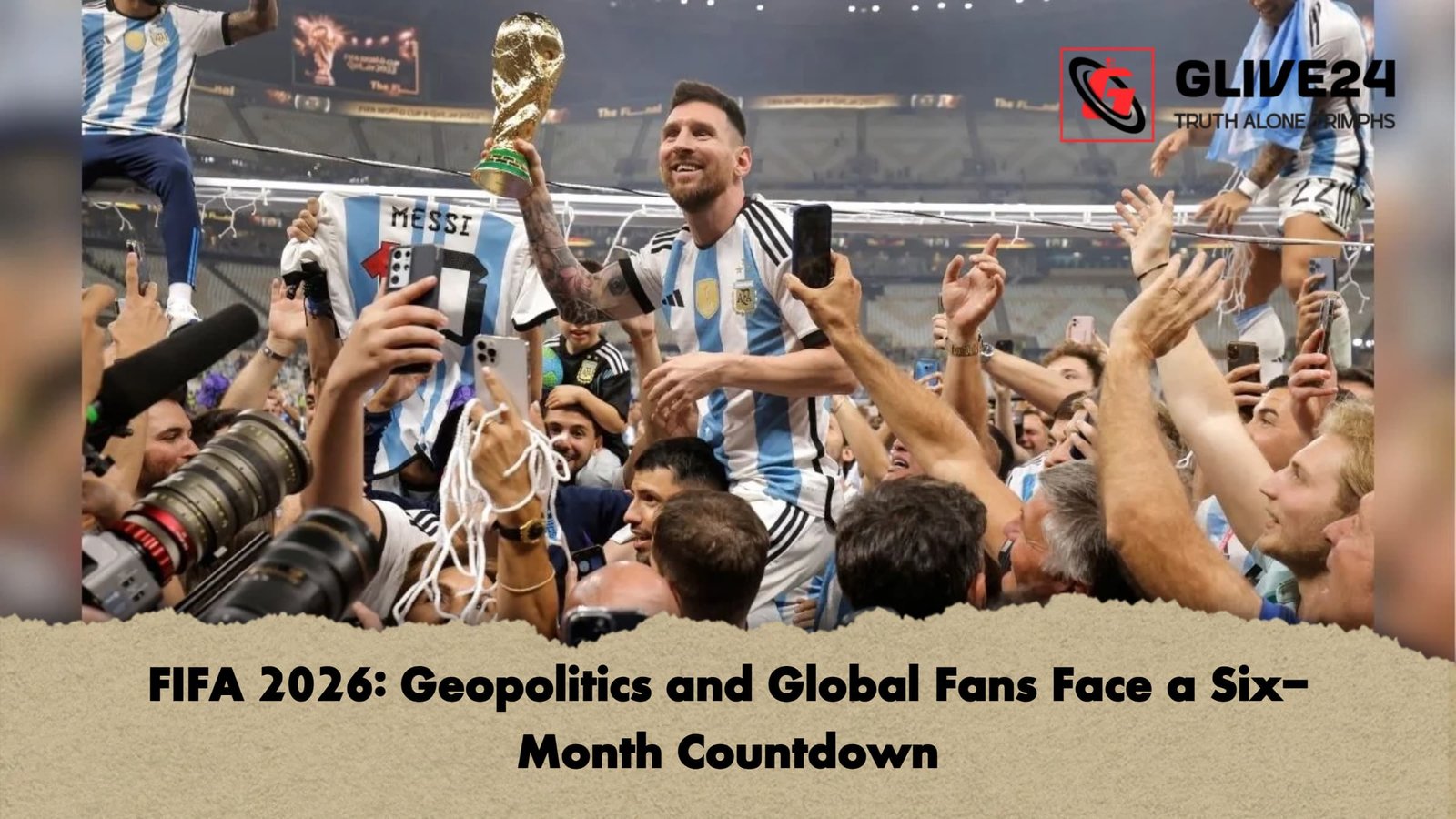
With exactly half a year remaining until the 2026 World Cup Final in New Jersey, the road to East Rutherford is proving to be as much a logistical gauntlet as a sporting one. While the tournament promises a sprawling celebration across sixteen cities in Canada, Mexico, and the United States, the reality for fans is becoming increasingly defined by soaring costs and a volatile American political landscape.
Table of Contents
FIFA’s decision to adopt a “dynamic pricing” model—historically used by airlines and hotel chains—has fundamentally altered the accessibility of the beautiful game. By adjusting ticket prices in real-time based on demand, FIFA has overseen a dramatic inflation in entry costs. Research suggests that the cheapest tickets for the final have risen nearly ninefold compared to Qatar 2022, even when adjusted for inflation.
In a bid to quell the rising tide of criticism, FIFA announced that a fraction of tickets would be capped at $60 (£47). However, with this allocation representing less than 2% of the total inventory, the gesture has done little to satisfy supporters’ groups who feel the “average fan” is being priced out of the experience.
| Metric | Details / Current Status |
| Tournament Final | 19 July 2026, MetLife Stadium, New Jersey |
| Ticketing High | Final prices up to 9x higher than 2022 |
| Travel Ban Nations | Iran, Haiti, Senegal, Côte d’Ivoire |
| Visa Fast-Track | 6–8 week window promised by State Dept |
| Travel Burden | Over 3,100 miles for some group-stage routes |
For international travellers, the primary hurdle isn’t the stadium gate, but the border control desk. While Canada and Mexico have maintained relatively open visa policies for the tournament, the United States, under President Donald Trump, has introduced more stringent measures.
Current travel bans specifically target fans from Iran, Haiti, Senegal, and Côte d’Ivoire. While official delegations are exempt, ordinary supporters from these nations face an uphill battle. Even for those not subject to bans, the “fast-track” visa system—touted by Secretary of State Marco Rubio—remains untested. Compounding the friction is a new requirement for many visitors to provide social media histories, a move that civil liberties groups have decried as an invasive overreach.
The sheer scale of North America presents a travel nightmare. Unlike the compact nature of previous hosts, teams and fans in 2026 will traverse thousands of miles. For example, a winner from the UEFA playoffs could start their journey in Toronto, fly nearly 2,600 miles to Los Angeles, and then head north to Seattle.
The political shadow of the White House looms large over the event. President Trump, a recipient of the FIFA Peace Prize, has already stirred controversy by suggesting he might interfere in venue selection based on local political leanings—though he lacks the unilateral authority to do so. His recent military actions in Venezuela and disparaging remarks regarding several participating nations have created a diplomatic tension that FIFA’s Gianni Infantino continues to navigate with caution.
As the 48-team tournament approaches, the question remains: will the expanded format and political theatre enhance the spectacle, or will the “Tickets, Travel, and Trump” triad dampen the spirit of the world’s most beloved game?




Comments