
Khabor Wala Desk
Published: 22nd January 2026, 10:02 AM
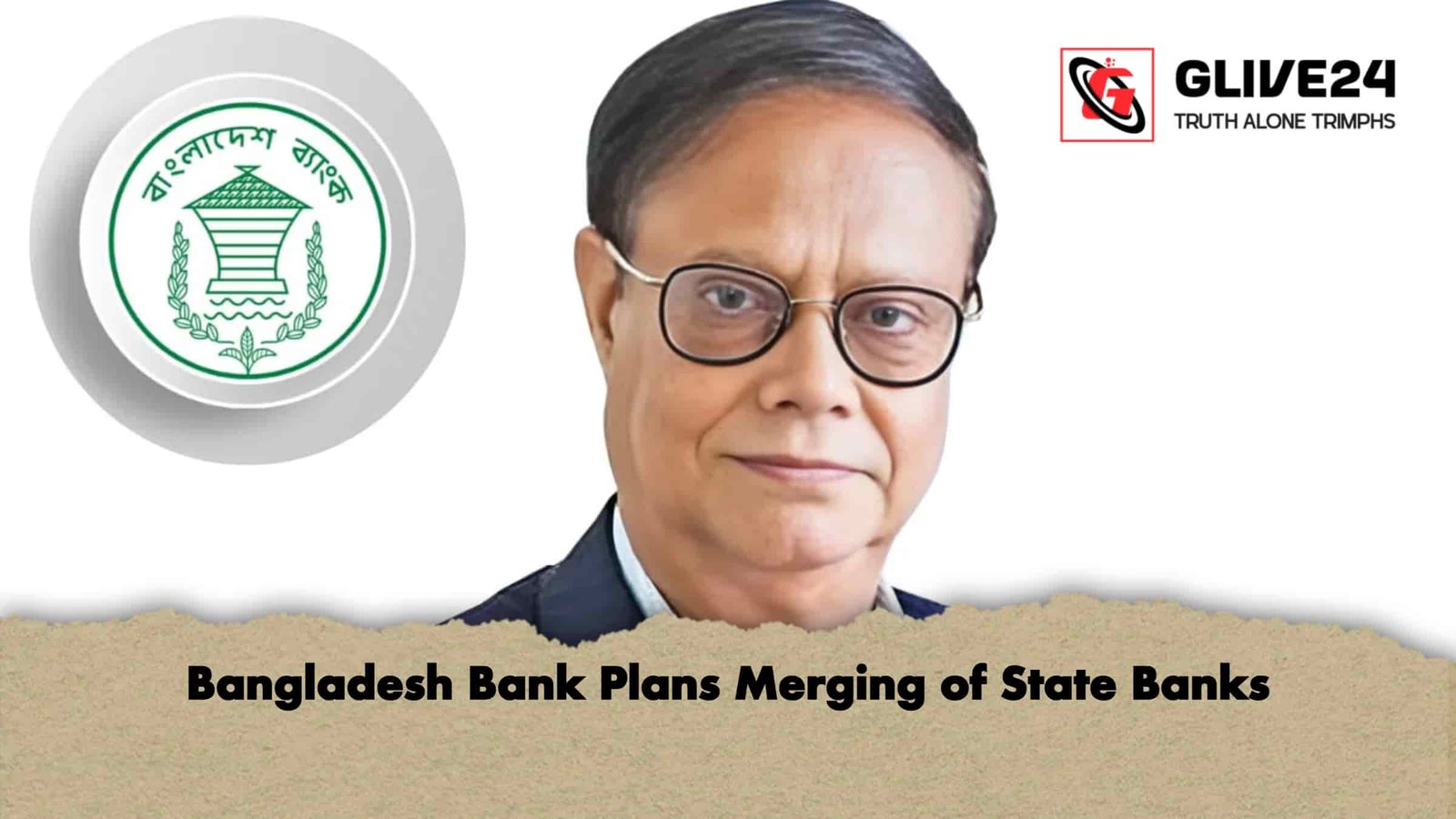
Bangladesh Bank has unveiled an ambitious plan to consolidate the country’s nine state-owned banks into just two large institutions, marking one of the most far-reaching reforms of the public banking sector in decades. The proposal was announced by central bank Governor Ahsan H. Mansur during a discussion held on Tuesday at Jagannath University in Dhaka, where he outlined the rationale and objectives behind the move.
According to the governor, the primary aim of the consolidation is to strengthen corporate governance, restore financial discipline, and address long-standing weaknesses caused by mismanagement, poor oversight, and political interference. He argued that Bangladesh’s banking system is excessively fragmented relative to the size of its economy, creating significant supervisory and regulatory challenges for the central bank.
At present, Bangladesh has 61 scheduled banks, a number the governor described as “abnormally high” for an economy of its scale. In his assessment, the country would be better served by having between ten and fifteen well-capitalised, efficiently managed banks rather than a large number of small and weak institutions. The proliferation of underperforming banks, he noted, has contributed to chronic governance failures and prolonged financial instability.
Drawing on international comparisons, Mansur pointed out that India, despite having an economy more than ten times larger than Bangladesh’s, has consolidated its state-owned banks into a limited number of large entities. He also cited Singapore, where the asset base of a single leading bank is comparable to the combined assets of Bangladesh’s entire banking sector. Fewer but stronger banks, he argued, are easier to regulate and better equipped to manage risk.
The nine state-owned banks currently operate under three broad categories—commercial, development, and specialised. Under the proposed plan, all of them would be brought under two large banking groups.
| Category | Banks Included |
|---|---|
| Commercial | Sonali Bank, Agrani Bank, Rupali Bank, Janata Bank |
| Development | BASIC Bank, Bangladesh Development Bank |
| Specialised | Bangladesh Krishi Bank, Rajshahi Krishi Unnayan Bank, Probashi Kallyan Bank |
The initiative forms part of a broader financial sector reform programme. In recent months, Bangladesh Bank has already overseen the merger of several weak private Islamic banks and initiated liquidation proceedings against a number of non-bank financial institutions. Mansur stated that decades of irregularities, crony lending, and political influence have inflicted losses estimated at nearly Tk 300,000 crore on the banking system, with concerns that a substantial portion of these funds may have been siphoned off abroad.
Many economists have welcomed the proposal, describing it as timely and necessary. They argue that state-owned banks have long suffered from bureaucratic management structures that undermine efficiency and accountability. These banks have repeatedly been linked to major loan scandals, the costs of which ultimately fall on the government and taxpayers. Despite repeated recapitalisation efforts, performance has failed to improve sustainably.
Official data indicate that between 2009 and 2024, the government injected more than Tk 25,000 crore into state-owned banks. Yet non-performing loan ratios at several institutions remain alarmingly high. Against this backdrop, policymakers view consolidation as a critical step towards restoring stability, protecting depositors, and rebuilding public confidence in Bangladesh’s banking system.




Comments