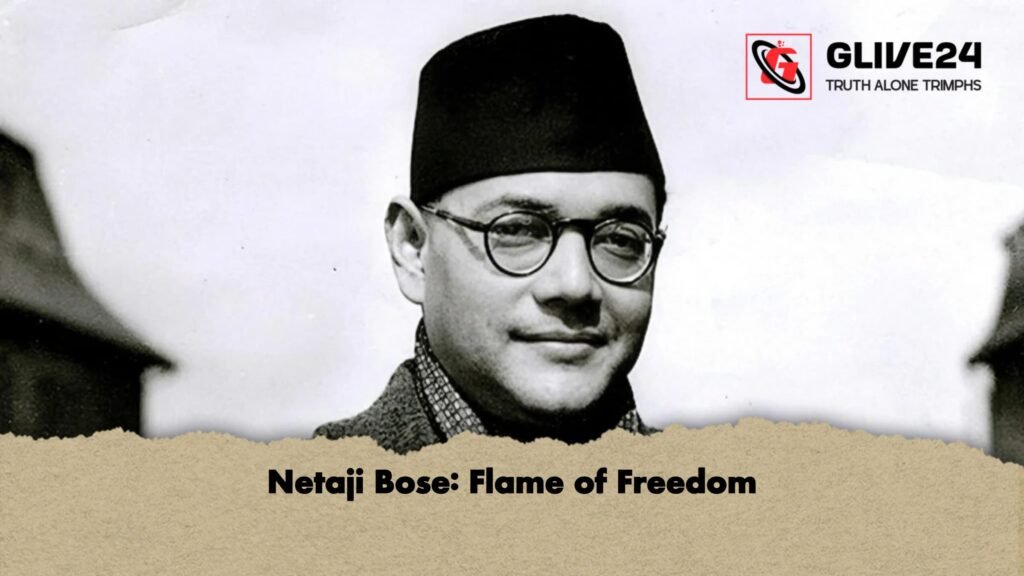
“Give me blood, and I will give you freedom.” With this electrifying pledge, Subhas Chandra Bose etched his name into the soul of India’s struggle for independence. Revered as Netaji (Respected Leader), Bose embodied defiance, courage, and an uncompromising belief that liberty must be seized, not merely requested.
Born on 23 January 1897 in Cuttack, in present-day Odisha, Bose displayed intellectual brilliance and moral resolve from an early age. He studied at Ravenshaw Collegiate School before moving to Calcutta, where he later graduated from Scottish Church College. His academic promise took him to Cambridge University’s Fitzwilliam Hall. In 1920, he passed the highly competitive Indian Civil Service examination — a remarkable feat under colonial rule. Yet, in a dramatic act of principle, he resigned before taking up the post, unwilling to serve an imperial administration he believed unjust.
Deeply influenced by Swami Vivekananda’s spiritual humanism and guided politically by Deshbandhu Chittaranjan Das, Bose quickly rose within the Indian National Congress. However, he differed fundamentally from Mahatma Gandhi’s philosophy of non-violent resistance. Bose believed that armed struggle, supported by international alliances, offered a more realistic path to ending British rule.
Elected Congress President in 1938 (Haripura) and again in 1939 (Tripuri), Bose’s growing ideological rift with the party leadership led to his resignation. Soon after, he founded the Forward Bloc, advocating immediate and complete independence. British authorities, wary of his influence, placed him under repeated detention.
In 1941, Bose made a daring escape from house arrest and travelled through Afghanistan and Europe before reaching East Asia. There, with Japanese support, he reorganised the Indian National Army (INA), originally formed from Indian prisoners of war. In 1943, he proclaimed the Provisional Government of Azad Hind in Singapore, rallying Indians with the call “Chalo Delhi” — March to Delhi.
Under Bose’s leadership, the INA fought alongside Japanese forces in the Imphal and Kohima campaigns of 1944. Though militarily unsuccessful, the INA’s efforts had a profound psychological impact, shaking the foundations of British authority in India.
A summary of key milestones in Bose’s life is presented below:
| Year | Event | Historical Significance |
|---|---|---|
| 1897 | Born in Cuttack | Birth of a future revolutionary leader |
| 1920 | Passed ICS exam | Demonstrated exceptional academic merit |
| 1921 | Resigned from ICS | Rejected service under British rule |
| 1938 | Congress President (Haripura) | Emerged as a national leader |
| 1939 | Founded Forward Bloc | Advocated radical independence |
| 1943 | Formed Azad Hind Government | Declared a government-in-exile |
| 1944 | INA campaigns in Northeast India | Peak of armed resistance efforts |
| 1945 | Reported death in air crash | Beginning of enduring mystery |
Netaji was reportedly killed in an air crash in Taiwan on 18 August 1945, though the circumstances remain debated, adding an aura of mystery to his legacy.
Today, Subhas Chandra Bose endures not merely as a historical figure but as a symbol of fearless patriotism, sacrifice, and indomitable will — a reminder that the quest for freedom often demands extraordinary resolve.