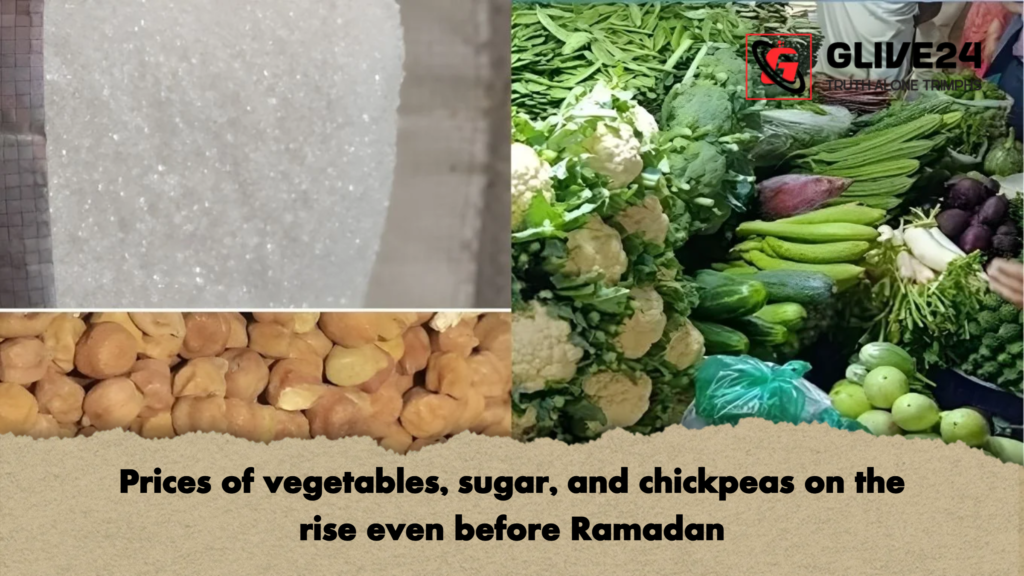
As the holy month of Ramadan approaches, shoppers in Dhaka are witnessing a noticeable rise in the prices of essential commodities across local markets. Particularly affected are lentils, sugar, and a variety of vegetables, with price hikes becoming increasingly evident over the past week. Both consumers and traders attribute the surge to dwindling supplies of winter vegetables as the season draws to a close.
A survey of major wholesale and retail markets on Friday, including Khilgaon and Karwan Bazar, revealed that the price of nearly all vegetables has increased by 10 to 20 Bangladeshi Taka per kilogram. Chickpeas, widely used for iftar and suhoor meals, have seen their prices climb from 90–100 BDT per kilogram a week ago to 100–110 BDT currently. As wholesale prices rise, the effect is swiftly felt in retail markets.
Sugar prices have also experienced an upward trend. Despite normal domestic supply, both packaged and loose sugar have become more expensive. A month ago, packaged sugar was sold at 100–105 BDT per packet, but now nearly all brands are priced at 105 BDT. Loose sugar, previously available for 100–105 BDT, is now rarely sold below 110 BDT.
Vegetable prices in Dhaka markets have similarly surged. Round eggplants are selling at 80 BDT per kilogram, papayas at 40 BDT, turnips at 60 BDT, radishes at 40 BDT, and cucumbers at 80 BDT. Fresh green chillies now cost 160 BDT per kilogram, tomatoes 80 BDT, and pumpkins 50 BDT. Beans range from 40–80 BDT depending on variety, potatoes 30 BDT, cauliflowers 40–50 BDT each, and cabbages 40 BDT.
The table below summarises the current prices of key commodities in Dhaka markets:
| Commodity | Unit | Current Price (BDT) |
|---|---|---|
| Chickpeas | kg | 100–110 |
| Sugar (loose) | kg | 110 |
| Round Eggplant | kg | 80 |
| Fresh Green Chillies | kg | 160 |
| Tomato | kg | 80 |
| Cauliflower | per piece | 40–50 |
| Broiler Chicken | kg | 170–185 |
| Sonali Chicken | kg | 290–300 |
The price increases have drawn the ire of consumers. Jasmine Ara, a housewife shopping at Khilgaon market, remarked, “Just a few days ago, I bought vegetables at considerably lower prices. Now nearly everything is 10–20 Taka more expensive. As the winter season ends, the price hike has become evident.” Another shopper, Rashed, suggested that merchants habitually raise prices during Ramadan.
At Karwan Bazar, Rahim noted that the price of cauliflower has almost doubled in just a few days. Traders, however, insist that reduced vegetable production towards the end of winter has driven wholesale prices up, consequently impacting retail prices.
The poultry market shows no relief either. Broiler chicken is selling at 170–185 BDT per kilogram, while the popular Sonali variety is priced at 290–300 BDT. Overall, the approaching Ramadan is exerting significant inflationary pressure on Dhaka’s markets, causing concern among middle- and lower-income households.