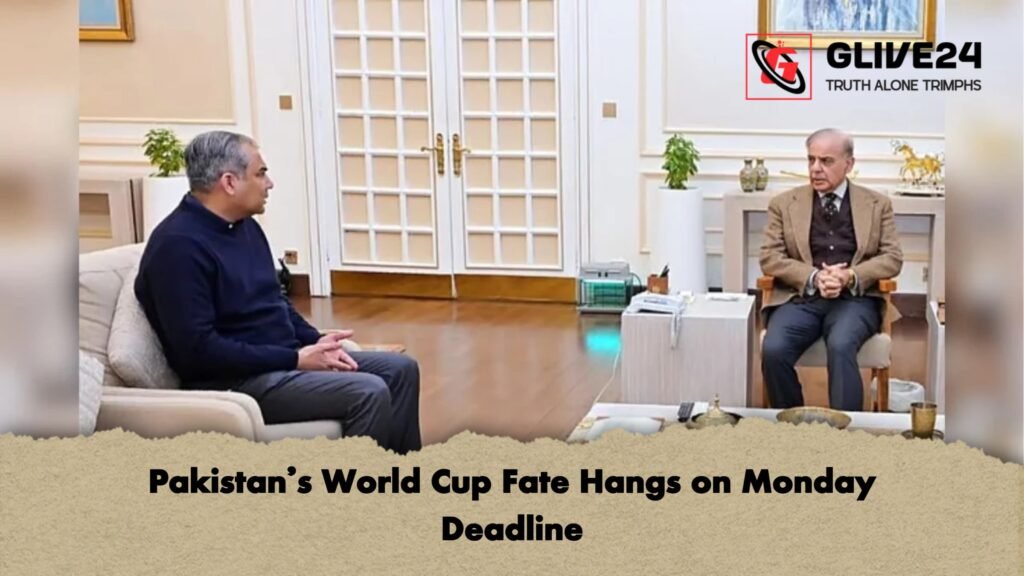
The landscape of international cricket is teetering on the edge of a major diplomatic rift as the Pakistan Cricket Board (PCB) deliberates on whether to boycott the upcoming T20 World Cup. Following a high-level consultative meeting in Islamabad on Monday, PCB Chairman Mohsin Naqvi confirmed that Prime Minister Shehbaz Sharif has instructed the board to keep “all options open” in response to recent decisions by the International Cricket Council (ICC).
Table of Contents
A Crisis of Consistency
The tension reached a breaking point after the ICC formally replaced Bangladesh with Scotland for the tournament. The Bangladesh Cricket Board (BCB) had expressed significant security concerns regarding travelling to India, requesting a neutral venue. When the ICC rejected this and subsequently excluded them from the event, the PCB viewed the move as a lack of equity in governance.
Chairman Naqvi highlighted a perceived double standard: while the ICC implemented a “Hybrid Model” to accommodate India’s refusal to play in Pakistan for the 2025 Champions Trophy, no such flexibility was extended to Bangladesh for their concerns in India.
T20 World Cup 2026: Crisis Timeline
| Date | Key Milestone | Outcome |
| 4 January | BCB Security Appeal | Bangladesh requests a venue change from India. |
| 21 January | ICC Board Meeting | ICC mandates that the original India schedule stands. |
| 24 January | Scotland Inducted | Scotland replaces Bangladesh in the tournament line-up. |
| 25 January | PCB Ultimatum | Naqvi threatens boycott if Bangladesh is excluded. |
| 26 January | Prime Minister Meet | Strategic briefing held; decision-making window set. |
| 2 February | Final Deadline | Latest date for Pakistan’s official participation status. |
Strategic Brinkmanship and Financial Stakes
During the meeting with the Prime Minister, the PCB Chairman outlined the potential financial fallout of a boycott. While Pakistan would forfeit a significant “participation fee,” Naqvi pointed out that the commercial damage to the ICC would be far more severe. The absence of a Pakistan-India clash—historically the most-watched sporting event globally—would result in catastrophic losses for broadcasters and sponsors.
According to Pakistani media reports, the board is considering two primary paths:
-
Total Boycott: A complete withdrawal from the tournament, starting February 7.
-
Selective Forfeit: Participating in the tournament but refusing to take the field specifically for the match against India as a mark of protest.
A Looming Deadline
In a statement released on his X (formerly Twitter) account, Naqvi noted that a definitive stance would be reached between Friday, 30 January and Monday, 2 February. The T20 World Cup is scheduled to begin in less than two weeks, with Pakistan currently slated for Group A alongside India, Namibia, the Netherlands, and the United States.
Should Pakistan follow through with its threat, it would mark one of the most significant political interventions in the history of the sport, potentially forcing the ICC to reconsider its hosting and substitution protocols.