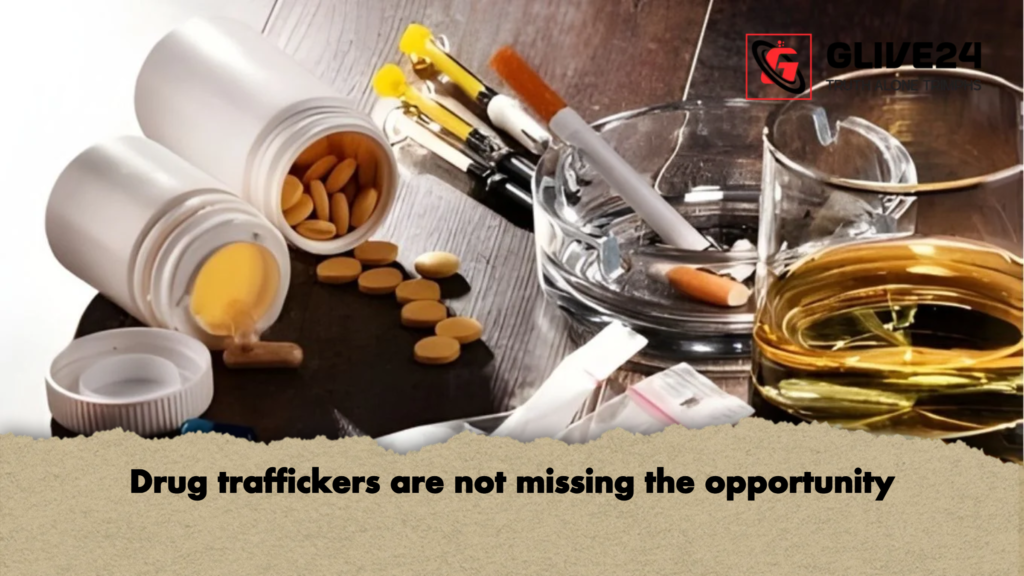
As Bangladesh prepares for the 13th national parliamentary elections on 12 February, the government and relevant authorities are fully engaged in ensuring a free, fair, and peaceful voting process. However, this heightened focus on election duties has inadvertently created an opportunity for drug traffickers, who have been operating with increasing boldness. Reports indicate a noticeable decline in special anti-narcotics operations, and even routine drug crackdowns have slowed, allowing traffickers to expand their illicit business.
A significant portion of narcotics entering Bangladesh originates from neighbouring India and Myanmar. Drugs are being smuggled into the country via land, sea, and air, reaching cities and rural areas alike, creating widespread concern nationwide. According to the Department of Narcotics Control (DNC), seizures in recent years show that most drugs are intercepted near border regions before spreading to other parts of the country.
Multiple factors contribute to the rising drug consumption among all social strata, particularly students. Curiosity, family disputes, unemployment, romantic failures, peer influence, negative social environments, and exposure to harmful online content are cited as key drivers. While male users still constitute the majority, female drug use is steadily increasing.
Although government records do not provide an official count of drug users, the non-governmental organisation MANAS estimates that approximately 15 million Bangladeshis are affected. The economic cost is staggering: around BDT 60,000 crore is spent on narcotics annually.
The drug trade involves nearly 200,000 individuals, including financiers, traders, carriers, and sellers. Each year, this number grows, with around USD 481 million (approximately BDT 5,147 crore) illicitly flowing out of Bangladesh due to drug trafficking. The consequences are not only financial and physical but also psychological, contributing to generational despair and undermining social development.
According to DNC figures, only 10 per cent of drugs entering Bangladesh are intercepted. Law enforcement agencies—including the police, Border Guard Bangladesh (BGB), Rapid Action Battalion (RAB), Coast Guard, and DNC—continue operations despite the election preparations. In 2025, seizures included:
| Drug Type | Quantity Seized |
|---|---|
| Yaba Tablets | 14,714,298 pieces |
| Crystal Meth/Ice | 10.408 kg |
| Phensedyl Bottles | 133,396 bottles |
| Other Narcotics | Various quantities |
During these operations, 2,334 individuals were arrested for involvement in drug trafficking networks.
DNC Director General Md. Hasan Maruf stated that anti-narcotics operations are ongoing, with increased vigilance ahead of the election. “We are working in coordination with law enforcement to ensure traffickers are dealt with firmly,” he said. MANAS chairman Professor Dr Arup Ratan Chowdhury echoed concerns, warning that traffickers are exploiting the current lack of focus on drug control.
Bangladesh Police AIG (Media) AH M Shahadat Hossain stressed that anti-narcotics operations have not slackened due to election duties. Dr Touhidul Haque, Associate Professor at Dhaka University’s Institute of Social Welfare and Research, noted that major state events often divert attention, giving criminals the opportunity to expand illicit activities.
Despite the challenges, authorities remain committed to intelligence-led monitoring, targeted operations, and inter-agency coordination to prevent any trafficker from evading justice.