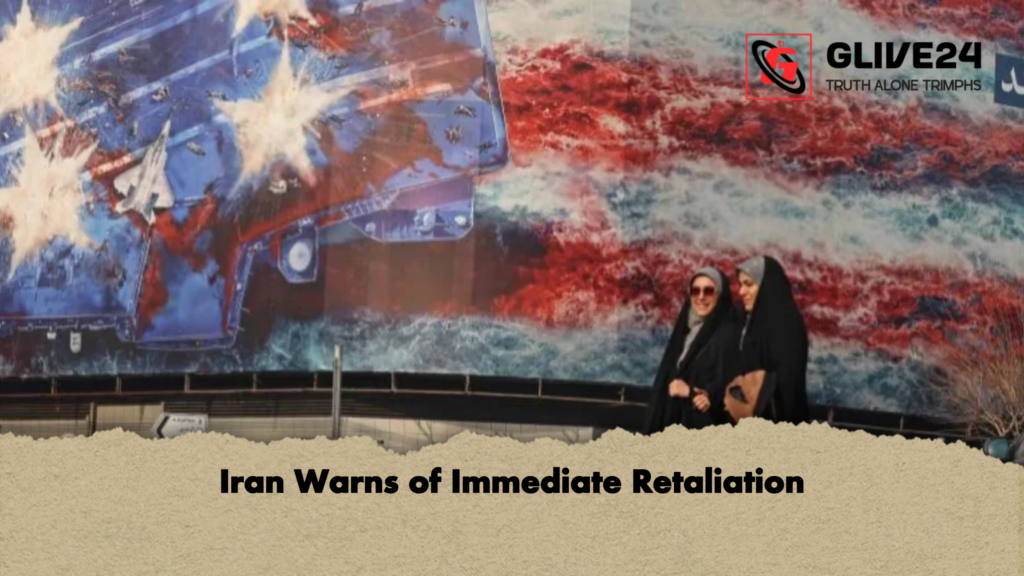
Iran has issued a stark warning that it stands fully prepared to respond to any military strike by the United States, signalling a sharp escalation in rhetoric amid mounting regional tensions. In unusually blunt language, Iran’s Foreign Minister Abbas Araghchi declared that the country’s armed forces have their “finger on the trigger”, underscoring Tehran’s readiness to deliver a forceful and immediate response should it come under attack.
Araghchi’s remarks follow comments by US President Donald Trump, who recently stated that “time is rapidly running out to avoid conflict” with Iran. The US president’s warning was widely interpreted as an indication that Washington may be considering military options against Tehran, particularly in light of long-running disputes over Iran’s nuclear programme and its regional influence. Iran’s senior diplomat responded swiftly, making it clear that the Islamic Republic would not hesitate to act if its sovereignty were threatened.
Adding to the sense of confrontation, Ali Shamkhani, an adviser to Supreme Leader Ayatollah Ali Khamenei, wrote in a post on X that the notion of a “limited strike” was a dangerous illusion. According to Shamkhani, any American military action, regardless of its scale or origin, would be treated by Iran as a declaration of war. He warned that Iran’s response would be “immediate, comprehensive and unprecedented”, suggesting that potential targets could include the heart of Tel Aviv as well as all supporters of what Tehran would regard as aggression.
President Trump has further fuelled tensions by announcing that a “massive armada” of the US Navy is moving towards waters near Iran. He said the force would be capable of completing its mission swiftly and decisively if required. In response, Araghchi took to social media to reiterate Iran’s preparedness, while also leaving the door open—at least rhetorically—to diplomacy.
The Iranian foreign minister emphasised that Tehran has always welcomed agreements based on mutual benefit and equality. However, he stressed that Iran would only accept a deal free from fear, pressure and threats. According to Araghchi, the kind of agreement Iran seeks would guarantee its right to use nuclear technology for peaceful purposes while ensuring the absence of nuclear weapons. He reiterated Tehran’s long-standing position that nuclear arms have no place in Iran’s security doctrine and that the country has never sought to acquire them. Iran has consistently maintained that its nuclear programme is limited to research and civilian energy production, a claim that Western governments continue to view with scepticism.
Meanwhile, several European leaders have echoed Washington’s tough stance on Iran. German Chancellor Friedrich Merz commented that Iran was approaching a critical moment following deadly crackdowns on anti-government protests. France has urged the European Union to designate the Islamic Revolutionary Guard Corps (IRGC) as a terrorist organisation, aligning itself with Berlin’s increasingly hard line.
The IRGC is widely regarded as Iran’s most powerful ideological and military institution. Both the United States and Canada have already listed it as a terrorist entity, although neither the European Union nor the United Kingdom has yet taken that step. Western pressure on Iran has intensified in the wake of widespread protests, which human rights organisations say were met with extreme violence. One such organisation claims that more than 6,200 people have been killed during clashes linked to the demonstrations.
The contrasting positions of the main actors in the standoff are summarised below:
| Actor | Stated Position |
|---|---|
| Iran | Immediate and forceful retaliation to any attack; conditional openness to diplomacy |
| United States | Warning of dwindling time for diplomacy; increased naval presence |
| European leaders | Growing alignment with US pressure; debate over banning the IRGC |
| Human rights groups | Allegations of mass fatalities during protest-related violence |
As military warnings and diplomatic signals continue to overlap, the situation remains highly volatile. Whether the crisis will move towards negotiation or confrontation now depends on decisions taken in Washington and Tehran in the coming days, with potentially far-reaching consequences for the region and beyond.