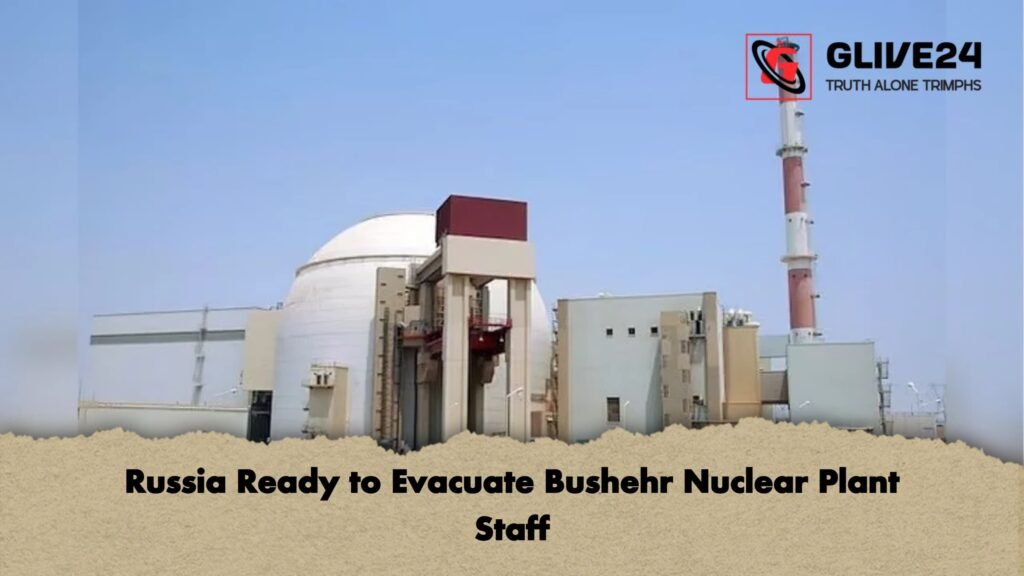
In a significant escalation of regional anxieties, Alexei Likhachev, the head of Russia’s state nuclear corporation Rosatom, has confirmed that Moscow is fully prepared to evacuate its personnel from Iran’s Bushehr Nuclear Power Plant should the security situation deteriorate further. The announcement comes amid heightened geopolitical tensions and persistent fears regarding the safety of nuclear infrastructure in the Middle East.
Strategic Coordination and Safety
Speaking to Russian state media, Likhachev emphasised that the Kremlin is maintaining a constant vigil over the facility. “We are monitoring the situation with the utmost gravity,” Likhachev stated. He further noted that Rosatom is working in seamless coordination with the Russian Ministry of Foreign Affairs and the Ministry of Defence to execute a rapid extraction of staff if deemed necessary by the unfolding threat level.
The Bushehr plant remains a critical piece of infrastructure, currently staffed by hundreds of Russian specialists and engineers. While previous military strikes in the region—including US-led operations last June—deliberately avoided the Bushehr site, the risk of “miscalculation” or collateral damage remains a primary concern for Moscow.
The Spectre of Chornobyl
Likhachev issued a stark warning to the international community, drawing a chilling parallel between the current risks in Iran and the 1986 Chornobyl disaster. He cautioned that any kinetic strike or sabotage at the Bushehr facility could trigger a “cataclysmic event” on par with the explosion at the Soviet-era plant in Ukraine.
The Chornobyl catastrophe remains the benchmark for nuclear horror. On 26 April 1986, a botched safety test led to a massive steam explosion and fire, releasing 400 times more radioactive fallout than the Hiroshima atomic bomb. Even today, four decades later, the “Exclusion Zone” remains a desolate, highly radioactive wasteland.
Comparative Risk Assessment
The Bushehr facility is an unusual hybrid of German and Russian engineering, making its safety protocols unique but also complex under combat conditions.
| Feature | Bushehr Nuclear Plant (Iran) | Chornobyl (Historic/Ukraine) |
| Reactor Type | VVER-1000 (Pressurised Water) | RBMK-1000 (Graphite Moderated) |
| Primary Staffing | Iranian & Russian (Rosatom) | Soviet Personnel |
| Current Status | Operational / Under Threat | Decommissioned / Entitied |
| Potential Risk | Regional radioactive contamination | Global fallout / Exclusion Zone |
Geopolitical Implications
The readiness to evacuate signifies a potential shift in Russian confidence regarding the stability of the Iranian “nuclear shield.” If Russian experts were to withdraw, it would not only halt the technical operation of the plant but also signal a significant cooling or tactical retreat in the Moscow-Tehran energy partnership. For now, the world watches closely, hoping that the diplomatic “red lines” surrounding nuclear facilities remain uncrossed.