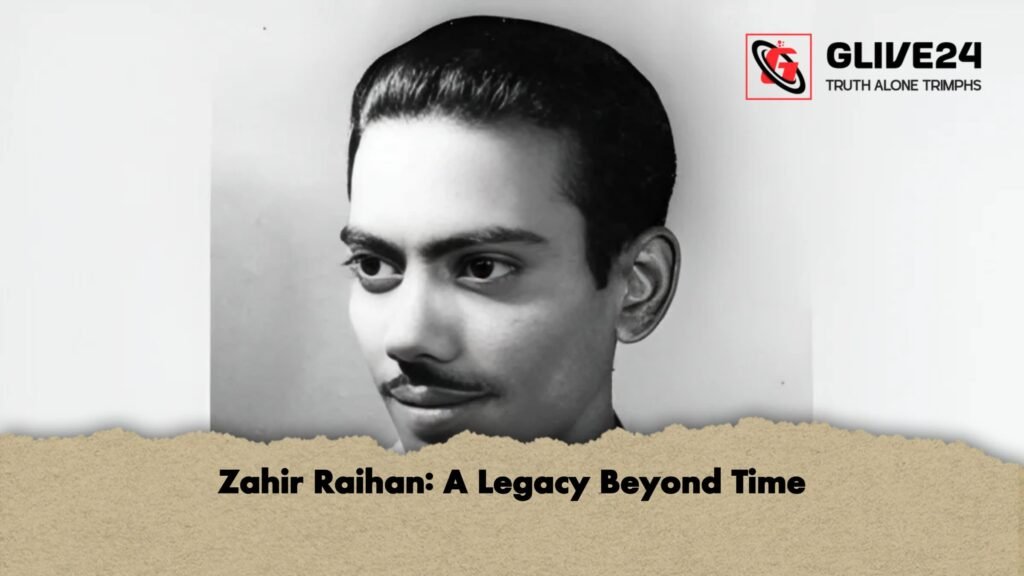
Few cultural figures in Bangladesh have left a legacy as profound and enduring as Zahir Raihan. A celebrated novelist, short story writer, journalist and pioneering filmmaker, Raihan’s creative life, though tragically brief, reshaped both Bengali literature and cinema. Decades after his disappearance, his works continue to inspire readers and viewers with their emotional depth, political consciousness and human sensitivity.
Among his most cherished literary achievements is the novel A Thousand Years Hence (Hazar Bochor Dhore). This widely read work offers a tender yet unflinching portrait of rural Bengali life — its quiet resilience, sorrows, hopes and unspoken struggles. Over time, the novel’s relevance has only deepened, securing Raihan’s place as a writer whose voice transcends generations.
Born on 19 August 1935 in Majupur village of Feni district, Raihan demonstrated creative brilliance from a young age. Though his life spanned only 37 years, his body of work remains remarkably rich and varied. He moved seamlessly between literature and film, leaving a permanent imprint on both.
His novels often reflected social reality and political awakening. Another Spring (Ar Ek Falguni), set against the backdrop of the Language Movement, remains one of the most powerful literary tributes to that historic struggle. Its famous closing line — “Next spring, we shall be twice as many” — still resonates as a symbol of resistance and hope. His novel February 21 further explored the emotional and political significance of the language movement. In The Melting River and The Girl of a Late Afternoon, he portrayed the complexities of love, loss and ordinary human endurance.
Raihan was equally revolutionary in cinema. His landmark film Life from the Real (Jibon Theke Neya) is widely regarded as a political allegory disguised as family drama, critiquing authoritarianism with rare boldness. The film remains strikingly relevant today. He also directed Behula, the debut film of legendary actor Razzak, and introduced several new talents, including actress Bobita. Earlier works such as Kakhono Asheni, Kancher Deyal, Anwara, and Sangam — noted as the first colour film produced in Pakistan — showcased his range and technical innovation.
Below is a summary of his major contributions and honours:
| Field | Notable Works / Achievements | Significance |
|---|---|---|
| Novel | A Thousand Years Hence | Classic portrayal of rural Bengal |
| Novel | Another Spring | Literary reflection on Language Movement |
| Novel | February 21 | রাজনৈতিক ও সাংস্কৃতিক চেতনার উপন্যাস |
| Film | Life from the Real | রাজনৈতিক রূপকের মাইলফলক |
| Film | Sangam | পাকিস্তান আমলের প্রথম রঙিন চলচ্চিত্র |
| Award | Bangla Academy Award (1972) | Posthumous recognition |
| Award | Ekushey Padak (1977) | Posthumous national honour |
| Award | Independence Award (1992) | Highest state recognition (posthumous) |
During the 1971 Liberation War, Raihan also made documentaries to raise global awareness about the atrocities in Bangladesh. After independence, he returned home and began searching for his missing brother, the writer Shahidullah Kaiser. On 30 January 1972, he went to Mirpur following a mysterious phone call suggesting information about his brother’s whereabouts. He never returned.
Though his life ended in uncertainty, Zahir Raihan’s artistic light has never dimmed. He lives on in his stories, his characters, his images on screen, and in the collective memory of a nation that still draws strength from his words and vision.