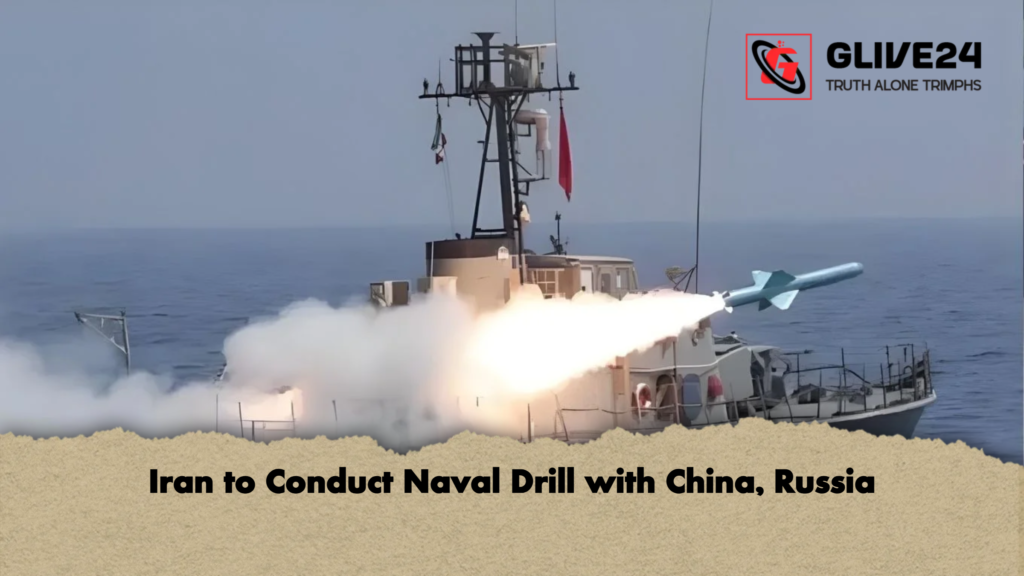
Amid escalating tensions with the United States, Iran is set to hold a joint naval exercise with China and Russia in February, a move observers describe as both a strategic military demonstration and a diplomatic signal. Officials have indicated that the drill, named “Maritime Security Belt”, is intended not only to showcase Iran’s naval capabilities but also to reinforce its international influence and strategic autonomy.
According to Iran’s semi-official Tasnim News Agency, the exercise will feature warships and support units from the three countries. Iran’s participation will include vessels from both the regular Iranian Navy and the Islamic Revolutionary Guard Corps (IRGC) naval units, working alongside Chinese and Russian counterparts in coordinated maritime operations.
The drills are scheduled to take place in the northern Indian Ocean in mid-February. Participating forces will conduct a range of activities, including naval manoeuvres, security patrols, and maritime protection exercises. Since the first edition in 2019, the exercise has been successfully conducted seven times, each iteration serving to refine the participating countries’ military doctrine and operational readiness.
Iranian officials have issued stern warnings to Washington, stating that any U.S. military action would elicit a “rapid, forceful, and devastating” response. At the same time, they emphasised that Tehran remains open to dialogue—provided that negotiations occur on what it considers just, balanced, and non-coercive terms.
Key Details of the Maritime Exercise
| Subject | Details |
|---|---|
| Exercise Name | Maritime Security Belt |
| Host Country | Iran |
| Participating Nations | Iran, China, Russia |
| Iranian Units | Regular Navy, IRGC Naval Units |
| Location | Northern Indian Ocean |
| First Conducted | 2019 |
| Total Iterations | 7 |
| Scheduled Timing | Mid-February 2026 |
| Context | Heightened Tehran–Washington tensions |
Analysts view this exercise as more than a conventional military drill; it carries a significant diplomatic message. Recent remarks from the U.S. President warning of a “massive fleet approaching Iran” have further heightened the already tense bilateral relationship.
Beyond signalling military strength, the joint drill aims to enhance maritime security cooperation, coordination, and communication protocols among Iran, China, and Russia. For the international community, the exercise represents a clear declaration: these nations are prepared to defend their naval strategy and diplomatic standing with cohesion and resolve.
By combining operational readiness with strategic messaging, the upcoming Maritime Security Belt exercise underscores Iran’s ambition to project both power and influence on the global stage, particularly in the Indo-Pacific region where the United States maintains a strong naval presence.