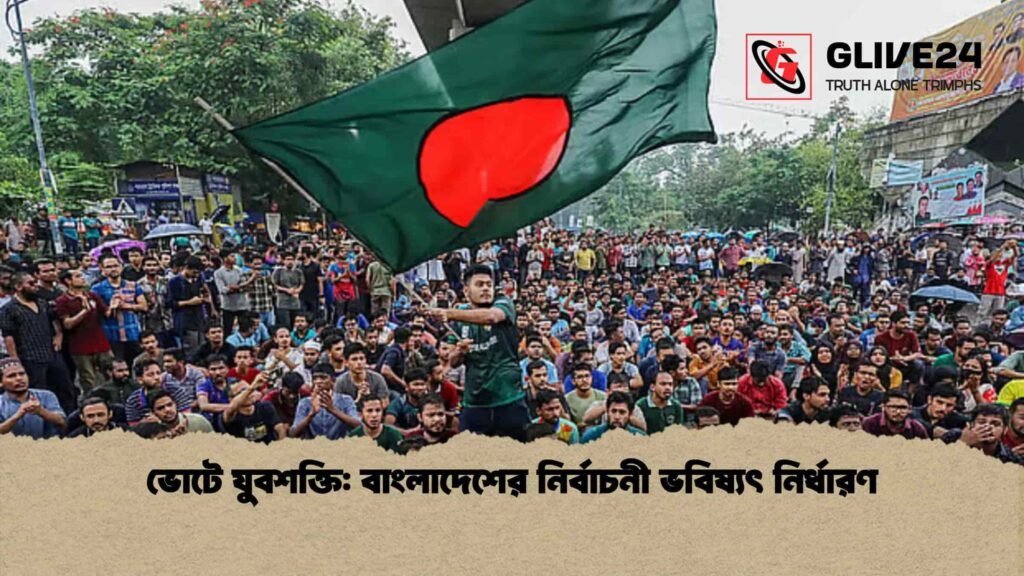
Political analysts in Bangladesh are increasingly recognising that the nation’s youth will play a decisive role in the upcoming general elections. Across online forums, social media platforms, and offline discussion groups, young citizens are actively engaging in policy scrutiny, evaluating political programmes, and, in some cases, stepping forward as candidates themselves. First-time voters, particularly university students, are demonstrating a heightened awareness of their civic responsibilities and democratic duties.
Arpa Barua, a student at the Institute of Education and Research, University of Chittagong, shared her perspective:
“Voting for the first time is both exciting and profoundly important. While there are some concerns about safety, participating responsibly gives one a real sense of civic engagement.”
A recent survey encompassing twenty first-time voters from universities across the country highlights this trend. Of these, eight have already made their voting decisions, while the remaining twelve continue to observe and analyse political developments. Influences shaping their decisions include social media, family and peer advice, and the performance and policies of candidates.
| University | Student | Voting Status | Key Influences |
|---|---|---|---|
| University of Chittagong | Arpa Barua | Observing | Civic duty, safety concerns |
| Jagannath University | Mahbubul Hasan | Decided | Political context, future aspirations |
| North South University | Suraiya Safia | Observing | Social media, teacher guidance |
| Canadian University | Nusrat Jahan | Observing | Fact-checking, personal reflection |
| Hazi Mohammad Danesh University | Jannatul Ferdous | Observing | Parental advice |
| Bangladesh University of Business and Technology | Zahid Hossain | Decided | Candidate and party performance |
The survey revealed that young voters prioritise a candidate’s personal competence, integrity, and proven effectiveness above party ideology or symbols. Many students expressed the view that electing the right individual is key to driving meaningful social and political change in Bangladesh.
Usman Gani, a student at the University of Chittagong, noted:
“Elections alone cannot bring change. Without broader social and political reforms, the impact of any election remains limited. Infrastructure can be upgraded, but values and ethics require transformation.”
Students from Rajshahi University and Chittagong University, including Fatin Nawal and Maimuna Sharmin, emphasised that responsible and conscious youth participation could gradually foster positive change. Their awareness, sense of responsibility, and data-driven decision-making are likely to serve as a strong foundation for Bangladesh’s future political and social stability.