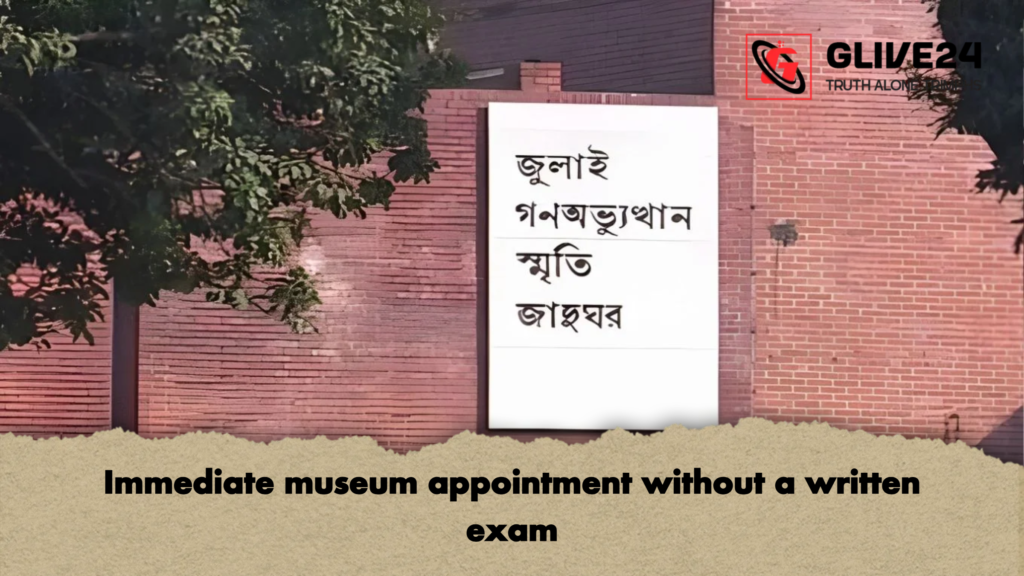
The Ministry of Cultural Affairs has recently undertaken a rapid recruitment drive at the July Uprising Memorial Museum, sparking widespread concern over the transparency and legality of the process. Questions have emerged regarding the bypassing of mandatory written examinations, with allegations that appointments are being made solely through oral interviews, or viva voce, favouring selected candidates.
The museum, established on the former state residence of ousted Prime Minister Sheikh Hasina following the July uprising, had issued a recruitment notice on 28 January for a total of 62 positions across grades six to twenty under the Ministry of Cultural Affairs. Despite clear stipulations in the museum’s own regulations mandating written tests for all posts, preparations for direct oral examinations have been completed without conducting any written tests. In some cases, candidates were informed of their viva schedules via SMS, while many others did not receive any notification at all.
The recruitment timetable has raised concerns due to its proximity to the upcoming national elections on 12 February, with critics describing the process as hurried and potentially biased. Reports suggest that the interim government has pressured the museum to complete the recruitment quickly, possibly circumventing standard procedures to expedite appointments.
Positions and Grades
| Grade | Number of Positions | Experience Requirements |
|---|---|---|
| 6 | 8 | Specific experience required |
| 9 | 20 | None specified |
| 10 | 13 | None specified |
| 11–20 | 21 | None specified |
For grades nine through twenty, candidates need only meet basic educational qualifications to secure appointments, entirely bypassing written evaluation. Certain “highly qualified” candidates are reportedly eligible for special exemptions, a provision critics say is vague and open to abuse.
According to the museum’s regulations, written tests covering Bangla, English, mathematics, general knowledge, and relevant technical subjects are mandatory, with a minimum passing mark of 50%. Only candidates who pass both written and practical assessments are eligible for oral interviews. Despite this, authorities have proceeded directly to viva assessments, effectively making the recruitment process wholly dependent on oral evaluation.
Public administration experts warn that such practices violate established administrative norms and risk the future annulment of appointments. Former senior civil servants emphasise that revenue-funded posts must adhere to merit-based selection, including written examinations, to ensure fairness and transparency. Skipping this step, they argue, raises questions about impartiality, opportunities for manipulation, and potential financial improprieties.
Several candidates have expressed frustration at the lack of communication. Some claim they never received SMS notifications or interview invitations despite applying in accordance with the official guidelines. Meanwhile, museum officials maintain that the process complies with regulations and assert that the viva constitutes the final assessment stage.
Museum Director Tanzeem Ibne Wahab stated, “We are following the July Uprising Museum’s recruitment regulations in full. The viva allows us to rapidly assess candidates’ administrative skills, communication, intelligence, and ability to handle real-world situations, enabling us to launch regular museum operations on schedule.” However, questions remain regarding the definition of “special qualifications” and whether the bypassing of written examinations undermines both transparency and meritocracy.
Analysts argue that for public institutions funded by government revenue, strict adherence to written examinations is non-negotiable. Any relaxation or ambiguity in recruitment procedures can create opportunities for nepotism, financial impropriety, and political influence, eroding public confidence in the integrity of the process.